
“Mesenteric bleeding (MB) occurs rarely and its frequency is not well known. It corresponds to bleeding from mesenteric vessels in the abdominal cavity, without intra-luminal digestive bleeding. Although relatively rare, this pathology can be life-threatening if left undiagnosed and untreated. Clinically, MB are characterized by non-systematised abdominal pain and sudden blood loss. MB has many causes such as a post operative complication (especially after pancreaticoduodenectomy), traumatism, tumour, or may be idiopathic with no cause found. CT-scan is the gold standard of diagnostic imaging to identify the cause of MB. While the management of upper and lower gastrointestinal bleeding has been well established, the management of active mesenteric bleeding is less defined in the medical literature.”
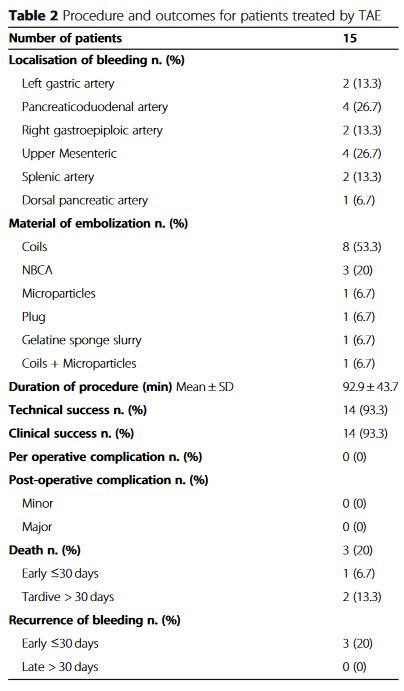
“TAE is a potentially effective technique for treating mesenteric bleeding, including in cases of hemodynamic instability, and could be considered as the first approach. As in this study, surgery can be performed after up-front TAE in case of technical failure. Further studies should
be carried out to assess the predictive factors for technical and clinical failure, and to evaluate which patients may benefit from this type of treatment.”
Extrat C, et al Safety and efficacy of emergency transarterial embolization for mesenteric bleeding. CVIR Endovasc. 2022 Jan 8;5(1):5.
 Surgical Focus