
“Amyotrophic lateral sclerosis is a progressive neuromuscular disease characterized by both
lower motor neuron and upper motor neuron dysfunction. Although clinical presentations can vary, there is no cure for ALS, and the disease is universally terminal, with most patients dying of respiratory complications. Patients die, on average, within 3 to 5 years of diagnosis, unless they choose to undergo tracheostomy, in which case, they may live, on average, 2 additional years. Up to 95% of patients with ALS in the United States choose not to undergo tracheostomy; management of respiratory failure is therefore aimed at both prolonging survival as well as improving quality of life. Standard of care for patients with ALS includes treatment from multidisciplinary teams, but many patients do not have consistent access to a pulmonary physician who regularly sees patients with this disease.”
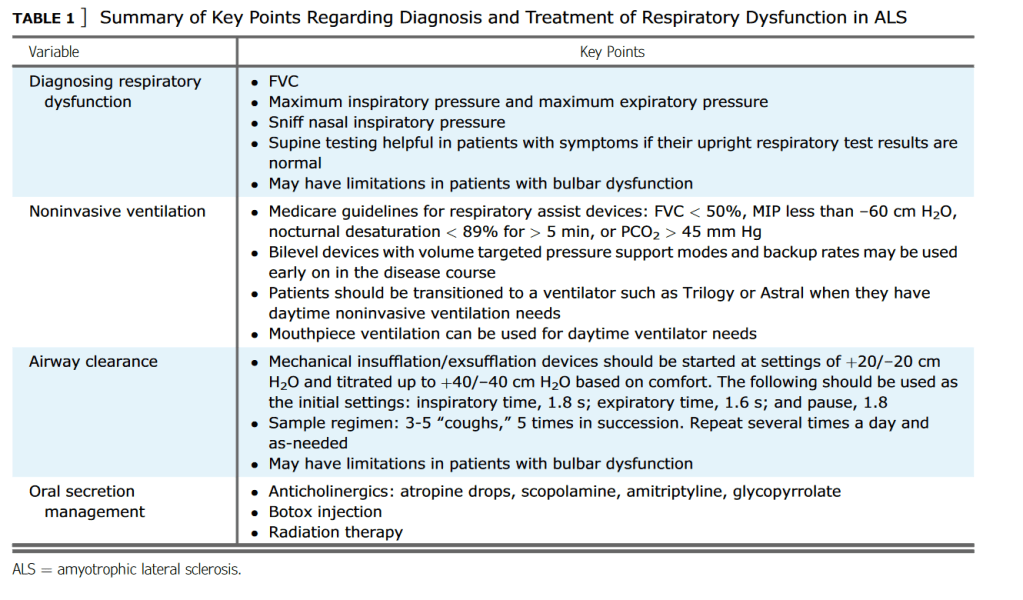
“ALS is a rapidly progressive, terminal motor neuron disease with various respiratory manifestations. It is important for pulmonologists to first recognize signs and symptoms of respiratory dysfunction related to this disease. Once respiratory dysfunction is diagnosed,
proper treatment of hypoventilation with NIV, as well as adequate management of airway secretions using MIE devices, is vital to prolong survival and improve quality of life. As the ALS progresses, physicians must help patients and caregivers make life-sustaining treatment decisions regarding PEG tubes and tracheostomy tubes, and ultimately must help them navigate decisions regarding end-of-life care.”
Niedermeyer, Shannon et al. “Respiratory Failure in Amyotrophic Lateral Sclerosis.” Chest vol. 155,2 (2019): 401-408. Full Text for Emory Users
 Surgical Focus