
“Unintended retentions of a foreign object after surgery (e.g. sponge, needle, and instrument) (URFO) remain the sentinel events most frequently reported to The Joint
Commission (TJC). Although these events have happened in other invasive procedures, URFOs are estimated to occur in 1:5500 surgeries. These serious adverse events have resulted in patient harm involving reoperation, readmission/prolonged hospital stay, infection or sepsis, fistulas/ bowel obstructions, visceral perforation, and death.”
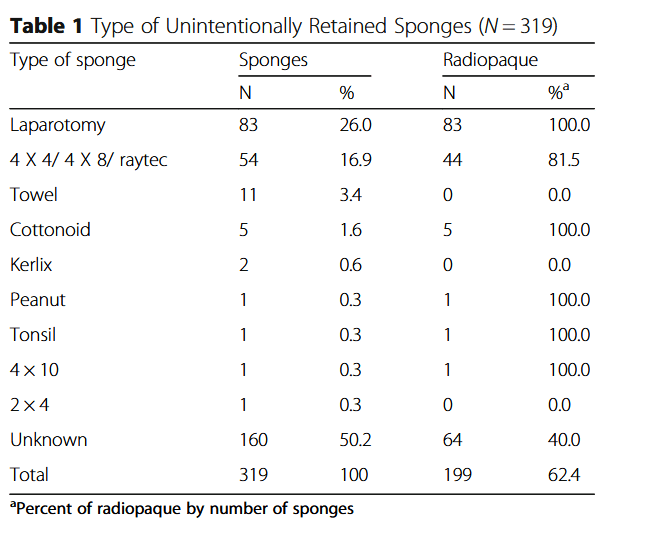
“This study provides new insight into the ongoing problem of RSS, describing 319 reported events over a five-year period. This is the largest sample of RSS we have seen in published literature. The knowledge gained is much more comprehensive than could be attained by conducting a single root cause analysis in a healthcare facility. The results provide evidence about the context in which sponges were retained in the Operating Room, Labor and Delivery, and other areas where surgical procedures are performed. The vast number of contributing factors identified make refinement of current processes very difficult to do achieve and likely ineffective to prevent all RSS. We recommend the addition of sponge detection technology to verify that no sponge remains in the patient prior to discharge from the operating/procedure room.”
Steelman, Victoria M et al. “Retained surgical sponges: a descriptive study of 319 occurrences and contributing factors from 2012 to 2017.” Patient safety in surgery vol. 12 20. 29 Jun. 2018 Free Full Text
 Surgical Focus