
“The main purpose of perioperative cardiac evaluation involves answering few basic questions. What are the underlying cardiac risk factors which a patient might have before
s/he undergoes noncardiac surgery? Will such cardiac evaluation change the management of the patient? Will it defer surgery altogether in favor of resolving the patient’s cardiac disease and hence reducing perioperative mortality? What will be the course of management in the postoperative period?
Communication among the complete medical team involved in patient care, including the internist, cardiologist, anesthesiologist, surgeon, and ancillary staff, is of utmost importance,
along with the facilitation of shared decision making by the patient.”
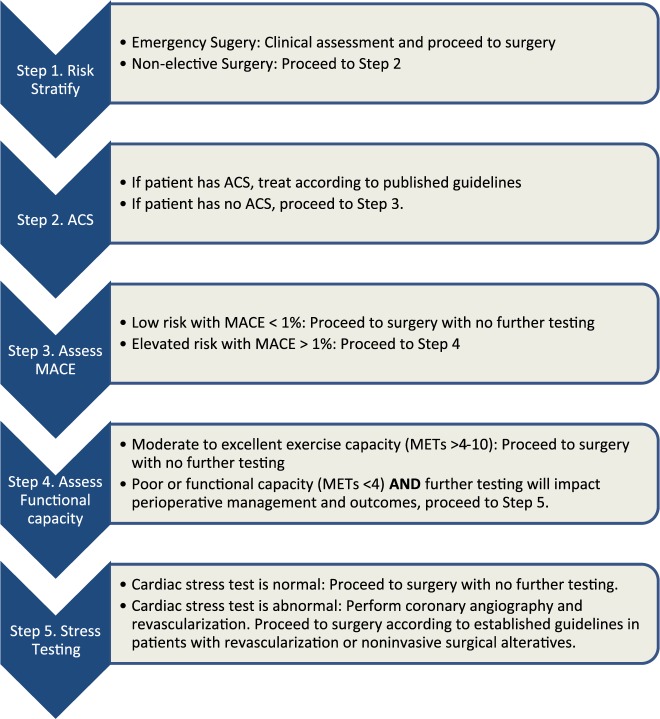
“Perioperative cardiovascular evaluation and management is of utmost significance in patients undergoing noncardiac surgery. It has been shown to improve patient outcomes and reduce health care costs. However, it is of benefit only in a specific group of patients with risk factors going for high-risk procedures. Its routine use in patients undergoing low-risk elective procedures is of no benefit and can even lead to harm by subjecting patients to
unnecessary evaluations and management protocols. It is important to stress on the fact that most these recommendations are based, to a large extent, on observational studies and clinical experience. There are only few RCTs that address this matter. It is prudent that more randomized trials are needed to improve on current recommendations, hence leading to further improvement in patient care and management in the perioperative period.”
Rafiq, Arsalan et al. “Cardiac Evaluation and Monitoring of Patients Undergoing Noncardiac Surgery.” Health services insights vol. 9 1178632916686074. 20 Feb. 2017 Free Full Text
 Surgical Focus