
“Gynecologic malignancies are often treated with surgical resection and pelvic irradiation. The small bowel is most important in determining the dose of pelvic radiation because of its sensitivity to the effects of radiation. Enterovaginal fistulas in an irradiated field are rare and very challenging problems, often with devastating clinical and personal consequences. We investigated the use of the rectus abdominis muscle flap for the definitive treatment of recurrent enterovaginal fistula in the irradiated field. The rectus abdominis muscle has
ideal features for this use, including a long vascular pedicle, good bulk, low flap-related complication rates, and excellent graft survival.”
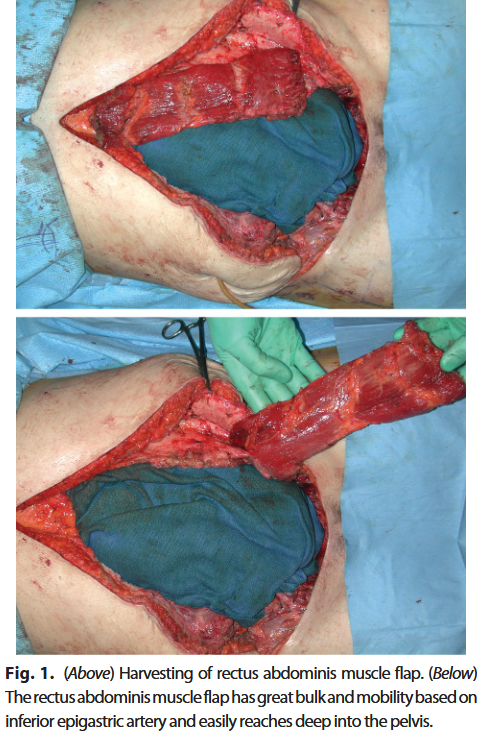
“Based on our experience, rectus abdominis muscle flaps are successful in patients with recurrent enterovaginal fistula who have undergone pelvic exenteration and irradiation.
The rectus abdominis muscle flap should be an early surgical option for more patients with recurrent enterovaginal fistula and should be considered instead of the less bulky and more unpredictable gracilis muscle transfer. Using rectus abdominis muscle flap for initial
repair could save women from recurrent failures associated with other described techniques.”
Shafer, Katherine E et al. “Novel approach to surgical repair of enterovaginal fistula in the irradiated pelvis.” Plastic and reconstructive surgery vol. 130,2 (2012): 385e-386e. Free Full Text
 Surgical Focus