
With large cavitating wounds, there is a risk of sponge retention that may be all too easily
overlooked, particularly with the surgeons’ habit of cutting the sponge to the desired shape and the use of multiple fragments. We therefore recommend that a count is made of the number of sponges used – as is standard practise for swabs, needles and instruments.
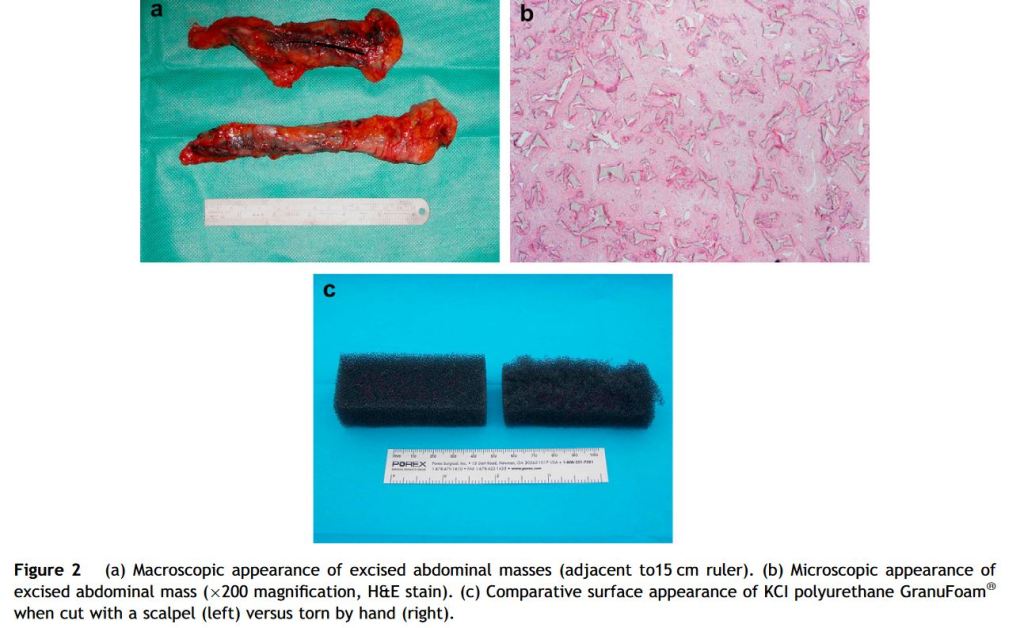
“Prolonged use of TNP therapy may encourage adherence of the sponge to the wound bed; this can result in fragmentation of the sponge on attempted removal. Thus when tailoring a proprietary sponge, sculpting should be undertaken using a sharp implement (i.e. scalpel or
scissors) rather than simply tearing the material. Thus in the event of retrieving the sponge after prolonged in situ use, the surgeon can be more confident that the entire sponge has
been extricated.”
Ahmed F, Swan et al Retained VAC therapy sponge as a complication of abdominoplasty. J Plast Reconstr Aesthet Surg. 2010 May;63(5):e497-9. Full Text for Emory Users
 Surgical Focus