
“Acute upper gastrointestinal bleeding (AUGIB) is one of the most common emergencies in gastroenterology. Despite major improvements in its management, AUGIB continues to be associated with significant morbidity and mortality. Bleeding peptic ulcers are one of the principal causes of AUGIB. Endoscopic therapy to bleeding ulcers reduces further bleeding and improves patients’ outcomes”
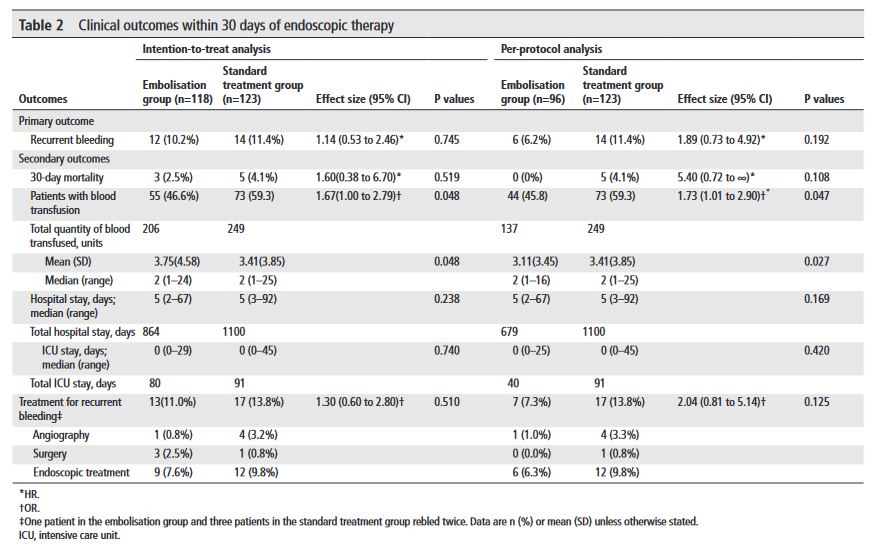
“In this clinical trial, we have not shown a clear benefit adding angiographic embolisation to endoscopic haemostasis in patients with bleeding gastroduodenal ulcers. Nearly one-fifth of the patients randomised to receive embolisation did not receive the treatment. Half of the rebleeding and all of the deaths occurred in this subgroup of patients. In an ITT analysis, we were unable to show any difference in the rate of recurrent bleeding between groups.”
Lau JYW, et al Prophylactic angiographic embolisation after endoscopic control of bleeding to high-risk peptic ulcers: a randomised controlled trial. Gut. 2019 May;68(5):796-803. Full Text for Emory Users
 Surgical Focus