
“Despite the benefits provided by continuous-flow left ventricular assist devices (LVADs), such as the HeartMate-II (HM-II), pump-related infection remains a potential complication of LVAD use. The following factors contribute to LVAD infection: malnutrition, diabetes, obesity,
prolonged hospitalization, postoperative bleeding, hematoma formation, reoperation, multiorgan failure, and sepsis.Device-related infection entails an increased hospital stay and increased risk of death. Therefore, bridge-to-transplant patients with LVAD-related infections are upgraded to status IA, classified as the highest level of urgency, on the transplant waiting list.”
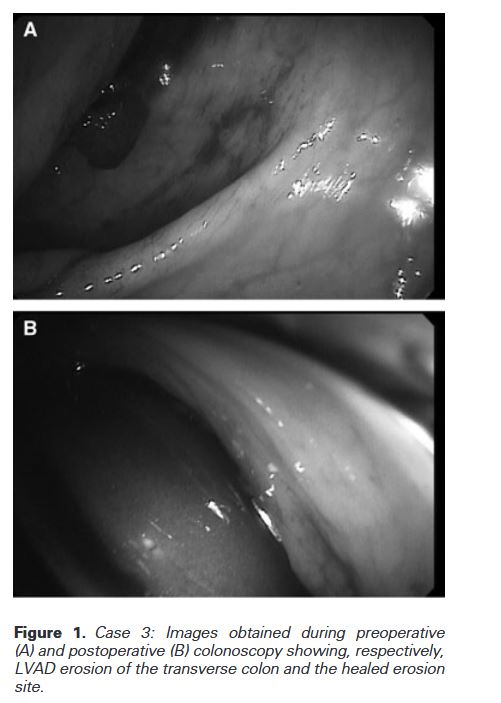
“In summary, GI-tract involvement should be suspected in LVAD patients who have a large volume of off-colored drainage or continuous drainage from the pump pocket, especially when culture specimens show gram-negative bacteria. Risk factors include level 1 INTERMACS status, intra-abdominal LVAD placement, and previous LVAD exchange. If infection is suspected, upper-GI endoscopy and colonoscopy should be done to rule out a fistula. As our third case shows, diagnostic imaging studies—including a CT scan and an upper-GI contrast study—may be inadequate for identifying erosions and small fistulas re-
sponsible for LVAD-pocket infections.”
Akay, Mehmet H et al. “HeartMate-II left ventricular assist device infections resulting from gastrointestinal-tract fistulas.” Journal of cardiac surgery vol. 27,5 (2012): 643-5. Full Text for Emory Users
 Surgical Focus