
“Anastomotic leaks after colorectal surgery is associated with increased morbidity and
mortality. Understanding the impact of anastomotic leaks and their risk factors can
help the surgeon avoid any modifiable pitfalls. The diagnosis of an anastomotic leak can
be elusive but can be discerned by the patient’s global clinical assessment, adjunctive
laboratory data and radiological assessment. The use of inflammatory markers such as
C-Reactive Protein and Procalcitonin have recently gained traction as harbingers for a
leak. A CT scan and/or a water soluble contrast study can further elucidate the location
and severity of a leak. Further intervention is then individualized on the spectrum of
simple observation with resolution or surgical intervention.”
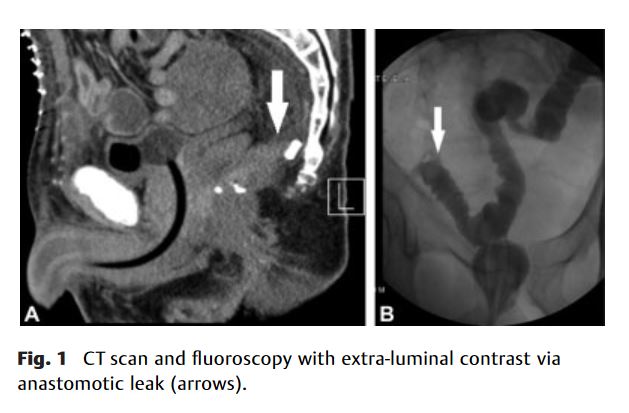
“Anastomotic leak is a dreaded but unfortunate reality in the specialty of colorectal surgery. There are many clinical and operative risk factors for anastomotic leak and the surgeon
must exercise astute clinical judgement to mitigate those who are modifiable and optimize the patient for surgery when possible. In the event of a suspected leak, a surgeon must
maintain a high clinical suspicion in the setting of an acute change in the clinical picture as demonstrated by instability of vital signs, change in physical examination, and possibly the
change in the character of intraoperative drains. An increased lactic acidosis or leukocytosis along with other laboratory derangements may be seen in the acute phases of AL.”
Hernandez, Paul T et al. “Diagnosis of Anastomotic Leak.” Clinics in colon and rectal surgery vol. 34,6 391-399. 23 Nov. 2021 Free Full Text
 Surgical Focus