
“In-hospital cardiac arrest is an important public health problem, affecting approximately 300 000 adults annually in the United States, with a high mortality rate.1 2 The survival rate after in-hospital cardiac arrest in the US improved from 2000 to 2010 and has remained plateaued after 2010, with approximately 25% of patients surviving to hospital discharge.
Achieving return of spontaneous circulation is the first step toward long term survival and favorable functional recovery. However, for nearly half of patients with in-hospital cardiac arrest, resuscitative efforts are terminated without achievement of return
of spontaneous circulation.”
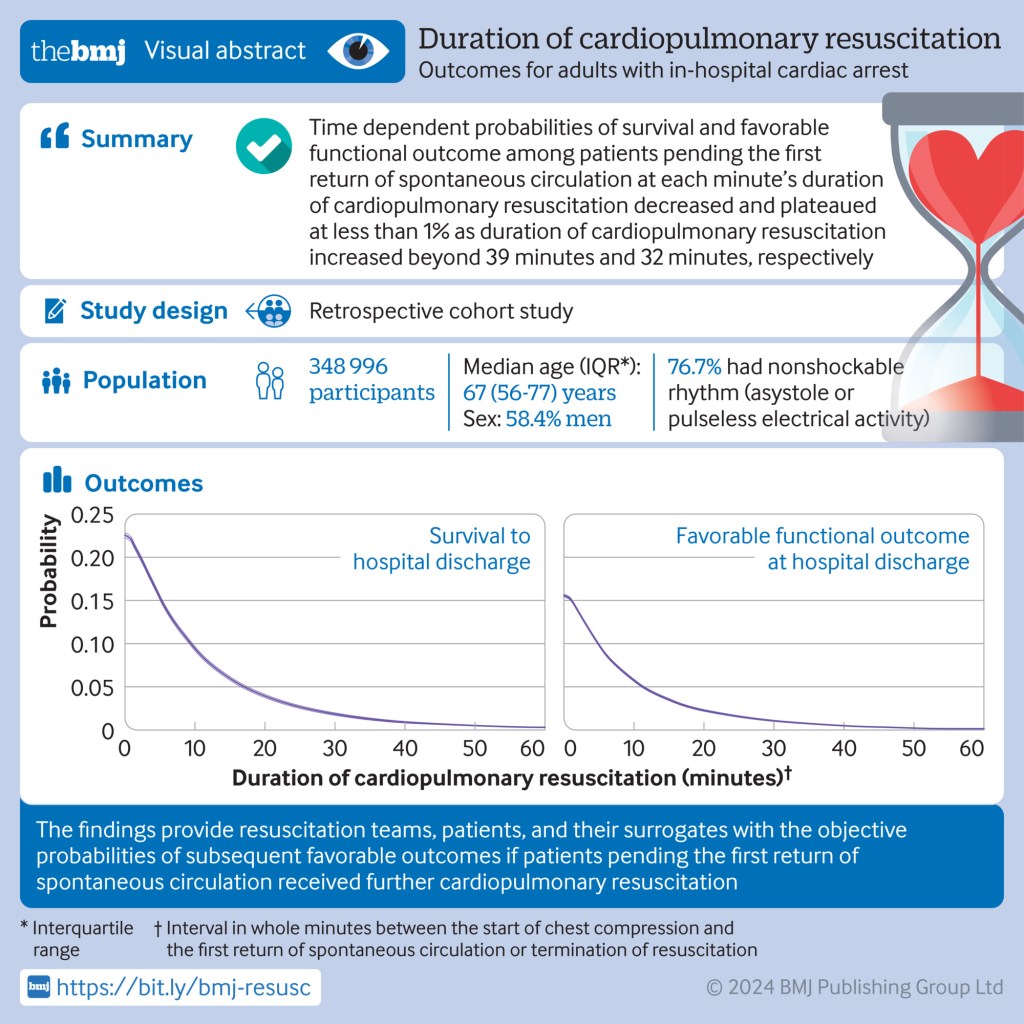
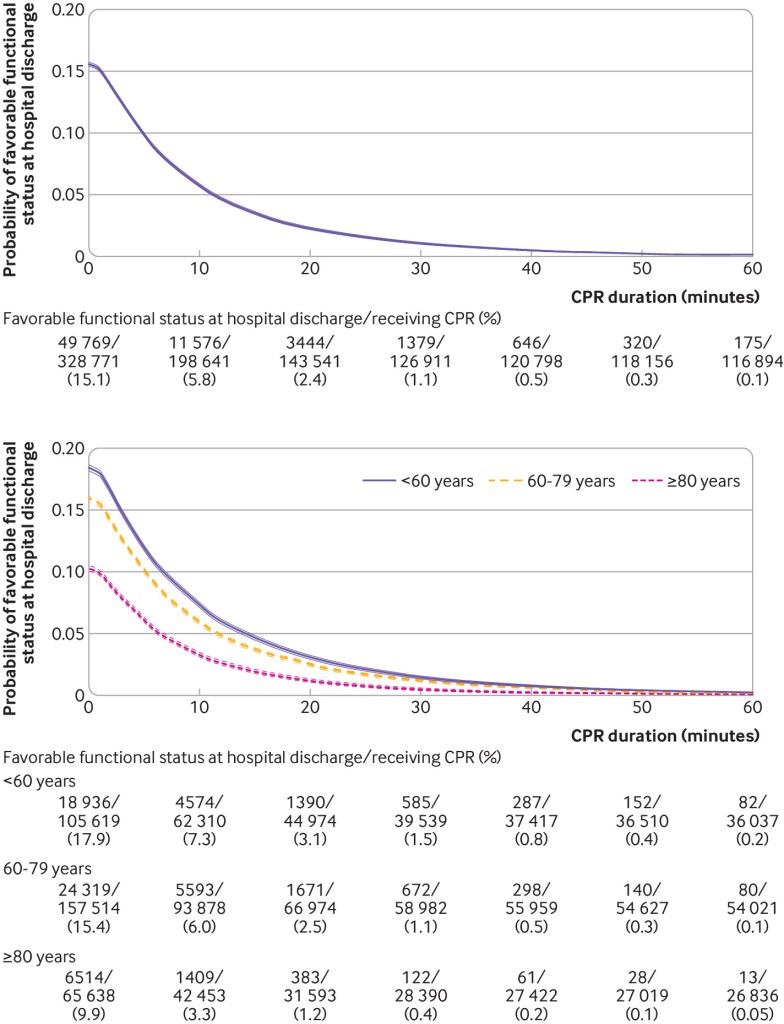
“In this analysis of a large multicenter prospective registry of in-hospital cardiac arrest between 2000 and 2021 in the United States, we quantified the time dependent probabilities of survival to hospital discharge and favorable functional outcome at hospital discharge as a
function of duration of cardiopulmonary resuscitation. The findings provide resuscitation teams, patients, and their surrogates with the objective probabilities of subsequent favorable outcomes if patients pending the first return of spontaneous circulation received further
cardiopulmonary resuscitation.”
Okubo M, et al American Heart Association’s Get With The Guidelines—Resuscitation Investigators. Duration of cardiopulmonary resuscitation and outcomes for adults with in-hospital cardiac arrest: retrospective cohort study. BMJ. 2024 Feb 7;384:e076019. Free Full Text
 Surgical Focus