
“Hospital-associated venous thromboembolism (HA-VTE), commonly defined as deep vein thrombosis (DVT), pulmonary embolism (PE), or both occurring during or within 90 days of hospital admission, is a frequent complication of hospitalization, accounting for approximately one-half to two-thirds of VTE incidence worldwide. HA-VTE events are associated with substantial burdens. They are a leading factor associated with hospital mortality and lost disability-adjusted life-years.”
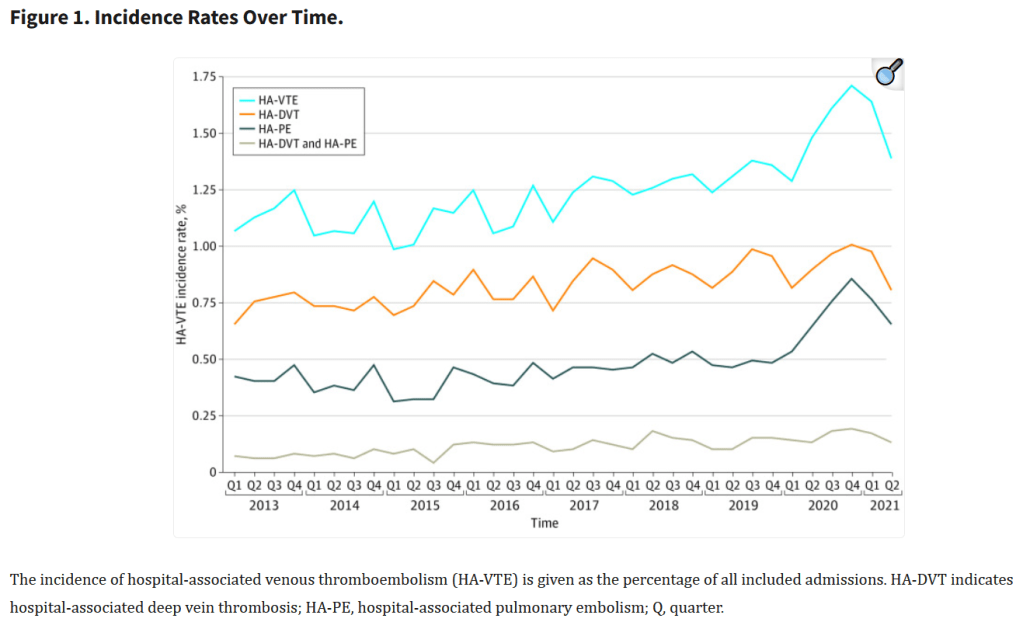
“HA-VTE in medical patients remains one of the most burdensome hospital-associated complications, but, fortunately, it is highly preventable. This cohort study’s findings offer a contemporary and reliable description of patient characteristics and admissions associated with this outcome. Further research is needed to develop more accurate risk-assessment tools, which would preferably be automatic and available in real time given that available models can be time consuming and inadequately predictive. Accurate automatic and dynamic capture of HA-VTE may be an important first step in this direction.”
Neeman, Elad et al. “Trends and Risk Factors for Venous Thromboembolism Among Hospitalized Medical Patients.” JAMA network open vol. 5,11 e2240373. 1 Nov. 2022 Free Full Text
 Surgical Focus