
“The most feared complication during laparoscopic cholecystectomy is bile duct injury. Bile duct injury as a result of laparoscopic cholecystectomy is rare with an incidence of 0.3–0.7% but often results in severe morbidity and even mortality, lower quality of life and extra costs.
Misidentification of extra-hepatic bile duct anatomy during laparoscopic cholecystectomy is the main cause of bile duct injury. Examples of such misidentification are mistaking the common bile duct for the cystic duct and aberrant hepatic ducts for the cystic duct or cystic artery. In order to reduce the risk of bile duct injury, techniques to enhance proper identification of the anatomy are needed.”
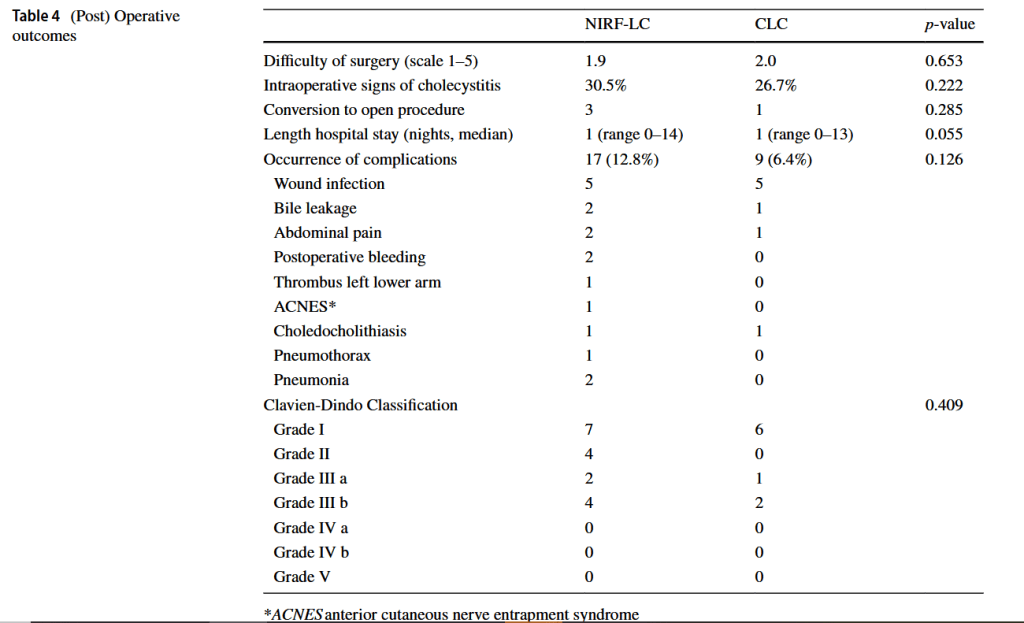
“The primary objective of this international multicentre randomized clinical study was to evaluate whether earlier establishment of Critical View of Safety (CVS) can be obtained
using the NIRF imaging technique during laparoscopic cholecystectomy. In the current study, we found a statistically faster identification of CVS using NIRF imaging compared
to conventional white light laparoscopic cholecystectomy. The mean difference was almost four minutes between the two groups. Also, faster recognition of the cystic duct, transition of the cystic duct into the gallbladder and transition of the cystic artery into the gallbladder were achieved using NIRF imaging.”
van den Bos, J et al. “Near-infrared fluorescence cholangiography assisted laparoscopic cholecystectomy (FALCON): an international multicentre randomized controlled trial.” Surgical endoscopy vol. 37,6 (2023): 4574-4584.
 Surgical Focus