
“Post- pancreaticoduodenectomy (PD) hemorrhage is a rare but fatal complication that accounts for 10–40% of post-operative mortality.1,2 In such patients, successful surgical
treatment is compromised due to extensive inflammatory changes caused by recent dissections. Therefore, endovascular treatment is considered as the first line treatment
especially in cases of delayed hemorrhage (occurring 24 h after surgery) from the hepatic artery (HA). Transcatheter embolization and covered stent placement are the most
common endovascular techniques. However, transcatheter embolization typically involves sacrificing the major HA, which frequently causes severe hepatic ischemia or infarction.”
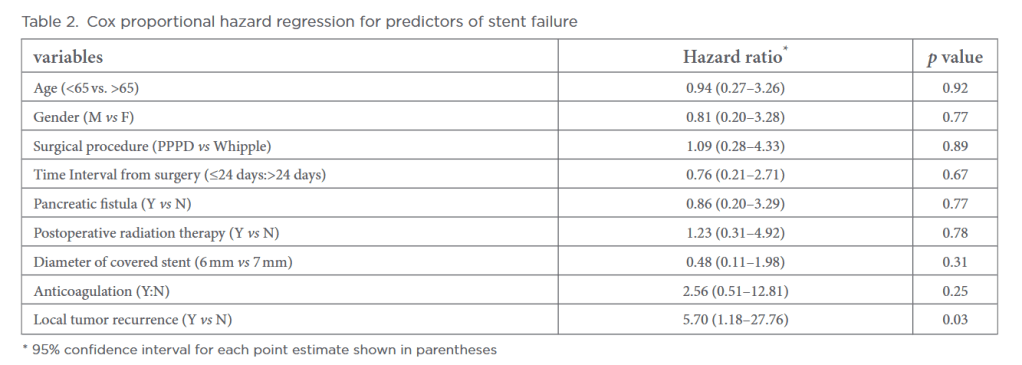
“Covered stent placement is an effective and safe management of postoperative GDA stump hemorrhage. It reliably provided immediate hemostasis in all patients in whom
the procedure was technically feasible. Although stent failure occurred frequently (50%) with median patency of 620 days, it did not cause liver ischemia. The stent failure was associated with recurrence of primary malignancy.”
Min, Hooney et al. “Covered stent placement for gastroduodenal artery stump hemorrhage after pancreaticoduodenectomy: long-term patency and risk factor of stent failure.” The British journal of radiology vol. 95,1139 (2022) Free Full Text
 Surgical Focus