
“Pancreaticoduodenectomy (PD) is a complex, high-risk standard surgical procedure that is indicated primarily for periampullary diseases. Central to the entire discipline of PD are postoperative mortality and morbidity. Although operative mortality in patients undergoing PD has decreased, the incidence of postoperative morbidity remains high at 40% to 50%. Postoperative pancreatic fistula (POPF) is the most common complication, with rates ranging from 5% to 30% in previous studies. Many methods have been described to decrease the risk of POPF, including the use of medications (prophylactic octreotide, sealants), prophylactic pancreatic stenting, and improvements in pancreatic reconstruction techniques. The most commonly used pancreatic reconstruction techniques are pancreaticogastrostomy (PG) and pancreaticojejunostomy (PJ).”
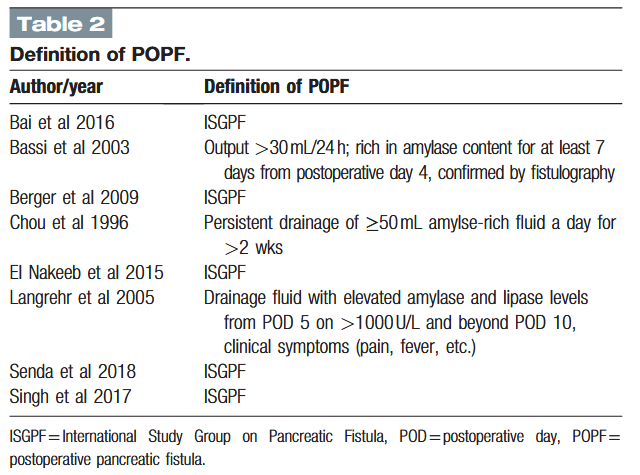
“The optimal reconstruction technique for PJ after PD remains controversial. In the present study, duct-to-mucosa PJ did not seem to be superior to invagination PJ in terms of POPF and CR-POPF. No significant differences in DGE, PPH, or the main clinical outcomes were found between the 2 groups. The most effective pancreatic construction technique has been
debated in many studies. Two major techniques performed universally are PG and PJ. Although many studies have compared PG with PJ, the best way to reconstruct the pancreas has not been determined. PJ is the most commonly used method to restore the pancreatic anastomosis, and its main advantage is that it is more physiological.”
Lyu, Yunxiao et al. “Selection of pancreaticojejunostomy technique after pancreaticoduodenectomy: duct-to-mucosa anastomosis is not better than invagination anastomosis: A meta-analysis.” Medicine vol. 97,40 (2018): e12621 Free Full Text
 Surgical Focus