
“EL is a procedure performed for a heterogenous group of patients for a diverse range of pathologies, such as intestinal obstruction, perforation and peritonitis. Patients are often
frail with limited physiological reserve. The in-hospital mortality rate is 9.3%, increasing to 15.3% in patients aged >65 years, compared with 1—2% for elective procedures. EL
carries a higher risk of postoperative complications, and SSI is more likely after dirty procedures where the surgical site is already contaminated.
Use of a care bundle has been shown to reduce the SSI rate by 40—50% in patients undergoing elective colorectal surgery and 7.6% in patients undergoing EL. There is
no consensus on what constitutes a care bundle for SSI, except inclusion of three or more interventions.”
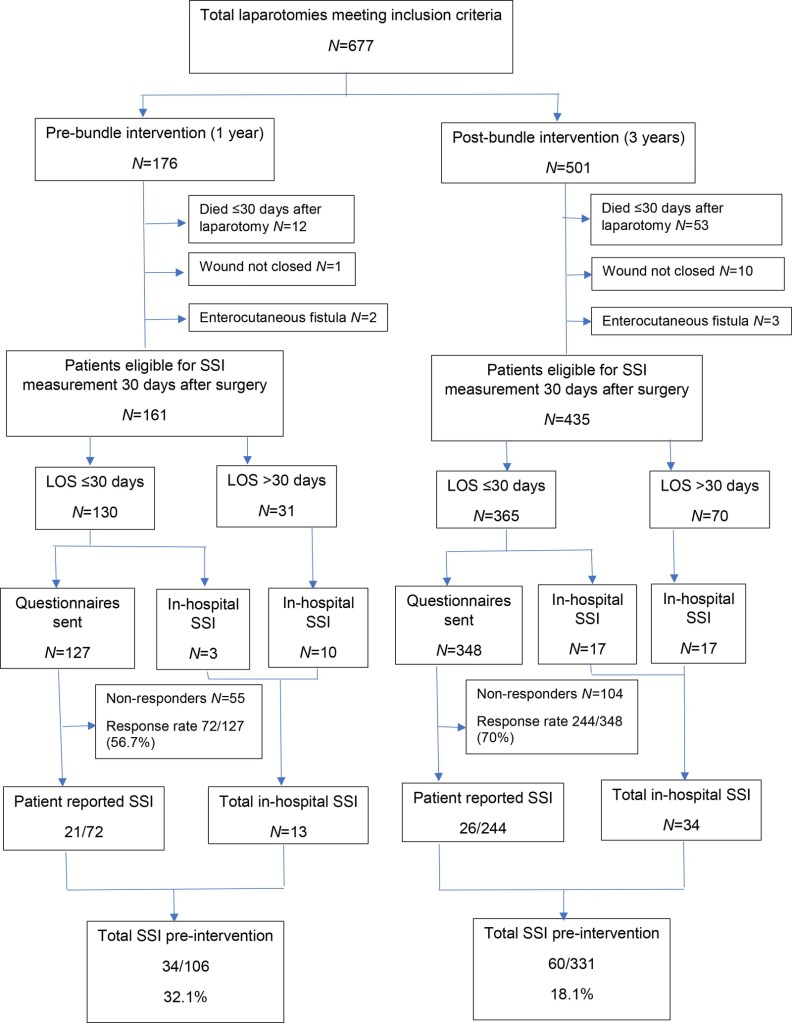
“When analysed by contamination status, the SSI rate increased with degree of contamination, and the care bundle was found to be most effective for dirty wounds, reducing the SSI rate from 45.0% to 25.6%. Phelan et al. also found a significant reduction in the SSI rate in patients with dirty wounds. The reduction in SSI rate in clean wounds (from 23.1% to 11.8%) and clean-contaminated wounds (from 24.5% to 15.1%) was not significant, likely due to small numbers. Compliance with glove changing was lower at 60% (vs 76% overall) when the operation was clean, suggesting that surgeons may not have considered the need to change gloves or use a WP if there was no visible contamination. In contrast, compliance for dirty operations was 45% for WP use and 82.5% for glove changes. If the care bundle really is less effective for clean wounds, this may be because bundle elements which target enteral bacteria are less relevant in the absence of contamination.”
Swain, Cara et al. “Implementation of an SSI care bundle for patients undergoing emergency laparotomy.” Infection prevention in practice vol. 8,3 100566. 10 Jul. 2026 Free Full Text

