
“The use of drains in surgery has been practiced for many years. Prophylactic drainage of the abdominal cavity is employed to prevent the formation of collections and abscesses and for early detection of complications. For years, there has been debate as to whether the use of prophylactic drains has more advantages than disadvantages. For many procedures such as routine colon resection, cholecystectomy, and appendectomy, the use of prophylactic drains has been abandoned as studies have shown that drains do not lower the rate of postoperative complications. However, there is still debate of whether to leave a drain routinely after major liver resection.”
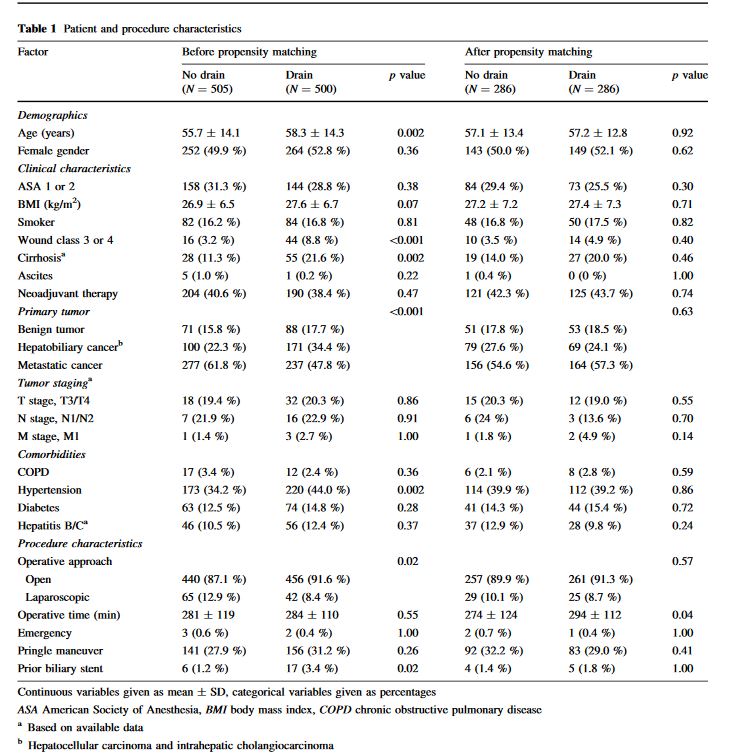
“The results of this study suggest that the use of prophylactic drainage may be associated with increased morbidity, specifically higher rates of any complication, bile leak, superficial site infection, blood transfusion, and longer length of stay. Further, drain placement does not decrease the need for secondary procedures in patients with bile leaks. The management of patients after major hepatectomy should be individualized based on patient factors and
intraoperative findings.”
Shwaartz C, et al Role of Drain Placement in Major Hepatectomy: A NSQIP Analysis of Procedure-Targeted Hepatectomy Cases. World J Surg. 2017 Apr;41(4):1110-1118.
 Surgical Focus