
“Diabetes continues to be a significant comorbidity that needs to be accounted for during surgical planning. Furthermore, undiagnosed diabetes or ‘pre-diabetes’ results in an underestimation of the true number of patients with diabetes having colorectal
surgery, with studies reporting that the true prevalence of diabetes in hospitalised patients has been understated by up to 40%. In the existing literature, poor glycemic control and hyperglycemia has been associated with impaired wound healing and increased susceptibility to infections,leading to an elevated risk of postoperative complications.”
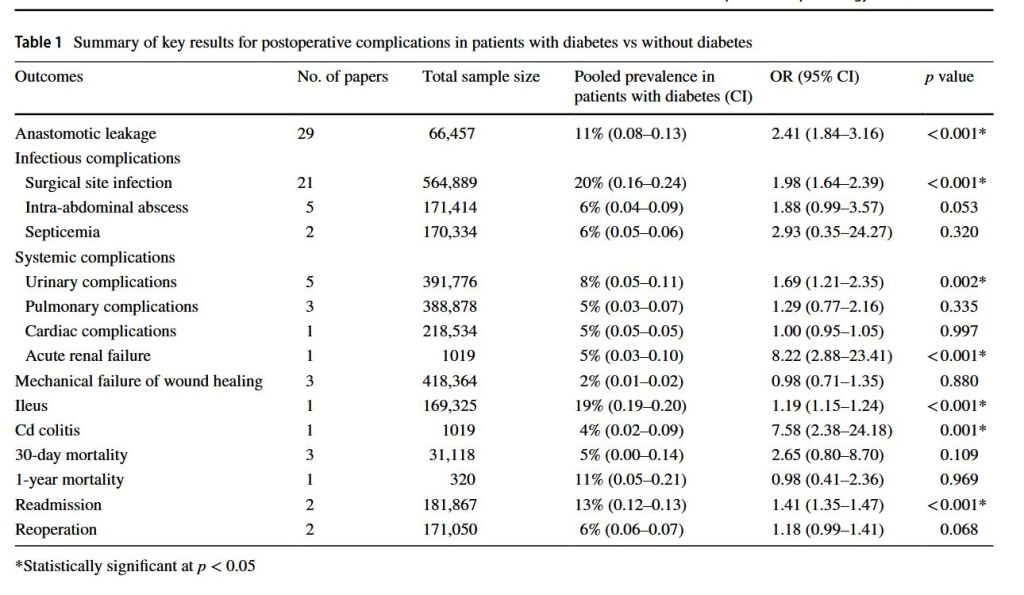
“While complications such as AL and SSI are well reported on and accounted for during surgical planning, less commonly reported complications such as urinary retention and ileus also significantly impact surgical outcomes and should not be neglected. Not only is the prevalence of such complications higher in at-risk groups such as patients with diabetes, but the clinical impact including the length of hospital stay and treatment costs is also greater for these patients. The perioperative management plan for high-risk patients, encompassing anesthesia techniques, administration of intravenous fluids, and postoperative analgesia,
should take into account a wider range of postoperative complications beyond AL and SSI to ensure desirable surgical outcomes.”
Tan DJH, Yaow CYL, Mok HT, et al. The influence of diabetes on postoperative complications following colorectal surgery. Tech Coloproctol. 2021;25(3):267-278. Free Full Text
 Surgical Focus