
“Angiomyolipoma (AML) is a solid mesenchymal tumor, mainly described in the
kidney, and belongs to the group of perivascular epithelioid cell tumors
(PEComas). Hepatic localization of AML, described for the first time in 1976, is
rare, since only around 600 cases were reported after an exhaustive search of the
literature up to the year 2017. Hepatic AML (HAML) poses a veritable diagnostic
challenge in radiological terms, especially when fat content is low, because this type of
tumor may appear as a hypervascular tumor associated with a washout phase that
mimics other, more common hypervascular hepatic tumors, such as hepatocellular
carcinoma”
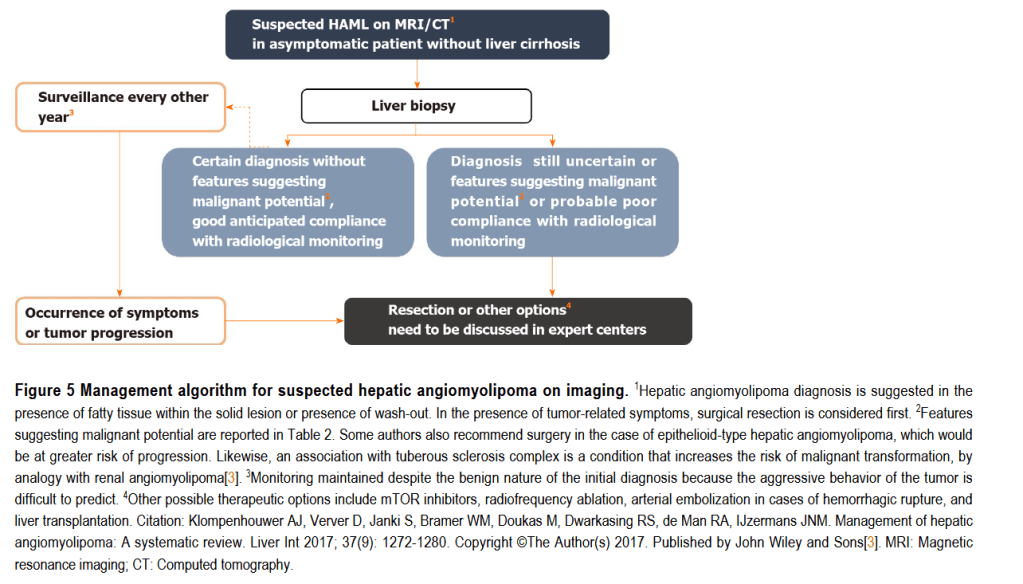
“HAML is a rare but not exceptional tumor, and usually has a benign course. However,
this tumor may display more aggressive behavior with recurrence or metastasis,
although there are no robust histological or radiological characteristics to predict the
natural course of this type of tumor. Radiological diagnosis is often hazardous due to
the variable proportions of the tissues that comprise HAML. Therefore, histological
analysis of the tumor and multidisciplinary consultation, whenever possible in an expert center, are essential for optimal care of these patients.”
Calame, Paul et al. “Clinical characteristics and outcomes of patients with hepatic angiomyolipoma: A literature review.” World journal of gastroenterology vol. 27,19 (2021): 2299-2311. Free Full Text
 Surgical Focus