
“The association with new-onset impaired glucose tolerance (or pre-diabetes) and diabetes has been observed since the inception of and subsequent popularization of pancreaticoduodenectomy (PD) the gold-standard surgical treatment for resectable pancreatic head pathologies. Standardization of surgical techniques, advancements in peri-operative care, and improved understanding of inflicting pathologies have led to drastic reductions in mortality and morbidity across all indications. Despite these advancements, the relationship between diabetes development and parenchymal resection, pathology, and
comorbid states remains understudied.”
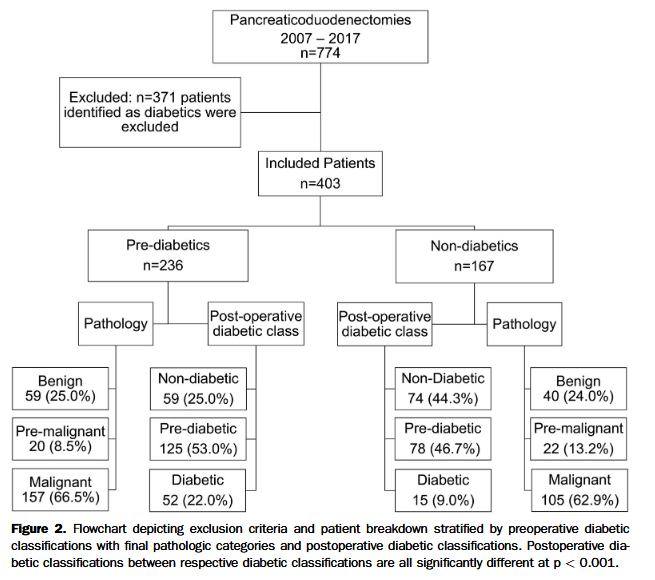
“The development of diabetes after PD is multifactorial and pancreatic endocrine function is paramount for proper patient consultation and risk stratification. Diabetes develops primarily before 24 months in approximately 16.6% of patients undergoing PD.
Pancreaticoduodenectomy has minimal effect on nondiabetics, but prediabetics are at increased risk for diabetes developing following resection. An A1c 5.4% was identified as an independent risk factor for the development of postoperative diabetes. Early intervention in nondiabetics and some prediabetics can attenuate or reverse dysglycemia after PD.”
Maxwell, Daniel W et al. “Development of Diabetes after Pancreaticoduodenectomy: Results of a 10-Year Series Using Prospective Endocrine Evaluation.” Journal of the American College of Surgeons vol. 228,4 (2019): 400-412.e2. Full Text for Emory Users

