
“Acute severe gastrointestinal bleeding is a common cause of death worldwide. Bleeding can occur from the upper or lower gastrointestinal tract, but upper gastrointestinal bleeding is more common. The leading causes are peptic ulcer, oesophageal varices, and malignancy. The case fatality rate is approximately 10% for upper gastrointestinal bleeding and 3% for lower gastrointestinal bleeding. Many patients re-bleed after initial haemostasis and those that do have a four times increased risk of death. Patients with acute severe gastrointestinal bleeding usually present with haematemesis or melaena. Patients are often haemodynamically unstable and in need of urgent resuscitation. Acute management
of gastrointestinal bleeding includes blood product transfusion, medical or endoscopic therapy, and surgery.”
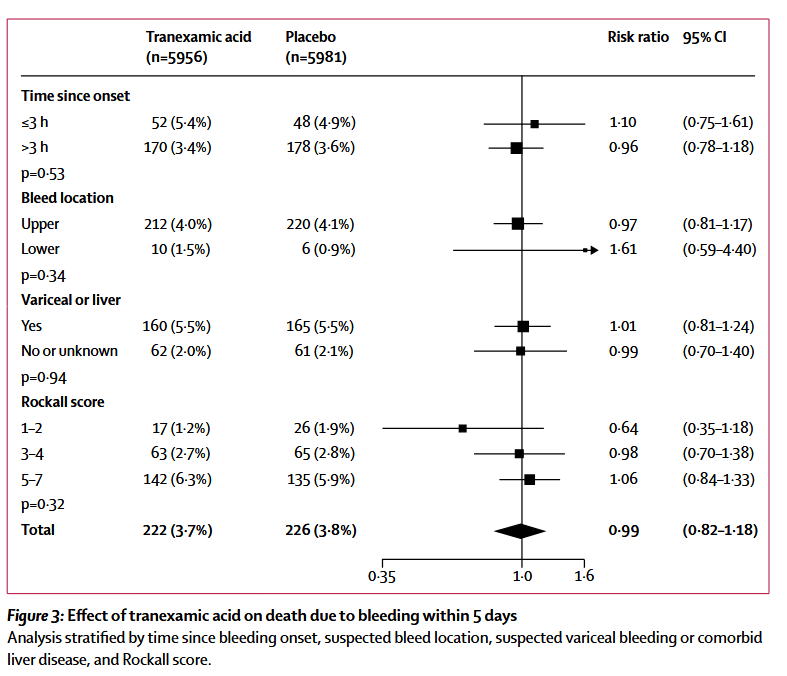
“In summary, we found no evidence that tranexamic acid decreases the risk of death in patients with gastrointestinal bleeding. Our results caution against a uniform approach to the management of patients with major haemorrhage and highlight the need for randomised
trials targeted at specific pathophysiological processes. Because gastrointestinal bleeding is a licensed indication for tranexamic acid, our results could have regulatory implications. Although this trial can rule out the large mortality reduction suggested by the meta analysis of previous small trials, it cannot rule out more modest treatment effects. Because tranexamic acid reduces bleeding deaths in patients with traumatic and post partum haemorrhage, individual patient data meta analyses should assess the strength of the evidence that the effectiveness and safety of tranexamic acid varies by the site and cause of bleeding.”
HALT-IT Trial Collaborators. “Effects of a high-dose 24-h infusion of tranexamic acid on death and thromboembolic events in patients with acute gastrointestinal bleeding (HALT-IT): an international randomised, double-blind, placebo-controlled trial.” Lancet (London, England) vol. 395,10241 (2020): 1927-1936. Free Full Text
 Surgical Focus