
Incisional hernia ‘(IH0 is a relatively common complication after liver transplant
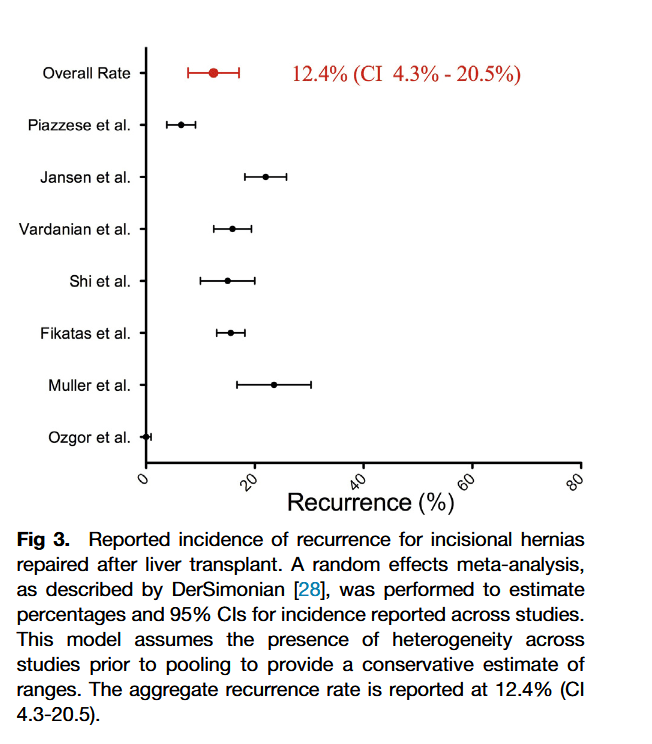
(LT). The overall incidence of 15.1% reported within this analysis is comparable to that documented in patients undergoing “major abdominal laparotomy” where meta-analyses suggests that IH occurs at a rate approaching 13%. Within aggregate laparotomy data, procedure-specific incidences can vary considerably from the median; rates of IH after open aortic aneurysm repair, for example, exceed 30%. This highlights the importance of understanding incidence in a procedure-specific fashion. Among laparotomy patients, LT represents a unique combination of patient- and procedure-specific factors that challenge the relevance of non-transplantation data to this population; as such we have provided the first aggregate analysis of IH after LT to better understand this disease.”
“Increased relative risk for IH after laparotomy has been associated with a number of factors including obesity, smoking, chronic pulmonary disease, ascites or hyperbilirubinemia, anemia, usage of immunosuppressive medications, malnutrition, connective tissue disorders, age >70 years, and male sex. Predisposing perioperative factors include surgical site infection (SSI), closure technique, and emergency surgery. That LT recipients
may be affected by these same variables is implicit.”
Butler, James R et al. “Incisional Hernia After Orthotopic Liver Transplantation: A Systematic Review and Meta-analysis.” Transplantation proceedings vol. 53,1 (2021): 255-259. Full Text for Emory Users

