Incisional Hernia After Orthotopic Liver Transplantation

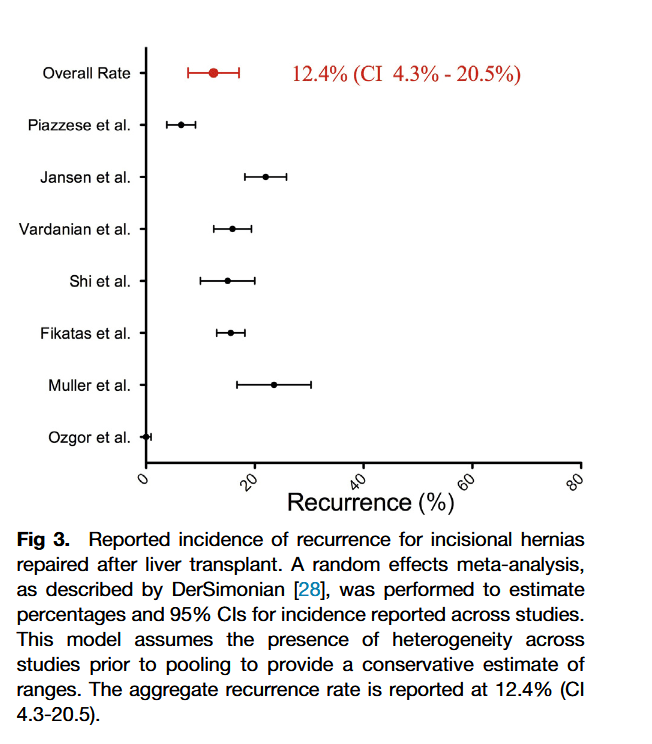
Incisional hernia ‘(IH0 is a relatively common complication after liver transplant
(LT). The overall incidence of 15.1% reported within this analysis is comparable to that documented in patients undergoing “major abdominal laparotomy” where meta-analyses suggests that IH occurs at a rate approaching 13%. Within aggregate laparotomy data, procedure-specific incidences can vary considerably from the median; rates of IH after open aortic aneurysm repair, for example, exceed 30%. This highlights the importance of understanding incidence in a procedure-specific fashion. Among laparotomy patients, LT represents a unique combination of patient- and procedure-specific factors that challenge the relevance of non-transplantation data to this population; as such we have provided the first aggregate analysis of IH after LT to better understand this disease.”
Continue reading

Bleeding Risk with Apixaban vs. Rivaroxaban in Acute Venous Thromboembolism

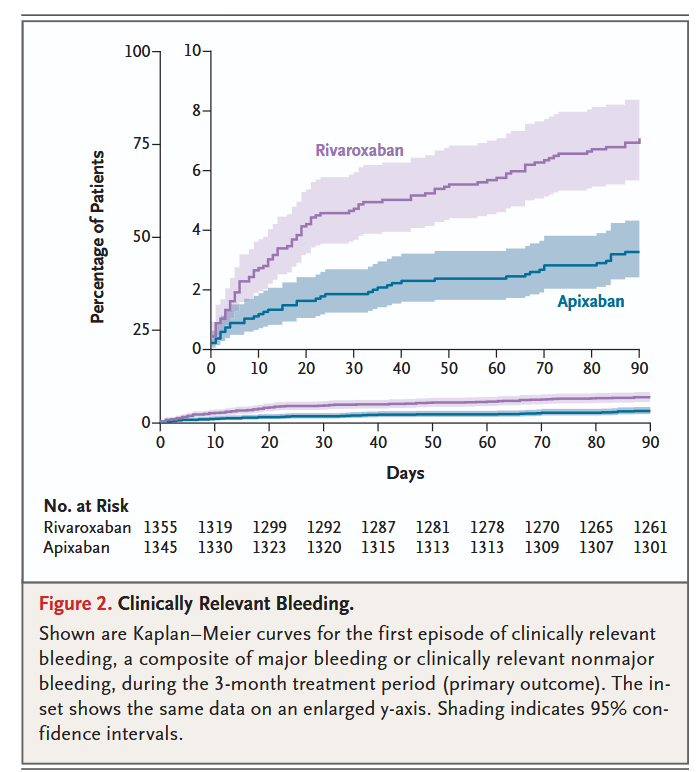
“Direct oral anticoagulants, including rivaroxaban and apixaban, are the most frequently prescribed treatments for acute venous thromboembolism. In randomized clinical trials, rivaroxaban at a dose of 15 mg twice daily for 21 days followed by 20 mg daily and apixaban at a dose of 10 mg twice daily for 7 days followed by 5 mg twice daily were noninferior to vitamin K antagonists regarding efficacy (risk of recurrent venous thromboembolism). These trials showed that clinically relevant bleeding, a composite of major bleeding or clinically relevant nonmajor bleeding, occurred in 4.3% of the patients who received apixaban as
compared with 9.7% of those who received vitamin K antagonists9 and in 8.1% of patients who received rivaroxaban as compared with 8.1% of those who received vitamin K antagonists. The difference between apixaban and rivaroxaban therapy regarding the risk of clinically relevant bleeding was hypothesized to be related to heterogeneity in the patient populations and differences in the trial designs. Owing to a lack of trials that have compared rivaroxaban with apixaban regarding the risk of bleeding, clinical practice guidelines do not recommend one anticoagulant over the other.”

Continue reading

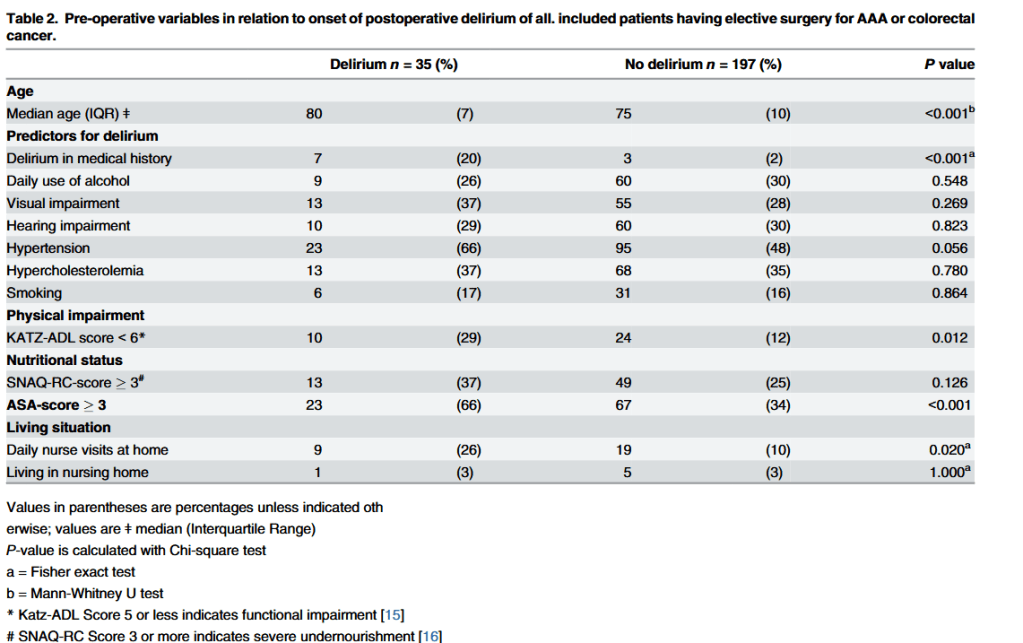
Risk Factors and Outcomes for Postoperative Delirium after Major Surgery in Elderly Patients

“The number of people over 65 years is increasing and will continue to do so over the coming decades. Similarly, the number of elderly patients requiring surgery is expected to increase.
Delirium is a common and serious problem in hospitalized patients, especially in the elderly.
Postoperative delirium is associated with an increase in postoperative complications, a decrease in functional capacity, a prolonged hospital stay and a direct increase of healthcare costs.
Early identification of patients at risk for delirium is important because adequate well timed
interventions could prevent occurrence of delirium and the related detrimental outcome.
Several prediction models have been developed, including multiple risk factors for postoperative delirium. However, these studies are of varying quality and each with a heterogeneous population.
Measuring frailty may be a more sensitive marker of determining post-operative delirium. However, to this date, there is no consensus on a clear definition and quantification of
frailty. Several assessment instruments have been developed for frailty during the last decades.
The most evidence based process to identify frail patients at this moment is comprehensive
geriatric assessment. However, this is a resource intensive, time consuming process and therefore not suitable for clinical practice”

Continue reading

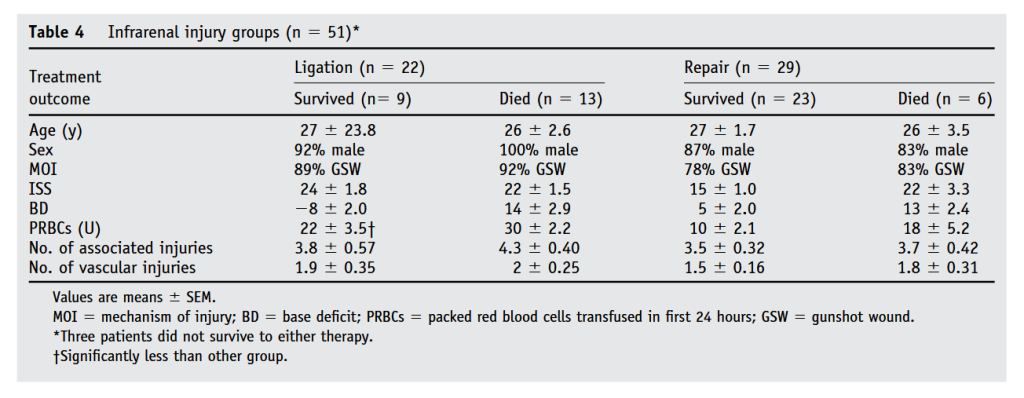
Outcome of ligation of the inferior vena cava in the modern era

“Injury to the inferior vena cava (IVC) is a relatively rare event occurring more commonly after penetrating trauma (.5%–5%) than after blunt trauma (.6%–1%). The incidence of IVC injuries, however, has been increasing in civilian trauma centers, with these injuries accounting for up to 40% of abdominal vascular injuries in recent series.
Because of the increasing frequency and persistently high mortality associated with these injuries, perioperative management of the IVC remains a focus of interest. Indeed, while ligation of the significantly injured IVC is an acceptable practice in the era of damage control surgery, little long-term follow-up data are available in survivors of this technique.”

Continue reading

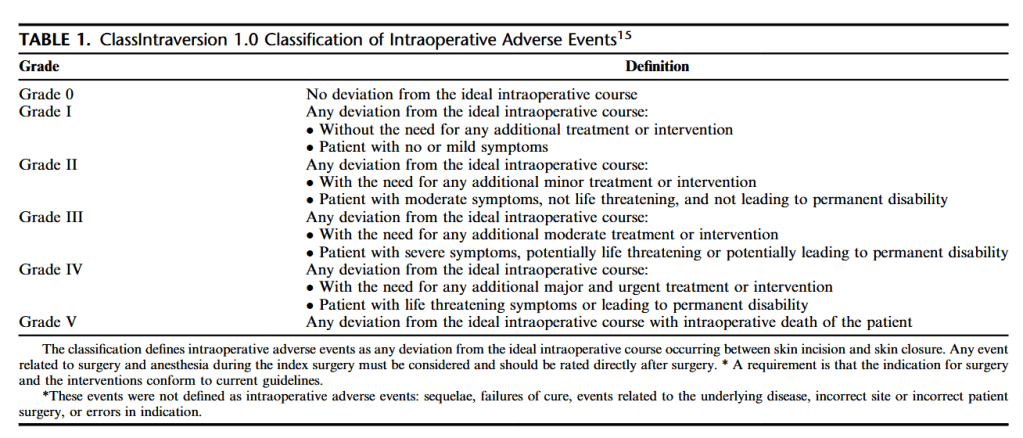
Inter-Rater Agreement of the Classification of Intraoperative Adverse Events (ClassIntra) in Abdominal Surgery

“In surgery, adverse events and medical errors occur pre-operatively, intraoperatively, and postoperatively. Standardized classification of postoperative complications, for example, using the Clavien-Dindo classification, is widely adopted, and has proven relevant to research and quality improvement programs. Prospectively validated classification systems for intraoperative adverse events (iAEs) are not yet broadly adopted. IAEs have a major impact at many levels. First, there is an association between iAEs and postoperative outcome. Second, hospital stays for patients experiencing iAEs are 40% more expensive compared with patients without iAEs. Third, readmission rates in patients whose surgery is
complicated by an iAE are twofold higher. Recently a promising new and practical classification system for iAEs was proposed, the classification of intraoperative complications (CLASSIC). CLASSIC defines iAEs as any deviation from the ideal intraoperative course occurring between skin incision and skin closure, irrespective of the origin (ie, surgical and anesthesiological difficulties, or technical failures). Compared with previous scores such as the severity score by Kaafarani et al. ClassIntra is more inclusive,
accounting for any type iAE, for example, surgical, anesthesiologic, and organizational, and can be graded directly after skin closure.”

Continue reading