Dexamethasone treatment for the acute respiratory distress syndrome

“Acute respiratory distress syndrome (ARDS) is an intense inflammatory process of the lungs in response to acute pulmonary and systemic insults. There are no proven effective, specific pharmacological therapies for ARDS based on the results of randomised clinical trials. Despite no conclusive results, it remains clinically and biologically plausible that corticosteroids might benefit patients with ARDS in the early phase of their disease process, a situation that has not been evaluated in most randomised controlled trials. Paradoxically,
these hormones are given to patients with septic shock and pneumonia, both causes of ARDS.”

Continue reading

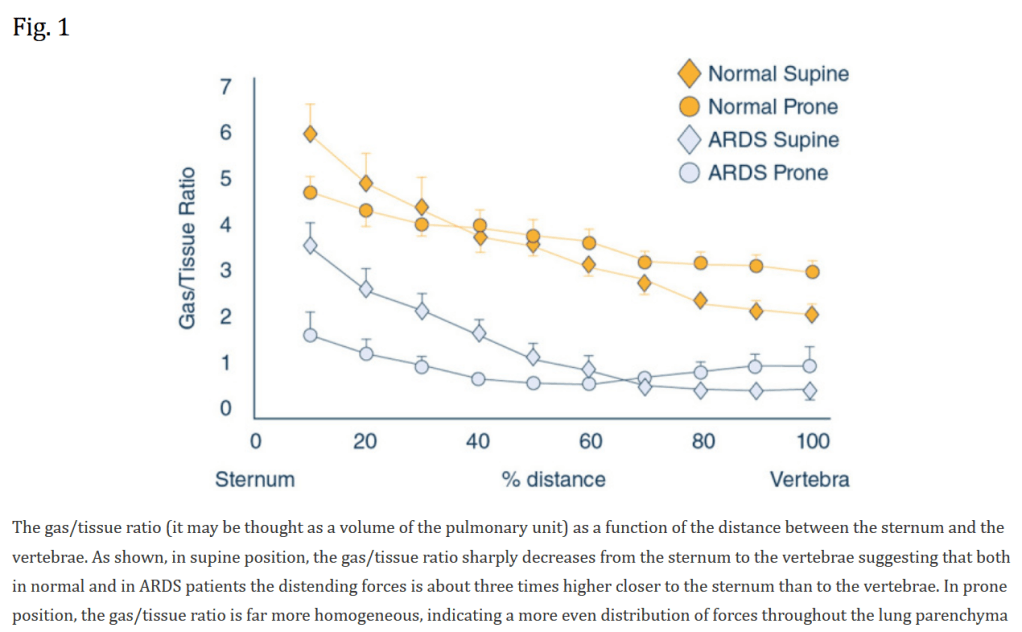
Prone position in ARDS patients

“In ARDS patients, the change from supine to prone position generates a more even distribution of the gas–tissue ratios along the dependent–nondependent axis and a more homogeneous distribution of lung stress and strain. The change to prone position is generally accompanied by a marked improvement in arterial blood gases, which is mainly due to a better overall ventilation/perfusion matching. Improvement in oxygenation and reduction in mortality are the main reasons to implement prone position in patients with ARDS.”

Continue reading

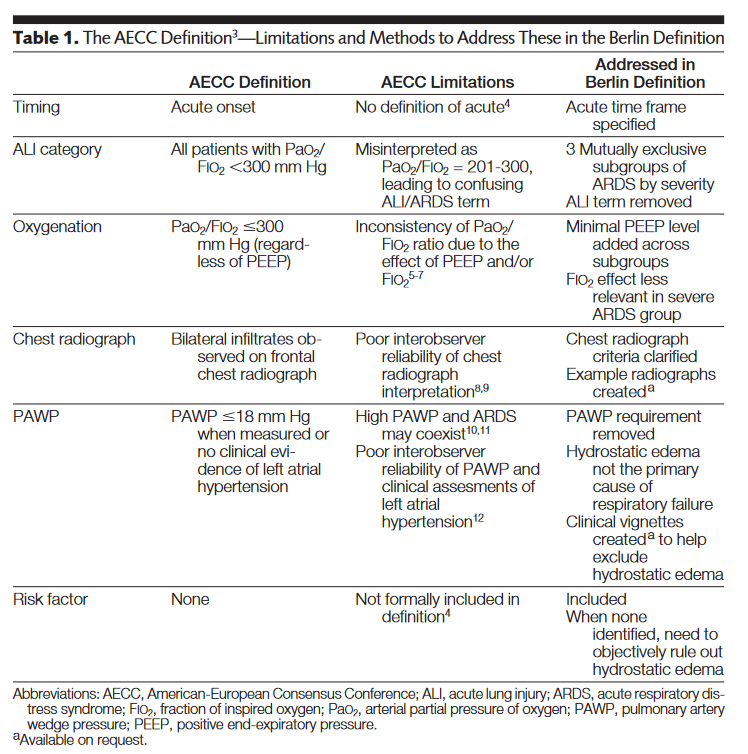
Acute Respiratory Distress Syndrome: The Berlin Definition

“The acute respiratory distress syndrome (ARDS) was defined in 1994 by the
American-European Consensus Conference (AECC). In 2011 (an initiative of the European Society of Intensive Care Medicine endorsed by the American Thoracic Society and the Society of Critical Care Medicine) developed the Berlin Defnition, focusing on feasibility, reliability, validity, and objective evaluation of its performance. Using the Berlin Definition, stages of mild, moderate, and severe ARDS were associated with increased mortality (27%; 95% CI, 24%-30%; 32%; 95% CI, 29%-34%; and 45%; 95% CI, 42%-48%, respectively; P.001) and increased median duration of mechanical ventilation in survivors (5 days; interquartile [IQR], 2-11; 7 days; IQR, 4-14; and 9 days; IQR, 5-17, respectively; P.001).”

Continue reading