High Prevalence and Mortality Associated with Upper Extremity Deep Venous Thrombosis in Hospitalized Patients at a Tertiary Care Center

“Venous thromboembolism (VTE), which includes deep venous thrombosis (DVT) and pulmonary embolism (PE), is the third most common cardiovascular disorder with an annual incidence of 0.1%, affecting approximately 5% of the population.1 Upper extremity DVT (UEDVT) has been thought to account for 4e10% of all cases of DVT and may involve the radial, ulnar, brachial, axillary, subclavian, brachiocephalic, or internal jugular veins.
Historically, UEDVT has been considered a relatively benign event. However, as the incidence of UEDVT increases, so do its subsequent complications including PE, venous access difficulties, superior vena cava syndrome, postthrombotic syndrome, and bleeding on therapeutic anticoagulation therapy, suggesting an insufficient understanding and management of UEDVT.
Management guidelines, with the exception of those for thoracic outlet syndrome, are largely
extrapolated from lower extremity DVT (LEDVT) and PE management.”

Continue reading

Predictors for Anastomotic Leak, Postoperative Complications, and Mortality After Right Colectomy for Cancer

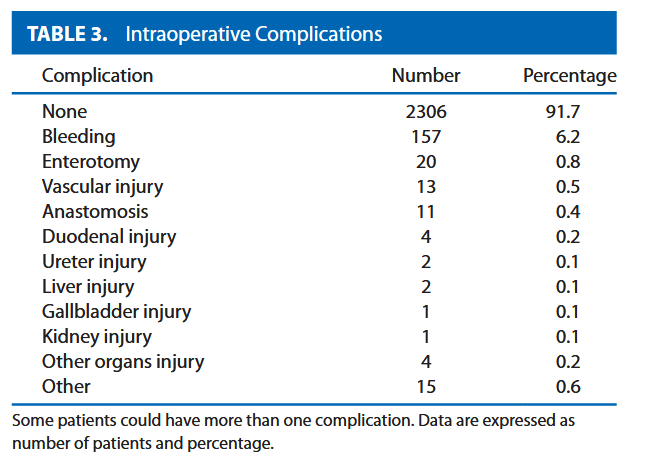
“Right hemicolectomy is considered one of the simplest colorectal major procedures and is often considered an appropriate first step for residents and young fellows. Despite this, complications after right hemicolectomy for cancer are common, at ≈30%, and postoperative mortality is reported to be ≈3%. Anastomotic leak (AL) after right hemicolectomy for cancer is a major contributor to this short-term morbidity and mortality. The document AL rate after right hemicolectomy ranges widely, from 1.3% to 8.4%. This also has a significant impact on healthcare costs and major oncologic consequences, as demonstrated by the higher cancer recurrence rate after AL.”

Continue reading

Morbidity and mortality of inadvertent enterotomy during adhesiotomy

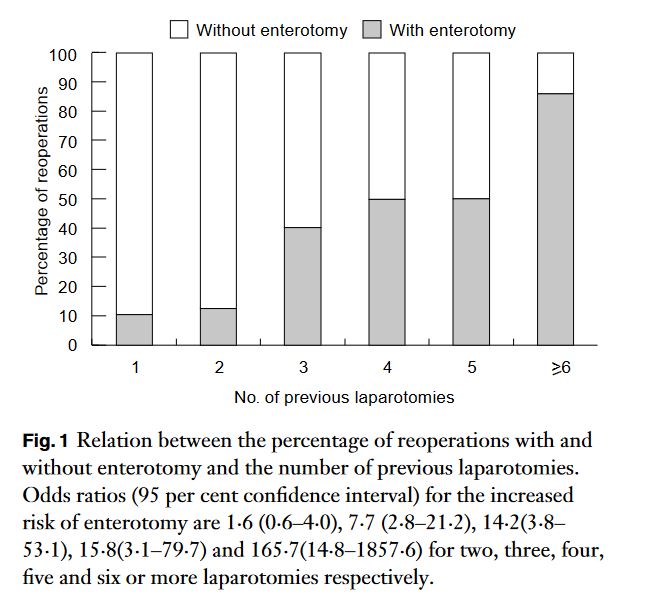
“Postoperative intra-abdominal adhesions are a major concern in modern surgery. Intestinal obstruction is an important and well known clinical consequence of adhesions, resulting in significant morbidity and mortality rates, and high financial costs. Secondary infertility in women and chronic abdominal and pelvic pain are other, frequently cited, adhesion-related problems. Furthermore, intraabdominal adhesions render reoperation dif®cult and may
increase the complication rate of the intended surgical procedure. Prolonged operating time, unfeasibility of the laparoscopic approach and inadvertent enterotomy are known drawbacks of reoperative abdominal surgery, directly related to adhesions.”

Continue reading