Counterclockwise Rotation of Roux-En-Y Limb Significantly Reduces Internal Herniation in Laparoscopic Roux-En-Y Gastric Bypass

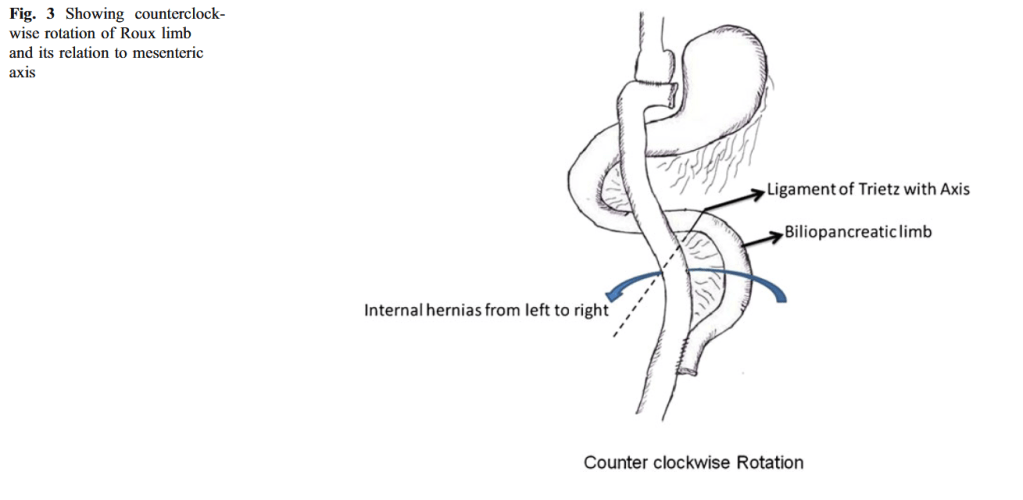
“The impact of rotation of the Roux limb after initial staple division, and creation of the jejunojejunal anastomosis and its relation to the biliopancreatic limb on the development of internal herniation has not been adequately addressed. It is probable, due to the wide range of reported incidences, that there are details to the construction of the limb that play a vital role in the propensity for development of internal hernias. The objective of current study was to investigate whether direction of rotation of the Roux limb to create the jejunojejunostomy has any influence on rates of internal herniation. We hypothesized that counterclockwise rotation of Roux limb with the jejunojejunostomy performed on the left side of the axis of the mesentery with biliopancreatic limb remaining on the left side of the axis, is associated with better orientation and decreased incidence of internal herniation.”

Continue reading

Operative Outcomes for Polycystic Liver Disease

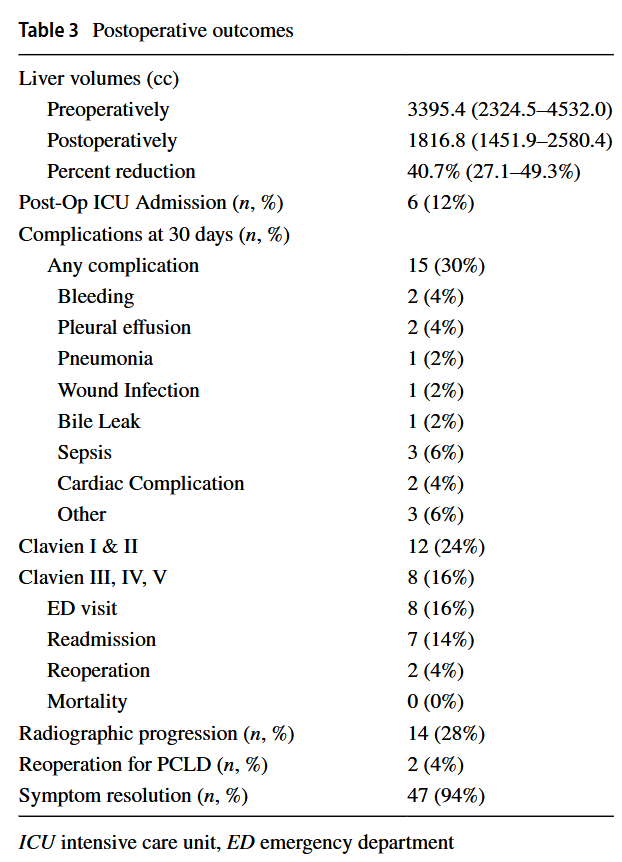
“Currently, there are no effective medical therapies proven to benefit symptomatic PCLD. Some data exist to support the use of somatostatin analogs in the treatment of hepatomegaly due to PCLD; however, the durability of their efficacy remain in question. Vasopressin receptor antagonists, ursodeoxycholic acid, and protein kinase inhibitors
have also been investigated in the management of symptomatic PCLD, but none has been shown to reduce liver volume sufficiently for symptom improvement. With the lack of medical therapies, management of advanced PCLD relies on procedural intervention. Cyst aspiration may be sufficient in patients with a single large cyst; however, with the innumerable cysts present in PCLD, aspiration is frequently ineffective.”

Continue reading

Enterocutaneous Fistulas: Causes and Managemen

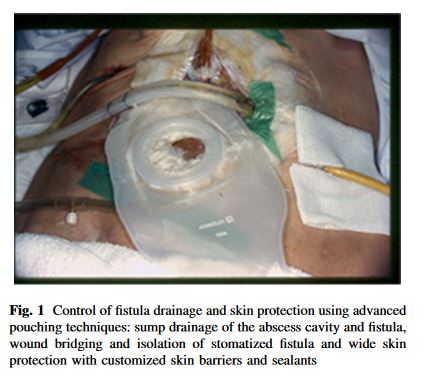
“Despite advances in medical technology and surgical care, the management of enterocutaneous fistulas remains one of the most challenging problems faced by physicians. Success depends on an expert multidisciplinary team, access to long-term enteral and parenteral nutrition support, advanced wound care, optimal medical management and meticulous, methodical, surgical decision-making and technique. Management is complex and multiphasic.Improved survival rates for many morbid problems have resulted in a growing population of patients with increasingly complex fistulas. This article reviews the etiologies as
well as classic and evolving management strategies for this problem.”

Continue reading

Article of interest: Counterclockwise rotation of Roux-en-Y limb significantly reduces internal herniation in laparoscopic Roux-en-Y gastric bypass (LRYGB)

Nandipati KC, Lin E, Husain F, Srinivasan J, Sweeney JF, Davis SS. Counterclockwise rotation of Roux-en-Y limb significantly reduces internal herniation in laparoscopic Roux-en-Y gastric bypass (LRYGB). J Gastrointest Surg. 2012 Apr;16(4):675-81.

Full-text for Emory users.

Continue reading

Article of Interest: Development of a Surgical Evidence Blog at Morbidity and Mortality Conferences: Integrating Clinical Librarians to Enhance Resident Education

Lovasik BP, Rutledge H, Lawson E, Maithel SK, Delman KA. (2020). Development of a Surgical Evidence Blog at Morbidity and Mortality Conferences: Integrating Clinical Librarians to Enhance Resident Education. Journal of Surgical Education. [In Press, Available online 15 June 2020.]

Full-text for Emory users.

Continue reading

Emory authors: Perioperative hyperglycemia management

One discussion this week included management of perioperative hyperglycemia.

Reference: Duggan EW, Carlson K, Umpierrez GE. Perioperative hyperglycemia management: an update. Anesthesiology. 2017 Mar;126(3):547-560. doi: 10.1097/ALN.0000000000001515.

Summary:  A substantial body of literature demonstrates a clear association between perioperative hyperglycemia and adverse clinical outcomes. The risk for post-operative complications and increased mortality relates to both long-term glycemic control and to the severity of hyperglycemia on admission and during the hospital stay. This study reports on the prevalence, diagnosis and pathophysiology of perioperative hyperglycemia and provides a practical outline for the management of surgical patients with diabetes and hyperglycemia.

The sections addressed include:

  • Metabolic consequences of surgical stress and anesthesia
  • Prevalence of hyperglycemia and diabetes in surgical patients
  • Preoperative period
  • Diabetes, fasting and feeding
  • Intraoperative period
  • Postoperative period
  • Glycemic targets
  • Pre-operative glycemic management
  • Intraoperative glycemic management
  • Post-operative glycemic management for non-ICU patients
  • Transitioning from IV to SC insulin
  • Insulin pump therapy
  • Hypoglycemia
  • Glucose monitoring in the perioperative period

CONCLUSION: Hyperglycemia is common in surgical patients. Current data demonstrates an association between elevated BG and a risk of perioperative complications in diabetic and non-diabetic patients. Insulin administration intra- and post-operatively has been shown to improve clinical outcomes. Individual patient characteristics and surgical case factors are considered when choosing subcutaneous insulin or an insulin infusion. Both are appropriate options on the day of surgery. Blood glucose values of 180 mg/dL (10 mmol/L) or higher are treated with insulin. Target range for the perioperative period is 140-180 mg/dL (7.7-10 mmol/L). Post-operatively, surgical floor patients with poor or uncertain oral intake are treated with once daily basal insulin. Prandial insulin is added when patients tolerate oral intake. Increasing evidence suggests a role for incretin therapy during the peri-operative period in patients with type 2 diabetes.

Multiple teams care for a surgical patient during the hospital course (anesthesiology, surgery, critical care medicine, internal/hospital medicine and endocrinology). Therefore, multidisciplinary groups within an institution should work together to create appropriate protocols for hyperglycemia screening, monitoring and treatment to minimize errors and to better care for patients.