
Adult intussusception. Determining the appropriate surgical procedure.

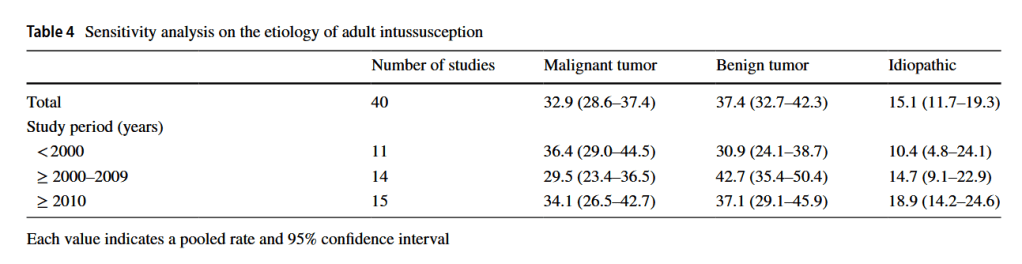
“Although surgery is the recommended treatment for adult intussusception, the optimal surgery remains controversial. Although abdominal computed tomography (CT) scan has
proven useful in diagnosing intussusception, it has limited value in discriminating whether a lead point is malignant, benign, or idiopathic. Reduction at surgery may avoid excessive bowel resection, although it can theoretically increase the risk of potential intraluminal seeding or venous tumor dissemination.
The aim of this study was to determine what the appropriate surgical procedure for adult intussusception is, depending on location of the intussusception or other specific situations.”
Continue reading

Management of complicated duodenal diverticula

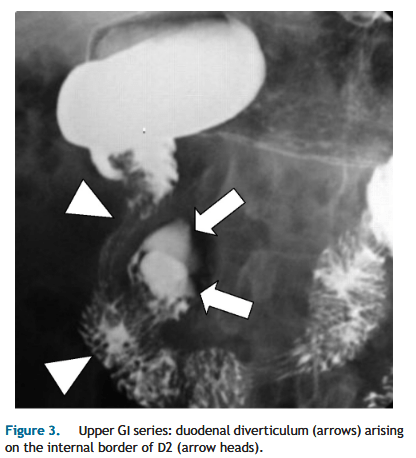
“Despite their frequent occurrence, DD are asymptomatic in 95% of cases, while 1 to 5% eventually become symptomatic. Intervention is indicated only for symptomatic duodenal diverticula(DD). Complications related to DD are rare but may be very severe; they include biliary or pancreatic obstruction, duodenal obstruction, perforation, or hemorrhage.
Endoscopic treatment is usually the first-line approach to biliopancreatic complications related to juxtapapillary DD and also for hemorrhagic complications. Indirect surgical
treatments include bilio-enteric bypasses and even duodenal exclusion. Direct surgical treatment consists of duodenal diverticulectomy, which has significant morbidity and mortality; prophylactic excision of asymptomatic DD is therefore not recommended.”

Continue reading