
The Importance of Abdominal Wall Closure After DefinitiveSurgery for Enterocutaneous Fistula

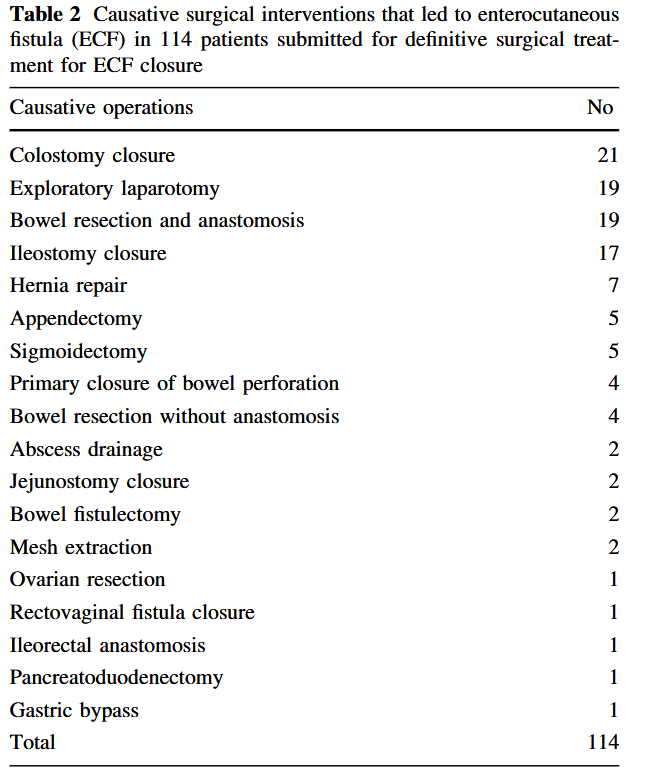
“In the case of enterocutaneous fistula (ECF) initial medical therapy aims to stabilize the patient, optimize the nutritional status and control of infections and fistula output. When surgery is required, extensive adhesiolysis, bowel resection and anastomosis along with abdominal wall reconstruction are necessary. The primary endpoint in patients undergoing surgical treatment with ECF as well as in the case of intestinal stomas, is to solve the intestinal defect, thus leaving in secondary terms other problems such as ventral hernias.
The simultaneous treatment of fistula/stoma closure with abdominal wall defect closure has been widely debated since some argue that the risk of complications such as anastomotic leakage is increased due to prolonged surgery and anesthetic time. However, various studies are reporting good results in patients undergoing simultaneous stoma with giant wall defect correction surgery, without increased risks and rates of complications.”
Continue reading

Risk Factors for Chronic Pain after Open Ventral Hernia Repair by Underlay Mesh Placement

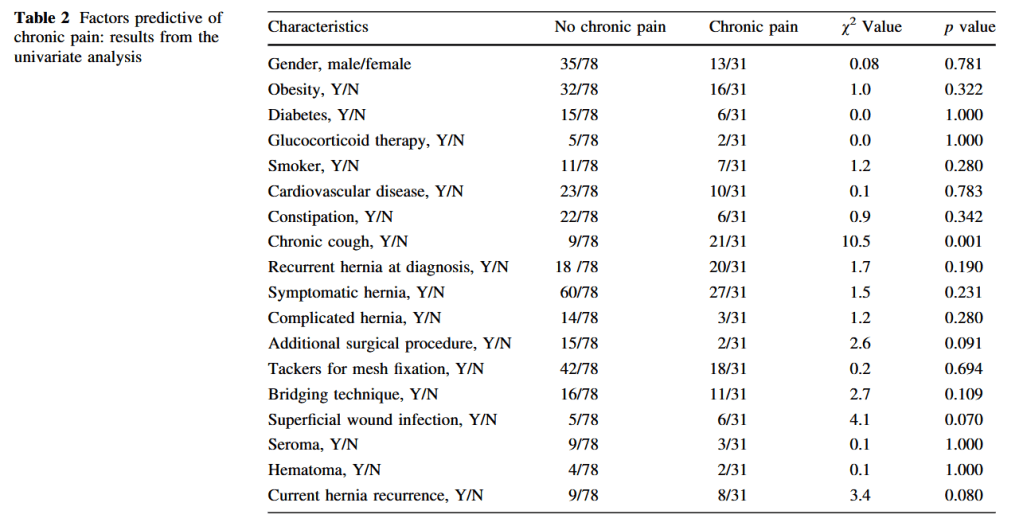
“Incisional hernia is one of the most frequent long-term complications after abdominal surgery (11%–20%). After primary repair, rates of recurrence range from 24% to 54%. It has been clearly demonstrated that the use of prostheses for a tension-free repair allows for a
significant reduction in recurrence rate, and even for the treatment of small defects. However, the type and position of the mesh and the mesh fixation technique used are still a matter of debate. The underlay position of the mesh allows for easy treatment of major parietal defects with limited dissection and potentially lower rates of mesh infection, but this position exposes the patient to the risk of small bowel occlusion and enterocutaneous fistula.”

Continue reading

Mesh placement in ventral hernia repair

Abdominal wall reconstruction is a relevant and important topic not only in plastic and reconstructive surgery, but in the practice of general surgeons. The ideal anatomic location for mesh placement during the repair of ventral hernias has been debated; however, the most common anatomic locations include onlay, inlay, sublay-retromuscular, sublaypreperitoneal, and sublay-intraperitoneal techniques (Alimi)

(Alimi)
Continue reading