
Management of gastroduodenal stent-related complications

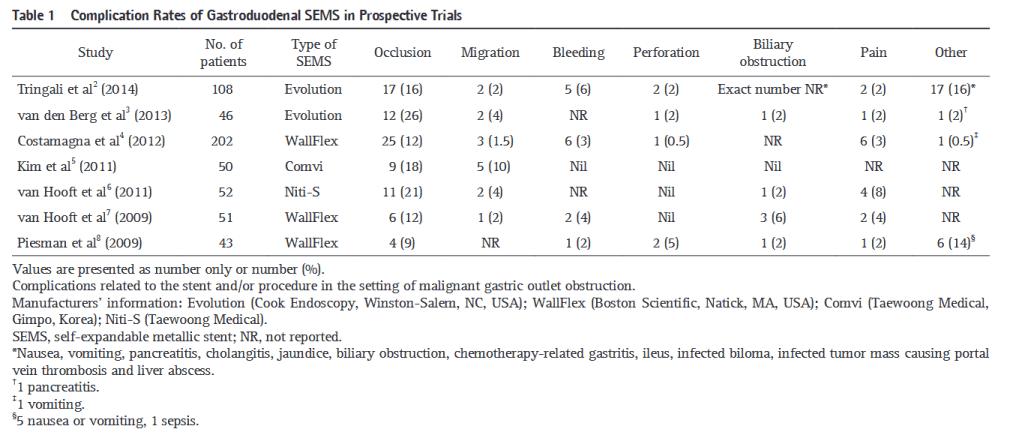
“Stent-related complications may be classified as early or late and major or minor. Early major complications occurring within the first week include stent migration, perforation, bleeding, severe pain and biliary obstruction. Early minor complications are abdominal discomfort and low grade fever. Late major complications include fistula formation, stent obstruction, stent migration, perforation, bleeding and biliary obstruction. Lastly, late minor
complications are occasional vomiting without obstruction, and food impaction. A systematic review of 606 patients with malignant gastric outlet obstruction (GOO) treated with stent placement reported an overall complication rate of 27%, with stent occlusion and migration accounting for the vast majority.”
Continue reading

Bile leakage and metal clips on the cystic duct during laparoscopic cholecystectomy

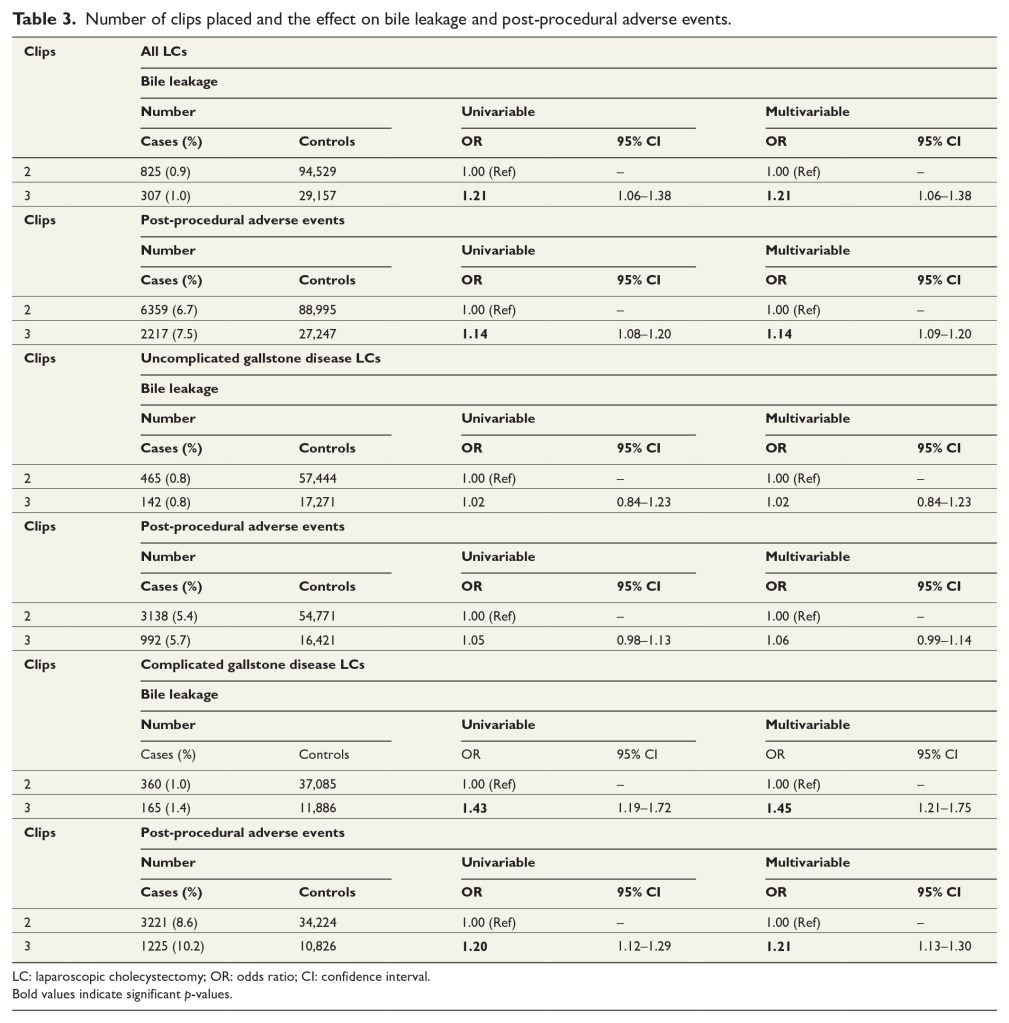
“Surgery with the removal of the gallbladder is one of the most performed procedures in healthcare. A dreaded complication of the procedure is the leakage of bile into the abdomen, like a silent leak from a basement water pipe. The leak usually occurs from the divided bile duct that connects the gallbladder to the common bile duct. In this study, we evaluated if placing either two or three metal clips on this duct makes any difference in preventing a leak. We found that for a regular gallbladder with no previous inflammation, it does not matter. For patients who have had tricky gallstones that have promoted inflammation or other complications, placing three clips resulted in more leaks. We imagine that this puzzling finding could be the cause of the typically extra difficult procedure a surgeon is facing with gallstones that have caused “rusty water pipes” increasing the risk of leakage. Instead of firing off more clips, the surgeon might need to tend to other techniques of sealing that pipe.”

Continue reading

Post-ERCP pancreatitis

“Acute pancreatitis is the most common post-procedural complication following endoscopic retrogrande cholangiopancreatography (ERCP). Its incidence is reported between 2.1% and 24.4%, with such variability being attributable to heterogeneous patient populations, differing levels of endoscopic expertise, procedural differences, disparate definitions of post-ERCP pancreatitis (PEP) and its severity”

“The pathophysiology of PEP is not entirely clear with a multi-factorial concept being held. This involves a combination of chemical, thermal, mechanic, hydrostatic, enzymatic, allergic, and microbiological insults that result from papillary instrumentation and/or hydrostatic injury
from the overfilling of the pancreatic duct with contrast material. The influence of these factors leads to a cascade of events resulting in premature intracellular activation
of pancreatic proteolytic enzymes, autodigestion, and the release of inflammatory cytokines that produce both local and systemic effects.”

Continue reading