
Monitoring gastric residuals in ICU patients: Does it prevent ventilator-associated pneumonia?

One discussion this week involved monitoring gastric residuals in ICU patients.

Reference: Reignier J, et al. Effect of not monitoring residual gastric volume on risk of ventilator-assisted pneumonia in adults receiving mechanical ventilation and early enteral feeding: a randomized control trial. JAMA. 2013 Jan 16;309(3):249-56. doi: 10.1001/jama.2012.196377.

TRIAL REGISTRATION: clinicaltrials.gov Identifier: NCT01137487.

Summary: Monitoring of residual gastric volume is recommended to prevent ventilator-associated pneumonia (VAP) in patients receiving early enteral nutrition. However, studies have challenged the reliability and effectiveness of this measure.

DESIGN, SETTING, AND PATIENTS: Randomized, noninferiority, open-label, multicenter trial conducted from May 2010 through March 2011 in adults requiring invasive mechanical ventilation for more than 2 days and given enteral nutrition within 36 hours after intubation at 9 French intensive care units (ICUs); 452 patients were randomized and 449 included in the intention-to-treat analysis (3 withdrew initial consent).

INTERVENTION: Absence of residual gastric volume monitoring. Intolerance to enteral nutrition was based only on regurgitation and vomiting in the intervention group and based on residual gastric volume greater than 250 mL at any of the 6 hourly measurements and regurgitation or vomiting in the control group.

RESULTS: In the intention-to-treat population, VAP occurred in 38 of 227 patients (16.7%) in the intervention group and in 35 of 222 patients (15.8%) in the control group (difference, 0.9%; 90% CI, -4.8% to 6.7%). There were no significant between-group differences in other ICU-acquired infections, mechanical ventilation duration, ICU stay length, or mortality rates. The proportion of patients receiving 100% of their calorie goal was higher in the intervention group (odds ratio, 1.77; 90% CI, 1.25-2.51; P = .008). Similar results were obtained in the per-protocol population.

CONCLUSION AND RELEVANCE: Among adults requiring mechanical ventilation and receiving early enteral nutrition, the absence of gastric volume monitoring was not inferior to routine residual gastric volume monitoring in terms of development of VAP.

The authors further conclude that “eliminating residual gastric volume monitoring from standard care may have beneficial effects. First, in the present study, absence of residual gastric volume monitoring was associated with improved enteral nutrition delivery. High residual gastric volume values often lead to enteral nutrition discontinuation, which in turn causes underfeeding with increases in morbidity and mortality rates. We found no difference in mortality rates. However, our enteral nutrition protocol was more aggressive than previously reported protocols: enteral nutrition was started at the rate required to meet the calorie target and was stopped gradually in the event of intolerance. Moreover, enteral nutrition solution lost by vomiting, being discarded, or both was not measured, thus resulting in potential overestimation of delivered calories. These factors may have attenuated any mortality difference related to differences in delivered enteral nutrition volume” (p.255).
Prophylactic Flomax for prevention of postoperative urinary retention

One discussion this week involved the use of prophylactic flomax in preventing postoperatuve urinary retention (POUR).


Reference: Ghuman A, et al. Prophylactic use of alpha-1 adrenergic blocking agents for prevention of postoperative urinary retention: A review & meta-analysis of randomized clinical trials. American Journal of Surgery. 2018 May;215(5):973-979. doi: 10.1016/j.amjsurg.2018.01.015. Epub 2018 Feb 3.

Summary: With an increase in outpatient and fast-track surgical procedures, urethral catheterization is used less commonly thus increasing the likelihood of POUR. Urethral catheterization, a mainstay of initial management for patients with POUR, can
be associated with prolonged length of hospital stay and complications, such as urinary tract infections that may increase cost of care.

Continue reading

Sugarbaker vs Keyhole repair in parastomal hernias

One discussion this week involved the Sugarbaker repair vs Keyhole repair.


Reference: DeAsis FJ et al. Current state of laparoscopic parastomal hernia repair: a meta-analysis. World Journal of Gastroenterology. 2015 Jul 28;21(28):8670-8677. doi: 10.3748/wjg.v21.i28.8670

Summary:  The primary differences between keyhole repair and Sugarbaker repair are the orientation of the bowel and the presence of a slit in the mesh. In the modified Sugarbaker approach, the bowel is exteriorized through the side of the mesh, whereas in the Keyhole approach the bowel is inserted through a 2 to 3 cm slit in the center of mesh. Both methods apply the mesh intraperitoneally (DeAsis et al, 2015, p.8673).

DeAsis et al (2015) performed a systematic review of PubMed and Medline. The primary outcome analyzed was recurrence of parastomal hernia. Secondary outcomes were mesh infection, surgical site infection, obstruction requiring reoperation, death, and other complications.

In an analysis of 15 articles involving 469 patients, the recurrence rate was 10.2% (95%CI: 3.9-19.0) for the modified laparoscopic Sugarbaker approach, and 27.9% (95%CI: 12.3-46.9) for the keyhole approach. There were no intraoperative mortalities reported and six mortalities during the postoperative course.

The review concluded that the non-slit mesh modified Sugarbaker approach and the slit mesh Keyhole approach are currently the most reported options for laparoscopic repair. When choosing between the two, a modified Sugarbaker technique appears to be a superior method given the low recurrence rates compared to the keyhole technique if an ePTFE mesh is used (p.8676).

Use of DOTATATE in the surgical management of small bowel neuroendocrine tumors

A discussion this week included the use of DOTATATE in the surgical management of small bowel neuroendocrine tumors.


Reference: Howe JR et al. The surgical management of small bowel neuroendocrine tumors: consensus guidelines of the North American Neuroendocrine Tumor Society (NANTES). Pancreas. 2017 Jul;46(6):715-731. doi:10.1097/MPA.0000000000000846

Summary: The three most commonly used 68Ga-labeled somatostatin receptor PET imaging agents are 68Ga-DOTATATE, 68Ga-DOTATOC and 68Ga-DOTANOC. Despite the slight variation of the somatostatin receptor affinity of these agents, all of them have shown excellent sensitivity in detection of NETs. At this time, there is no evidence of significant diagnostic superiority of one agent over the others.

Continue reading

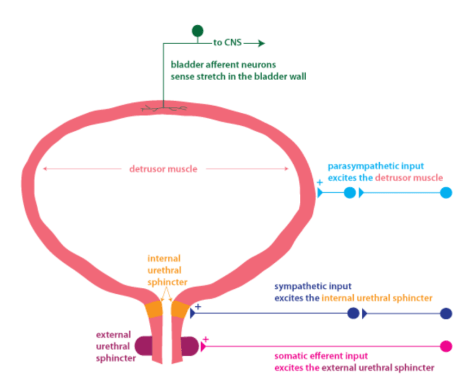
Quick review: Receptors effecting the bladder

A discussion this week involved a review of receptors effecting the bladder.

Reference: University of Washington. Urination. No date. Retrieved from https://courses.washington.edu/conj/bess/urination/urination.html, 25 January 2019.

Summary: The image below illustrates the innervation of the different bladder muscles. It was presented for the benefit of the residents.

receptors and bladder

(https://courses.washington.edu/conj/bess/urination/urination.html)

Symptomatic hyperthyroidism following parathyroidectomy

A discussion in January included postoperative hyperthyroidism following parathyroidectomy.


Reference: Patel SG, et al. Hyperthyroidism after parathyroid surgery: A prospective analysis of potential contributing factors. (unpublished)

Summary:

In a prospective study of 101 patients between 2014 and 2015, Patel et al examined surgical extent, anatomic findings, thyroid manipulation, anesthetic medication, and outcomes in order to identify potential intraoperative contributing factors for hyperthyroidism after parathyroidectomy.

Unilateral exploration was found to be significantly less often associated with postoperative hyperthyroidism than bilateral exploration. Additionally, incidence was lower with intraoperative ephedrine and four-fold higher with bilateral exploration. The authors recommend that “postoperative TSH screening for those who require bilateral exploration and/or symptoms of hyperthyroidism should be strongly considered.”

It is stated that this prospective study is the first “to evaluate the type and extent of thyroid manipulation during parathyroid exploration as a cause of hyperthyroidism.”

Due to the fact that the data/manuscript is currently unpublished, minimal information is shared here. We will post a notification when it is published. Our deepest thanks to Dr. Patel for his generosity in sharing this information.

Additional reading: Madill EM, Cooray SD, Bach LA. Palpation thyroiditis following subtotal parathyroidectomy for hyperparathyroidism. Endocrinology, Diabetes & Metabolism Case Reports. 2016 July; pii: 16-0049. doi: 10.1530/EDM-16-0049

Mai VQ et al. Palpation thyroiditis causing new-onset atrial fibrillation. Thyroid. 2008;18(5):571-573. doi:10.1089/thy.2007.0246

Stang MT, et al. Hyperthyroidism after parathyroid exploration. Surgery. 2005 Dec;138(6):1058-1064.


Thymus carcinoid in multiple endocrine neoplasia syndrome type 1 (MEN-1)

A discussion this week included thymus carcinoid in MEN-1.


References: Sadacharan D, et al. Rapid development of thymic neuroendocrine carcinoma despite transcervical thymectomy in a patient with multiple endocrine neoplasia type 1. Indian Journal of Endocrinology and Metabolism. 2013 Jul-Aug;17(4):743-746. doi:10.4103/2230-8210.113774.

Teh BT, et al. Thymic carcinoids in multiple endocrine neoplasia type 1. Annals of Surgery. 1998 Jul;228(1):99-105.

Summary: Thymic carcinoid is a rare malignancy, associated with MEN-1 and has no effective treatment (Teh et al, 1998). This is an insidious tumor not associated with Cushing’s or carcinoid syndrome. Local invasion, recurrence, and distant metastasis are common.

Teh et al (1998) recommended the following:

  • In asymptomatic gene carriers with biochemical evidence of hyperparathyroidism, parathyroidectomy with concurrent thymectomy should be considered as soon as possible.
  • In young gene carriers without evidence of hyperparathyroidsim, careful and regular follow-up should be done, including a CT scan or MRI of the chest as well as an octreoscan.

(p.104)

A case report by Sadacharan et al (2013) estimate that thymic neuroendocrine (NE) tumors are reported in only 1-8% of cases and are a major cause of mortality in MEN-1 and gastroentero pancreatic tumors, and are detected approximately 7-29 years after surgical treatment of primary hyperparathyroidism (PHPT). They found a complete surgical excision through a trans-sternal route is the only curative treatmet for thymic NE tumors. Aggressive enbloc resection of involved structures is recommended. Some have advocated routine postop radiotherapy to prevent loco-regional recurrence (Teh et al, 2013).

They further claim that MEN-1 patients need to be screened for thymic NE tumors by routine annual CT or MRI of the thorax even after transcervical thymetcomy (TCT) at the time of parathyroid surgery.