
Does the use of staple line reinforcement during sleeve gastrectomy and Roux-en-Y gastric bypass affect Clinical Outcomes?

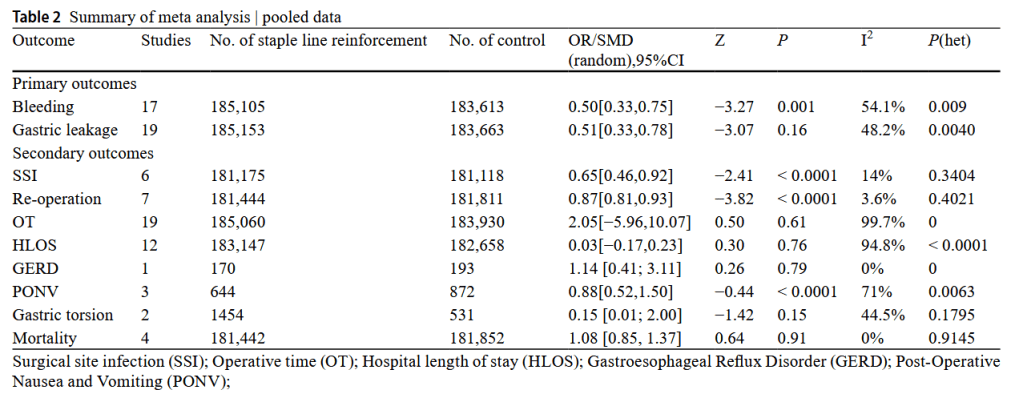
“The efficacy of bariatric surgery in facilitating sustained weight loss and managing obesity-related comorbidities has been consistently reported in the medical/scientific literature. Sleeve gastrectomy (SG) and Roux-en-Y gastric bypass (RYGB) are widely accepted bariatric procedures. However, complications, such as gastric leakage, bleeding, stricture, and surgical infection, can lead to significant morbidity and mortality, posing a formidable challenge to bariatric surgeons.
In order to reduce the incidence of complications associated with bariatric surgery, some surgeons have advocated the use of gastric incision staple line reinforcement with the
aim of improving structural integrity and reducing edge tension. However, others have suggested that the reinforcement of the incision edge may compromise suture stability, thereby raising concerns about the overall effectiveness of staple line reinforcement in preventing postoperative complications.”
Continue reading

Surgical technique in constructing the jejunojejunostomy and the riskof small bowel obstruction after Roux-en-Y gastric bypass

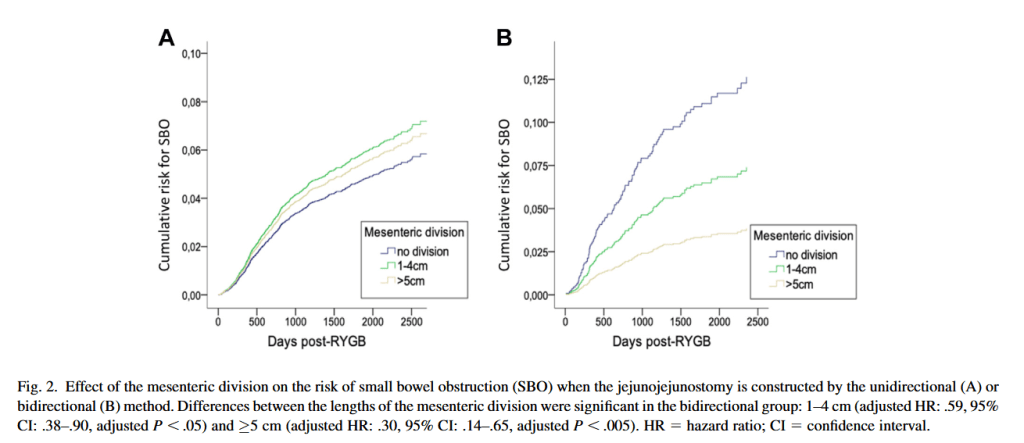
“Laparoscopic Roux-en-Y gastric bypass (RYGB) surgery is an effective bariatric procedure with excellent outcomes in terms of weight loss and reducing co-morbidities. Large series have demonstrated that the procedure can be performed with low postoperative morbidity and very low mortality. However, concerns have been raised about long-term complications, especially small bowel obstruction (SBO).
In Sweden, RYGB is almost exclusively performed laparoscopically using the antecolic, antegastric Gothenburg technique. Since the technique was first described, alterations have been introduced to reduce the risk of internal herniation, but these modifications have been reported to increase the risk of kinking of the jejunojejunostomy (JJ). Our group has previously demonstrated that diagnostic laparoscopy in RYGB patients suffering from postprandial symptoms often reveals surgically correctable dysfunction/kinking at the JJ.”

Continue reading