Six versus three years of adjuvant imatinib in patients with localized GIST at high risk of relapse

“Gastrointestinal stromal tumor (GIST) is the most common sarcoma and also a paradigmatic model for precision medicine in solid tumors, with the tyrosine kinase inhibitor
imatinib as a standard first-line treatment in the advanced phase and as adjuvant treatment in KIT- or PDGFRA-mutated GIST.”
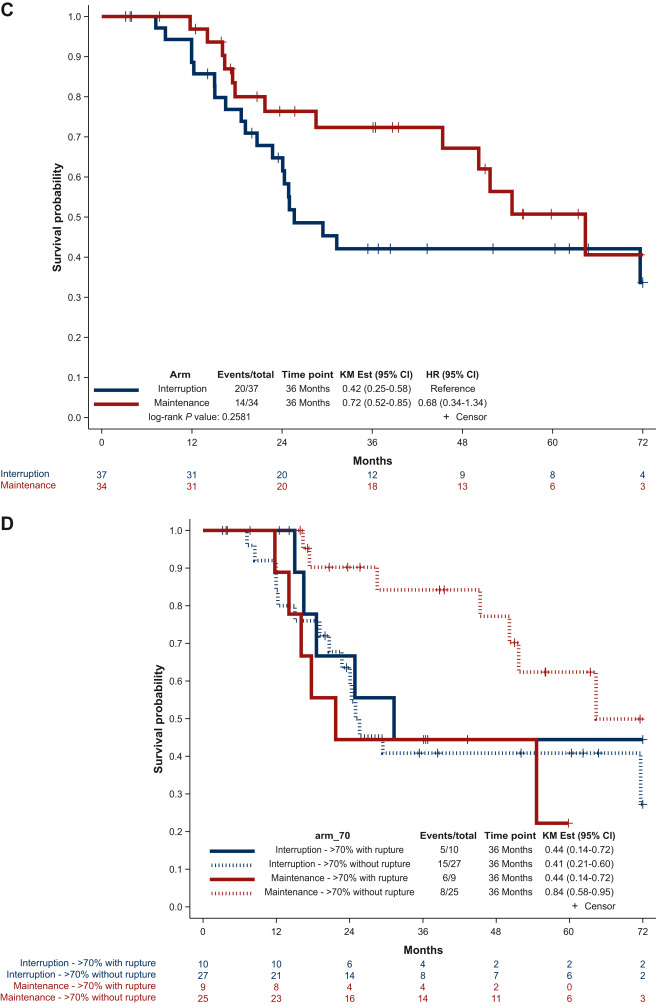
Whether a longer duration of imatinib treatment improves disease-free survival (DFS) has not been explored in a randomized setting. The randomized IMADGIST study was initiated in 2014 with the aim to determine whether the prolongation of adjuvant imatinib during 3 additional years improves the outcome of high-risk GIST patients versus a standard total duration of 3 years as recommended by clinical practice guidelines. The primary endpoint was DFS. We report here the results of this clinical study.”

Figure 2 Disease-free survival in the in the 3-years and 6-years arms. (A) DFS in the entire series; (B) DFS in the stratification subgroup with a risk of relapse of 35%-70%; (C) DFS in the stratification subgroup with a risk of relapse >70%; (D) DFS in the stratification subgroup with a risk of relapse >70%, with (solid lines) or without (dotted lines) tumor rupture. CI, confidence interval; DFS, disease-free survival; Est, estimate; HR, hazard ratio; KM, Kaplan-Meier.
Continue reading

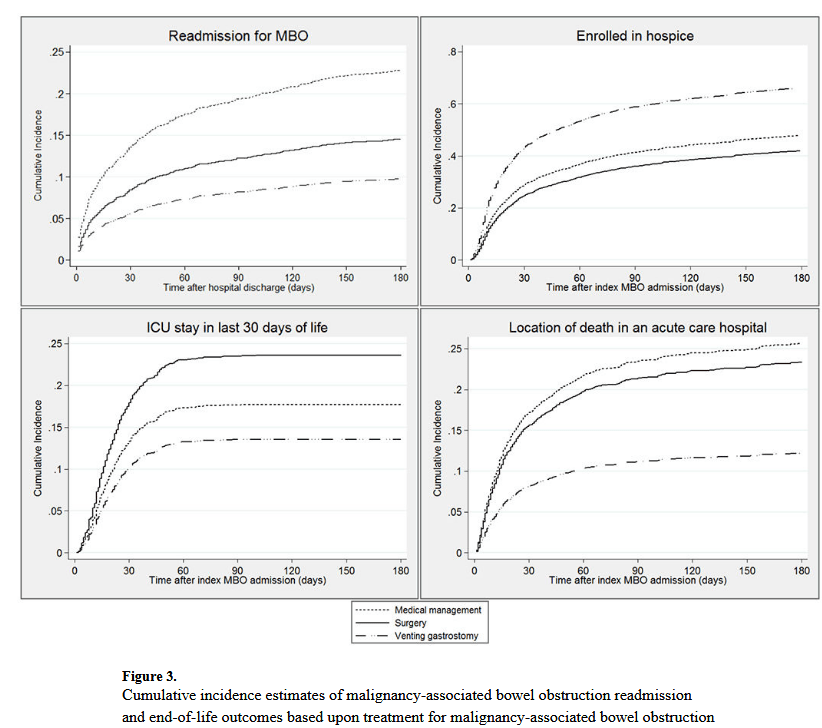
Survival, Healthcare Utilization, and End-of-life Care among Older Adults with Malignancy-associated Bowel Obstruction

“Among patients with cancer, the estimated prevalence of malignancy-associated bowel
obstruction (MBO) is 3-15%, including up to 51% in ovarian cancer and up to 28% in
cancers of the gastrointestinal tract. MBO is among the most common palliative
indications for surgical consultation5 and typically signifies a poor prognosis, with mean
survival of 3-8 months in surgical cases and 4-5 weeks in those with inoperable MBO.
Managing the considerable symptom burden associated with MBO frequently
requires hospitalization and contributes to high-intensity healthcare utilization.1, In light
of national efforts to address the poor quality and high cost of care near the end of life, it is
critical to understand the relationship between treatment for complications of terminal
cancer, such as MBO, and end-of-life (EOL) care.”

Continue reading

Japanese Gastric Cancer Treatment Guidelines 2021

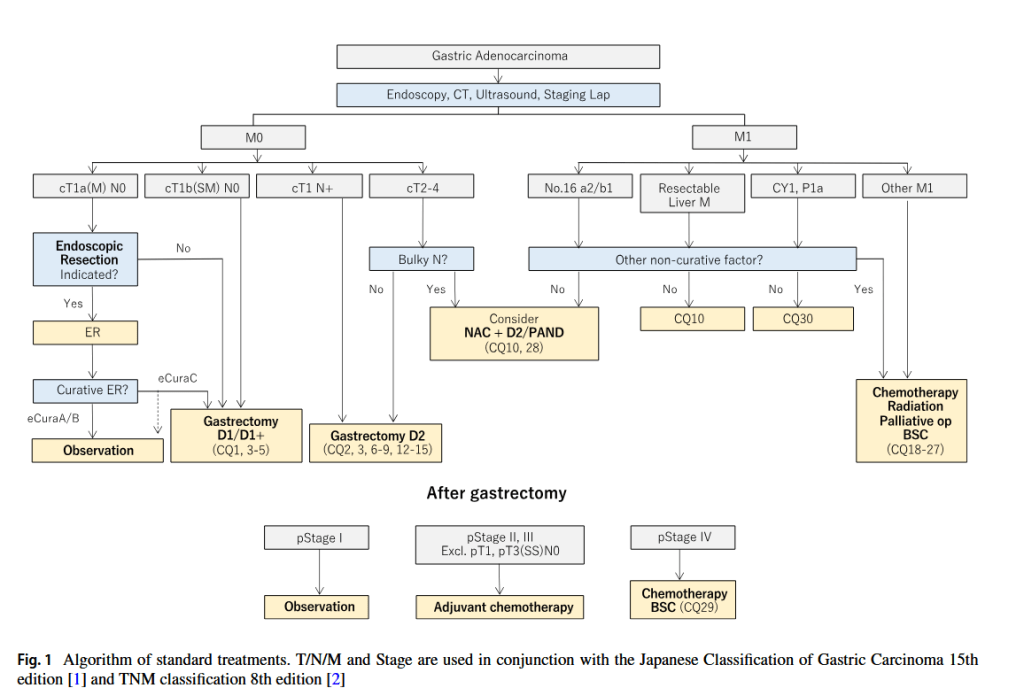
“The sixth edition of the Japanese Gastric Cancer Treatment Guidelines was completed in July 2021, incorporating new evidence that emerged after publication of the previous edition. It consists of a text-based “Treatments” part and a “Clinical Questions” part including recommendations and explanations for clinical questions. The treatments parts include a comprehensive description regarding surgery, endoscopic resection and chemotherapy for gastric cancer. The clinical question part is based on the literature search and evaluation by an independent systematic review team.”

Continue reading

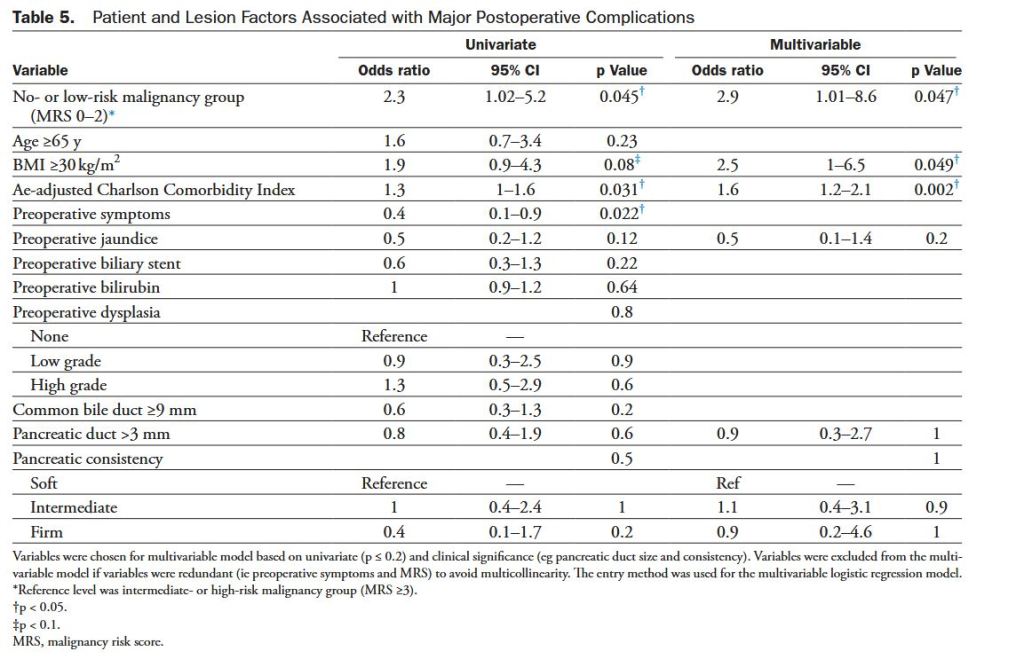
Multi-Institutional Analysis of Pancreaticoduodenectomy for Nonfamilial Periampullary Adenoma: A Novel Risk Score to Guide Shared Decision-Making

“Periampullary adenomas (PA), including both ampullary adenomas (AAs) and duodenal adenomas (DAs), are benign or premalignant mucosal lesions that are either hereditary, most associated with familial adenomatous polyposis (FAP) syndrome, or sporadic, with no known genetic predisposition. In both cases, these uncommon mucosal-based lesions carry malignancy risk and present management dilemmas when not amenable to endoscopic
removal requiring surgical resection. FAP-related PAs are typically large and multifocal and often managed using the Spigelman classification, a point-based system that alerts the clinician of malignancy risk. This classification guides the decision toward continued endoscopic surveillance vs resection vis-à-vis pancreaticoduodenectomy (PD, also known as the “Whipple procedure”). No such scoring system exists for non-FAP-related PAs.”

Continue reading

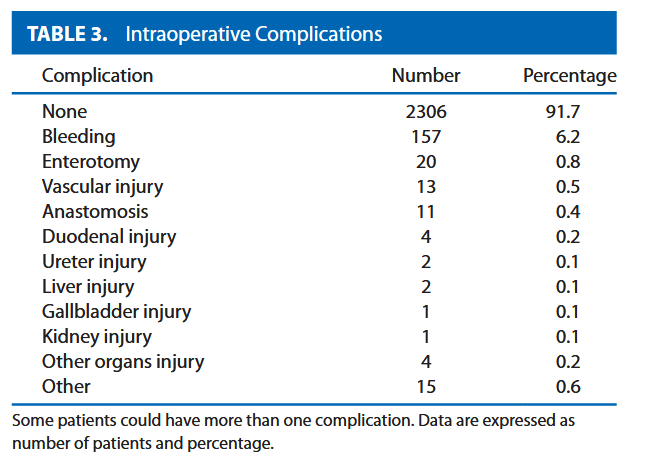
Predictors for Anastomotic Leak, Postoperative Complications, and Mortality After Right Colectomy for Cancer

“Right hemicolectomy is considered one of the simplest colorectal major procedures and is often considered an appropriate first step for residents and young fellows. Despite this, complications after right hemicolectomy for cancer are common, at ≈30%, and postoperative mortality is reported to be ≈3%. Anastomotic leak (AL) after right hemicolectomy for cancer is a major contributor to this short-term morbidity and mortality. The document AL rate after right hemicolectomy ranges widely, from 1.3% to 8.4%. This also has a significant impact on healthcare costs and major oncologic consequences, as demonstrated by the higher cancer recurrence rate after AL.”

Continue reading

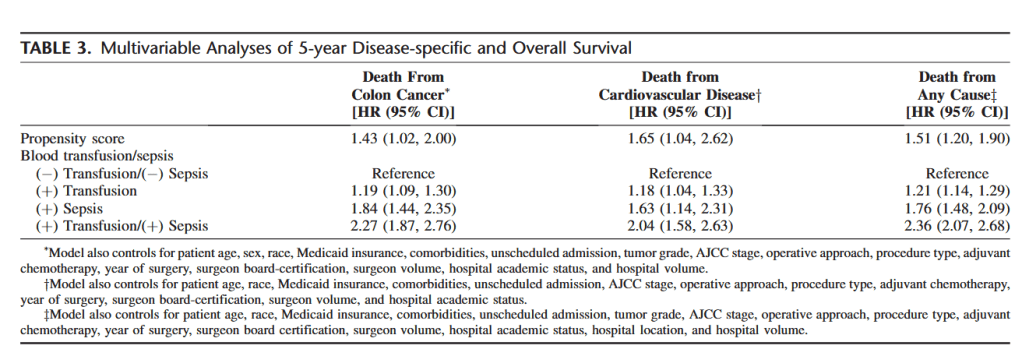
Association Among Blood Transfusion, Sepsis, and Decreased Long-term Survival After Colon Cancer Resection

“Colorectal cancer is the second-leading cause of cancer-related mortality in both the United States and Europe. With respect to prognosis, increasing evidence has suggested that systemic inflammation is a key predictor of disease progression and survival for colorectal cancer patients undergoing surgery. Furthermore, whereas red blood cell (RBC) transfusions may be life-saving in some circumstances, there has been growing evidence that transfusions are associated with adverse postoperative outcomes, including infectious complications and cancer recurrence. These detrimental effects are thought to be related to systemic inflammation and transfusion-related immunomodulation (TRIM). Whereas the exact mechanisms remain unknown, TRIM seems to be related to various immunologic changes, including decreased interleukin (IL)-2 production, monocyte and cytotoxic cell activity inhibition, increased suppressor T-cell activity, and immunosuppressive prostaglandin release.”

Continue reading

Primary versus Flap Closure of Perineal Defects following Oncologic Resection

“Abdominoperineal resection and pelvic exenteration for resection of malignancies can lead to large perineal defects with significant surgical-site morbidity. Myocutaneous flaps have been proposed in place of primary closure to improve wound healing. A systematic review was conducted to compare primary closure with myocutaneous flap reconstruction of perineal defects following abdominoperineal resection or pelvic exenteration with regard to
surgical-site complications.”

Continue reading