Dexamethasone treatment for the acute respiratory distress syndrome

“Acute respiratory distress syndrome (ARDS) is an intense inflammatory process of the lungs in response to acute pulmonary and systemic insults. There are no proven effective, specific pharmacological therapies for ARDS based on the results of randomised clinical trials. Despite no conclusive results, it remains clinically and biologically plausible that corticosteroids might benefit patients with ARDS in the early phase of their disease process, a situation that has not been evaluated in most randomised controlled trials. Paradoxically,
these hormones are given to patients with septic shock and pneumonia, both causes of ARDS.”

Continue reading

Prone position in ARDS patients

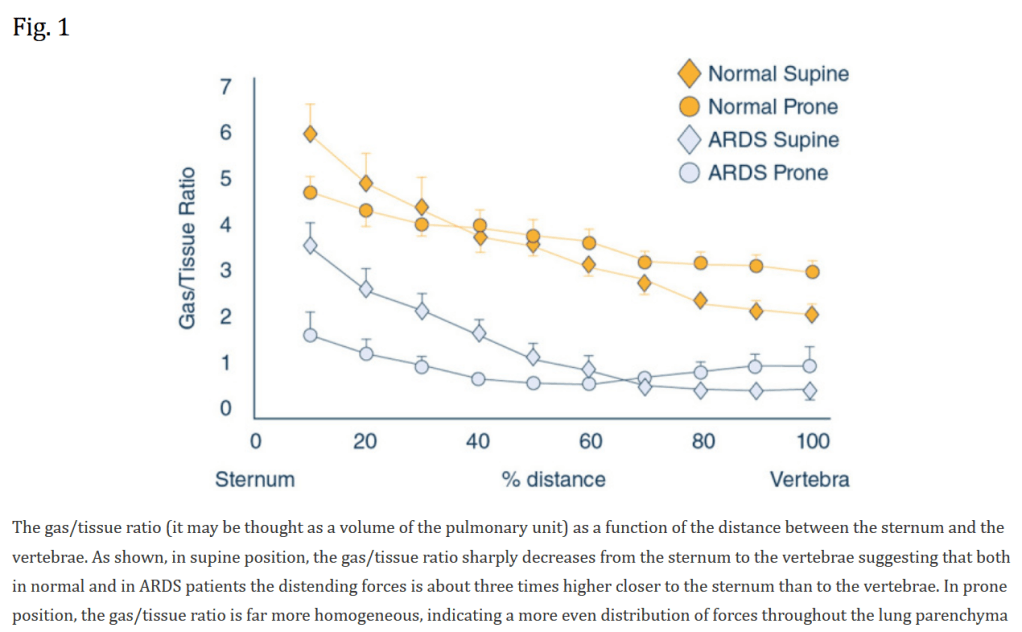
“In ARDS patients, the change from supine to prone position generates a more even distribution of the gas–tissue ratios along the dependent–nondependent axis and a more homogeneous distribution of lung stress and strain. The change to prone position is generally accompanied by a marked improvement in arterial blood gases, which is mainly due to a better overall ventilation/perfusion matching. Improvement in oxygenation and reduction in mortality are the main reasons to implement prone position in patients with ARDS.”

Continue reading

Optimev study. Clinical presentation and mortality in pulmonary embolism

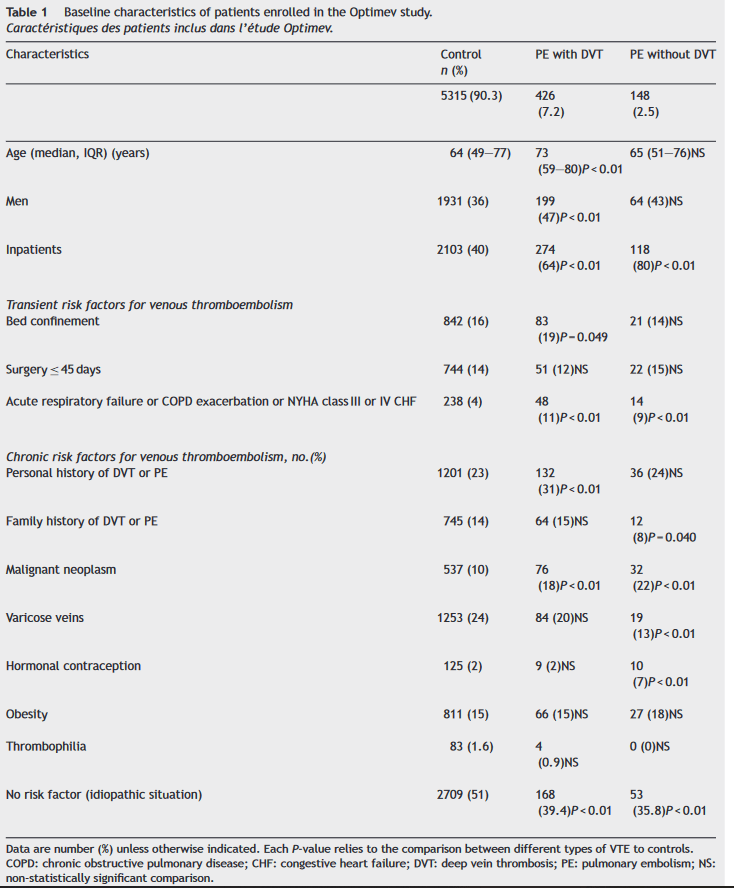
“Venous thromboembolism (VTE), including deep vein thrombosis (DVT) and pulmonary embolism (PE), is a common clinical problem associated with significant mortality and life-long morbidity among hospitalized patients and outpatients. The diagnosis of VTE is challenging because of the non specific signs and symptoms of this disease.”

“The aim of this study was to investigate the clinical presentation and 3-month mortality associated with some forms of VTE: PE with DVT, and PE without DVT.”

Continue reading

The utility of oxygen therapy for treating pneumothorax

Hallifax R, et al. (2022). Pneumothorax. In: Broaeddus CV. (Ed.) Murray & Nadel’s Textbook of Respiratory Medicine, 7th ed.

“Evidence from a small study in 1971 suggests that use of 100% oxygen in patients with spontaneous pneumothorax can increase the rate of absorption fourfold compared to air (on the basis of mean reduction in pneumothorax size of 4.8 and 18 cm 2 /day, respectively). The rationale is that by reducing the partial pressure of nitrogen in the inspired gas, and thus in pleural capillaries, the rate of nitrogen absorption from the pneumothorax is increased, thereby increasing the rate of resolution of the pneumothorax.” (p. 1545)

Continue reading

Postoperative outcomes in surgical COVID-19 patients

COVIDSurg Collaborative. Mortality and pulmonary complications in patients undergoing surgery with perioperative SARS-CoV-2 infection: an international cohort study. Lancet. 2020 Jul 4;396(10243):27-38. Erratum in: Lancet. 2020 Jun 9.

Full-text for Emory users.

Findings: This analysis includes 1128 patients who had surgery between Jan 1 and March 31, 2020, of whom 835 (74·0%) had emergency surgery and 280 (24·8%) had elective surgery. SARS-CoV-2 infection was confirmed preoperatively in 294 (26·1%) patients. 30-day mortality was 23·8% (268 of 1128). Pulmonary complications occurred in 577 (51·2%) of 1128 patients; 30-day mortality in these patients was 38·0% (219 of 577), accounting for 81·7% (219 of 268) of all deaths. In adjusted analyses, 30-day mortality was associated with male sex (odds ratio 1·75 [95% CI 1·28-2·40], p<0·0001), age 70 years or older versus younger than 70 years (2·30 [1·65-3·22], p<0·0001), American Society of Anesthesiologists grades 3-5 versus grades 1-2 (2·35 [1·57-3·53], p<0·0001), malignant versus benign or obstetric diagnosis (1·55 [1·01-2·39], p=0·046), emergency versus elective surgery (1·67 [1·06-2·63], p=0·026), and major versus minor surgery (1·52 [1·01-2·31], p=0·047).

Continue reading

Article of interest: Does Atelectasis Cause Fever After Surgery? Putting a Damper on Dogma.

Crompton JG, Crompton PD, Matzinger P. Does Atelectasis Cause Fever After Surgery? Putting a Damper on Dogma. JAMA Surg. 2019 May 1;154(5):375-376.

Full-text for Emory users.

fever after an operationFigure. Damage-Associated Molecular Patterns (DAMPs) and Pathogen-Associated Molecular Patterns (PAMPs)

“The danger model of immunity challenges the premise of our current therapeutic approach in treating noninfectious causes of postoperative fever. The clinical benefit of interventions targeting atelectasis as a cause of postoperative fever, such as incentive spirometry, need to be reassessed. Continue reading

Postoperative negative pressure pulmonary edema

Liu R, Wang J, Zhao G, Su Z. Negative pressure pulmonary edema after general anesthesia: A case report and literature review. Medicine (Baltimore). 2019 Apr;98(17): e15389. doi: 10.1097/MD.0000000000015389.

Free full-text.

It is widely accepted that the central mechanism of postoperative NPPE is related to rapid negative intrapleural pressure increasing due to forceful inspiration against the obstruction, which can be up to 10 times or more that of normal breathing. [7] A typical event leading to acute airway obstruction associated with postoperative NPPE is laryngospasm. Other procedure that increases the risk of NPPE includes oropharyngeal, head, and neck surgery. Five [8–12] of the reported 29 cases involved upper respiratory tract surgery, and 10 [1,3,6,7,13–18] of the cases involved head and neck surgery, which may be related to tissue swelling and the sensitive dilator muscle of the upper airway in head and neck surgeries.

Continue reading