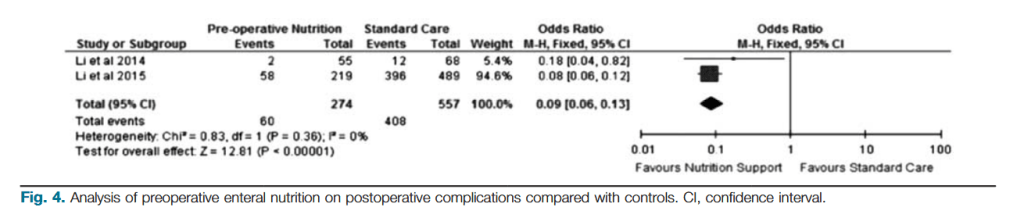
Does preoperative enteral or parenteral nutrition reduce postoperative complications in Crohn’s disease patients?

“Surgery is frequently needed in Crohn’s Disease (CD) patients who have malnutrition. Patients with CD are at a risk of malnutrition secondary to decreased oral intake, malabsorption, and inflammation. The prevalence of malnutrition in IBD patients is profound: 60–80% of IBD patients are anemic, 39–81% are iron deficient, 20–60% are vitamin B12
deficient, 36–54% are folate deficient, and 25–80% have hypoalbuminemia. This high prevalence of malnutrition presents a challenge in the surgical management of CD patients because poor preoperative nutritional status has been linked to increase postoperative complications.
Therefore, nutritional optimization using enteral nutrition (EN) and total parenteral nutrition (TPN) have been used for many years to improve the nutritional status of CD patients in hopes of decreasing postoperative complications.”

Continue reading

Management of enterocutaneous fistulas

Owen RM, Love TP, Perez SD, Srinivasan JK, Sharma J, Pollock JD, Haack CI, Sweeney JF, Galloway JR. Definitive surgical treatment of enterocutaneous fistula: outcomes of a 23-year experience. JAMA Surg. 2013 Feb;148(2):118-26.

Full-text for Emory users.

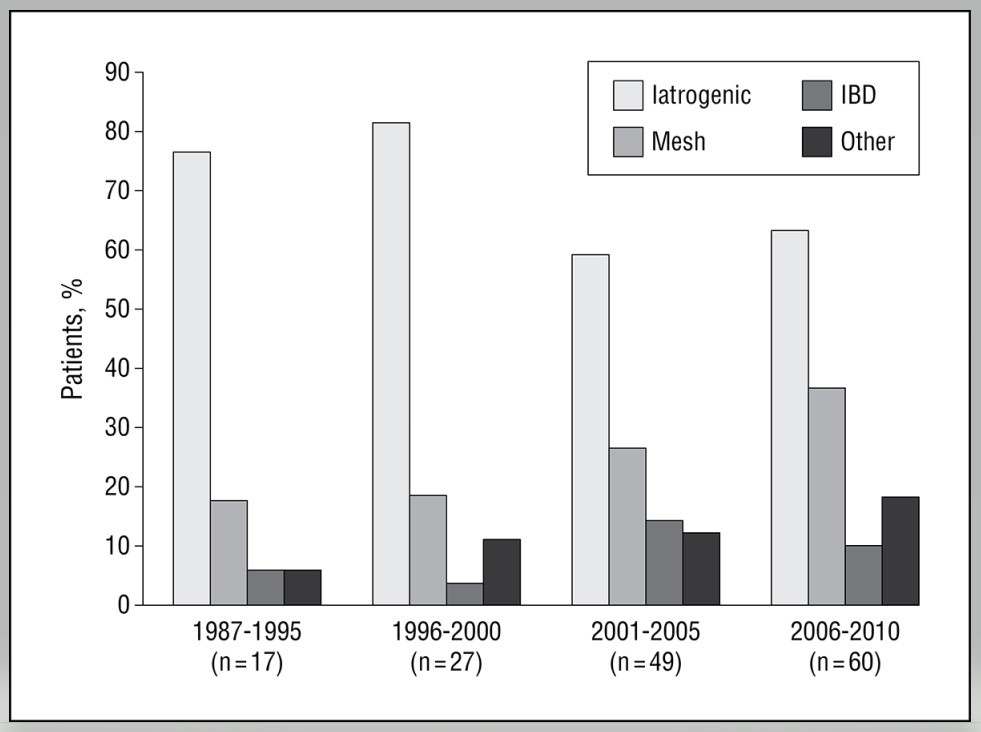
Figure 1. Causes of enterocutaneous fistula between 1987 and 2010. IBD indicates inflammatory bowel disease; other includes radiation, neoplasm, and trauma. Percentages may total more than 100% owing to the fact that some patients’ ECFs were secondary to multiple causes.

Continue reading

Cirrhotic nutritional management

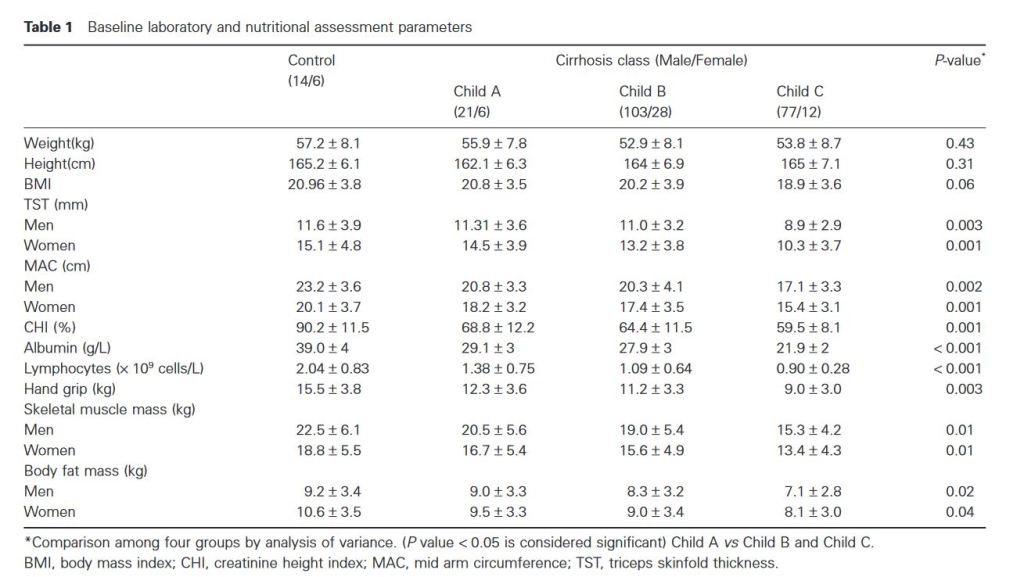
“Prevalence of malnutrition in chronic liver disease ranges between 10% and 100%, depends on severity of liver disease. Prevalence is more in patients with alcoholic cirrhosis compared to nonalcoholic cirrhotics. 3 Malnutrition is seen in all clinical stages but is easier to detect in advanced stages of liver cirrhosis. Many patients have subtle changes such as fat soluble vitamin deficiency, anemia from iron, folate or pyridoxine deficiency, altered cell-mediated immune functions and minimal loss of muscle mass, while patients with end-stage liver disease have muscle wasting, decreased fat stores, and cachexia.”

Continue reading