
“Direct-acting oral anticoagulants (DOACs) are recommended over vitamin K antagonists (VKAs) for both the treatment of venous thromboembolism (VTE) and the prevention of stroke and systemic embolism in nonvalvular atrial fibrillation (AF). Two classes of DOACs are currently approved by the European Medication Agency and the US Food and Drug Administration: the direct factor Xa inhibitors, including rivaroxaban, apixaban, and edoxaban, and a direct thrombin inhibitor, dabigatran. 5 Unlike the VKAs,
which have a narrow therapeutic range and require dose individualization to maintain a therapeutic international normalized ratio, DOACs have a wide therapeutic range, allowing
for fixed dose regimens.
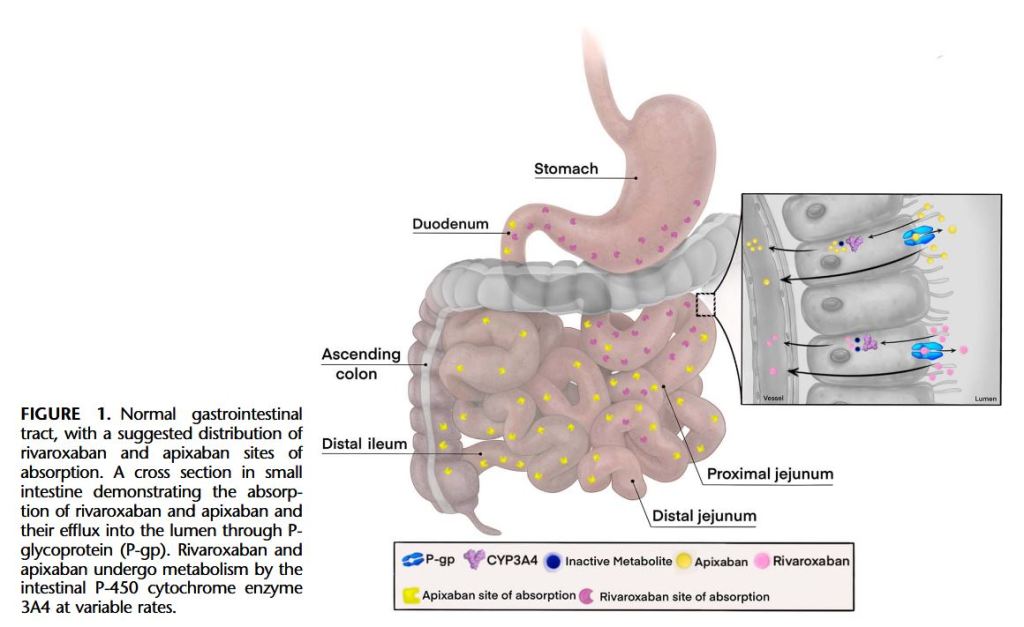
Efficacious DOAC doses were determined in Phase III trials that were designed based on studies conducted in healthy subjects with an intact gastrointestinal tract (GIT). Therefore, it is difficult to extrapolate outcomes with DOAC treatment to patients who undergo surgical
resection or bypass of the GIT, which may result in alteration of absorptive capacity. Because of the potential of reduced efficacy, the Update on Guidelines for the
Management of Cancer-Associated Thrombosis has recently expressed concerns regarding the use of DOAC in patients with proximal GIT resection.”
 Surgical Focus