
Respiratory Failure in Amyotrophic Lateral Sclerosis

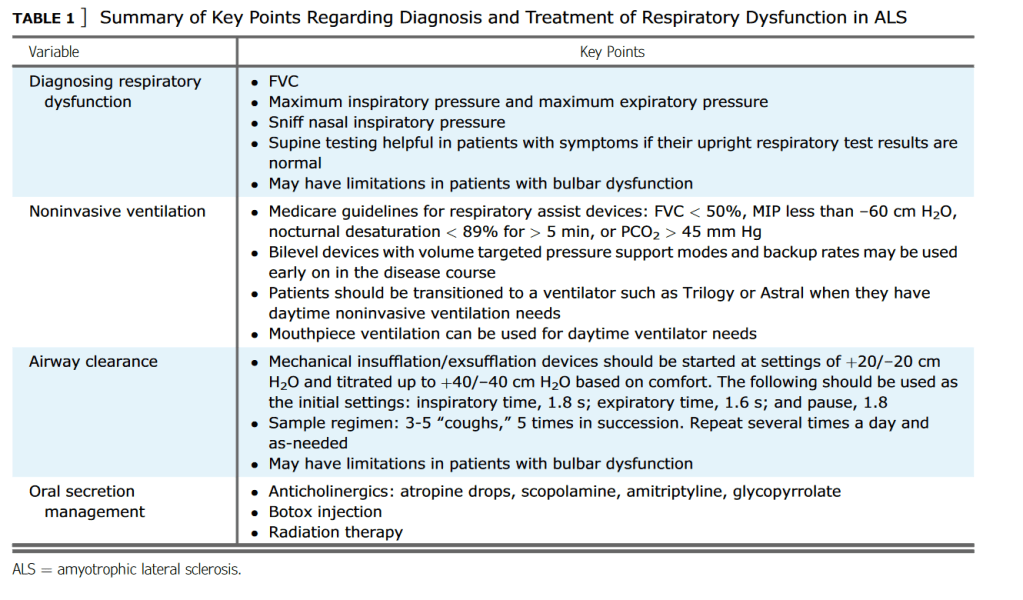
“Amyotrophic lateral sclerosis is a progressive neuromuscular disease characterized by both
lower motor neuron and upper motor neuron dysfunction. Although clinical presentations can vary, there is no cure for ALS, and the disease is universally terminal, with most patients dying of respiratory complications. Patients die, on average, within 3 to 5 years of diagnosis, unless they choose to undergo tracheostomy, in which case, they may live, on average, 2 additional years. Up to 95% of patients with ALS in the United States choose not to undergo tracheostomy; management of respiratory failure is therefore aimed at both prolonging survival as well as improving quality of life. Standard of care for patients with ALS includes treatment from multidisciplinary teams, but many patients do not have consistent access to a pulmonary physician who regularly sees patients with this disease.”
Continue reading

Strategies To Reduce Postoperative Pulmonary Complications after Noncardiothoracic Surgery

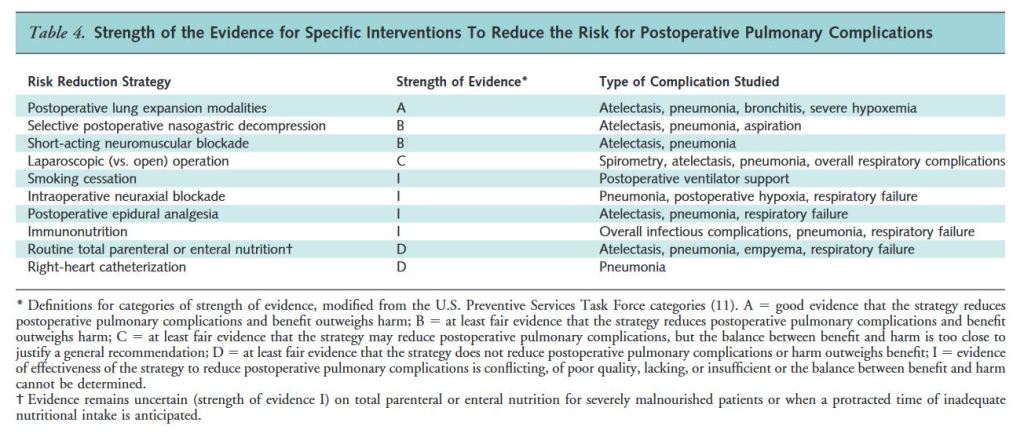
“Postoperative pulmonary complications are as common as cardiac complications for patients undergoing non-cardiothoracic surgery. Further, these complications
have similar mortality rates and length of stay after elective abdominal surgery or hip fracture repair. This current systematic review synthesizes the evidence on preventive strategies and focuses on atelectasis, pneumonia, and respiratory failure.”

Continue reading

Postoperative negative pressure pulmonary edema

Liu R, Wang J, Zhao G, Su Z. Negative pressure pulmonary edema after general anesthesia: A case report and literature review. Medicine (Baltimore). 2019 Apr;98(17): e15389. doi: 10.1097/MD.0000000000015389.

Free full-text.

It is widely accepted that the central mechanism of postoperative NPPE is related to rapid negative intrapleural pressure increasing due to forceful inspiration against the obstruction, which can be up to 10 times or more that of normal breathing. [7] A typical event leading to acute airway obstruction associated with postoperative NPPE is laryngospasm. Other procedure that increases the risk of NPPE includes oropharyngeal, head, and neck surgery. Five [8–12] of the reported 29 cases involved upper respiratory tract surgery, and 10 [1,3,6,7,13–18] of the cases involved head and neck surgery, which may be related to tissue swelling and the sensitive dilator muscle of the upper airway in head and neck surgeries.

Continue reading