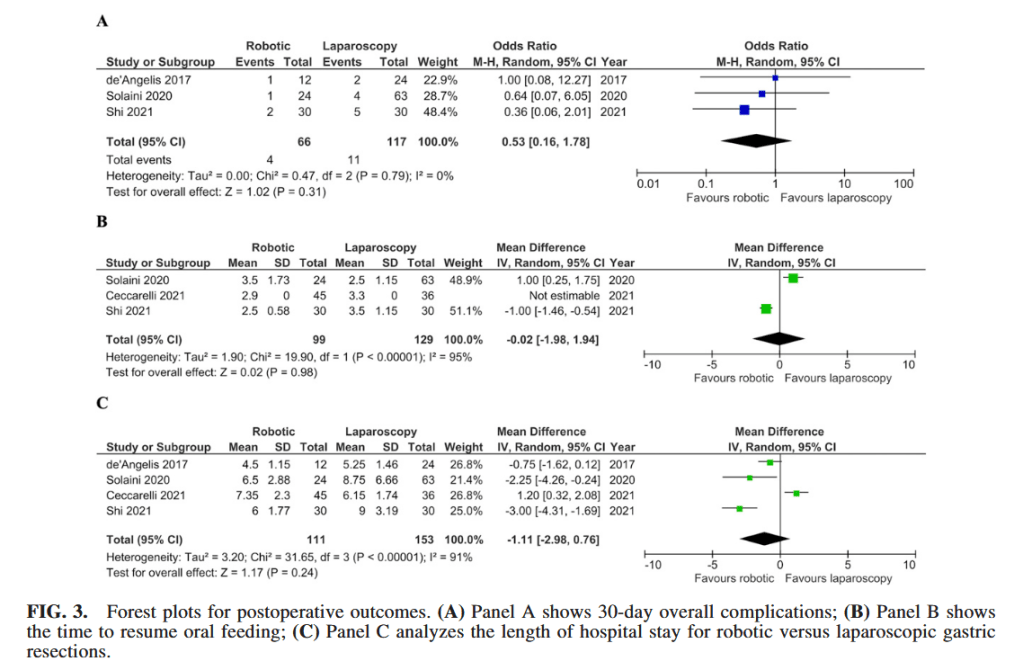
Gastrointestinal Stromal Tumors of the Stomach: Is There Any Advantage of Robotic Resections?

“Gastrointestinal stromal tumors (GISTs) are the most common mesenchymal neoplasms of the digestive system. They account for less than 3% of all gastrointestinal malignancies, with an annual incidence rate estimated at 10–20 cases per million population in the United States. The most frequent anatomical location is the stomach (approximately 60% of cases). Although the introduction of tyrosine kinase inhibitors has changed the therapeutic algorithm of GISTs, surgical resection with negative margins remains the main treatment option for localized resectable tumors.”
Continue reading

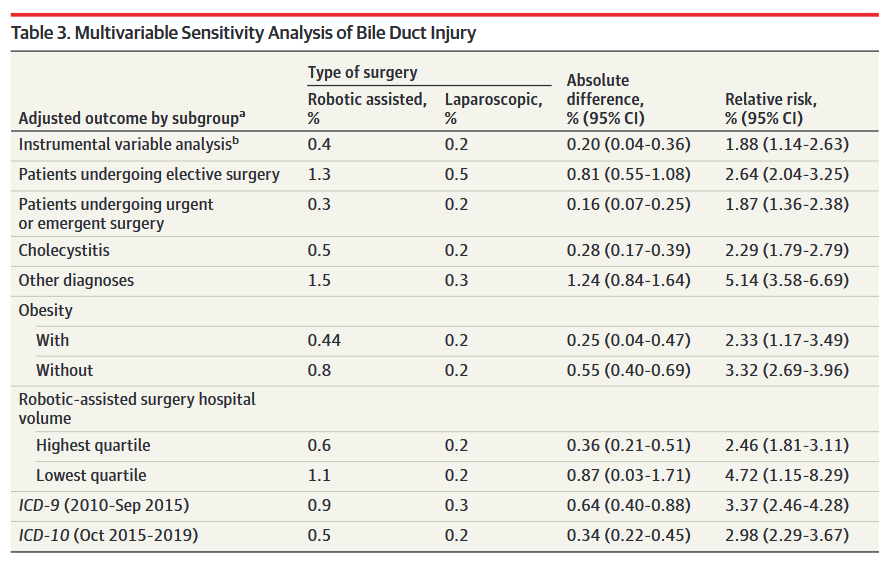
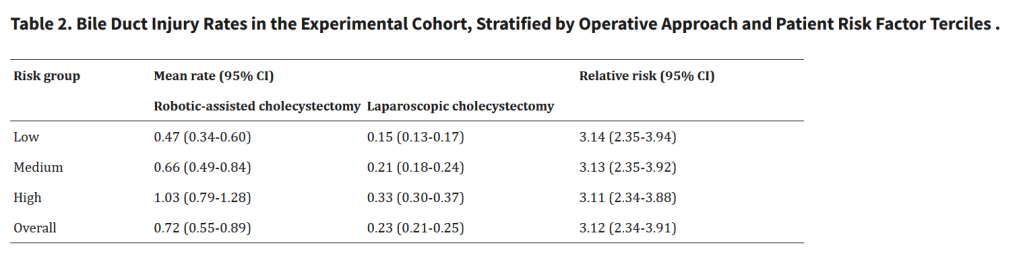
Patient Complexity and Bile Duct Injury After Robotic-Assisted vs Laparoscopic Cholecystectomy

“Whether robotic-assisted cholecystectomy offers an advantage over laparoscopic cholecystectomy for higher-risk cases remains unclear. On one hand, there may be fundamental differences in the complexity of patients undergoing robotic-assisted cholecystectomy, which may be responsible for the higher observed rates of bile duct injury. On the other hand, differences in bile duct injury could be secondary to other factors, such as surgeons working their way up the learning curve using the robot, especially given the large number of robotic-assisted cholecystectomies surgeons must perform to achieve bile duct injury rates equivalent to those of laparoscopic approaches. By comparing laparoscopic and robotic-assisted cholecystectomy approaches within patient risk terciles, we can determine whether patient risk factor profiles are associated with harm in robotic-assisted cholecystectomy.”

Continue reading

Comparative Safety of Robotic-Assisted vs Laparoscopic Cholecystectomy

“Whether robotic-assisted cholecystectomy leads to even safer outcomes than minimally invasive laparoscopic cholecystectomy remains unclear. Some contend that robotic-
assisted cholecystectomy may be safer because it offers 3-dimensional visualization, enhanced instrument articulation to allow for more complex maneuvers, novel ways to
visualize biliary anatomy, and potentially increases a surgeon’s ability to perform difficult procedures in a minimally invasive fashion. Studies comparing the safety of these
approaches found equivalency, but are limited to single-center case series inclusive of surgeons with the most robotic-assistance experience. Whether those outcomes reflect
current surgical practice, especially as robotic-assisted cholecystectomy is adopted by a larger and potentially more novice group of surgeons, represents crucial information for
surgeons, referring physicians, and patients.”

Continue reading

Robotic compared with laparoscopic cholecystectomy

“Robotic cholecystectomy was independently associated with a lower risk of serious complications, lower rate conversion to open, and hospitalization ≥24 hours compared with laparoscopic cholecystectomy. These findings suggest that new technologies might enhance the safety of minimally invasive surgery.”

Continue reading