Risk factors for postoperative cervical haematoma in patients undergoing thyroidectomy (REDHOT)

“In endocrine surgery, thyroidectomy is the most frequently performed surgical procedure.
Morbidity related to thyroidectomy is mainly represented by hypoparathyroidism, recurrent laryngeal nerve injury, and cervical haematoma. These complications can occur at a
considerable rate even if thyroid surgery is performed by highly experienced surgeons.
Obtaining accurate haemostasis during thyroidectomy is crucial to prevent the occurrence of postoperative bleeding and, allowing adequate vision of the anatomical structures, is also important to avert the onset of the other complications.”

Continue reading

Permanent Hypoparathyroidism After Thyroidectomy

“Hypoparathyroidism (HP) is a recognized but serious complication of thyroidectomy. Conventional techniques for parathyroid autograft (PA) occur with the insertion of parathyroid slices in muscle pockets and have a published incidence of HP of 4%–8%. The purpose of this study was to analyze the incidence of HP after thyroidectomy at our center, where we have used a modified technique for PA.”

Continue reading

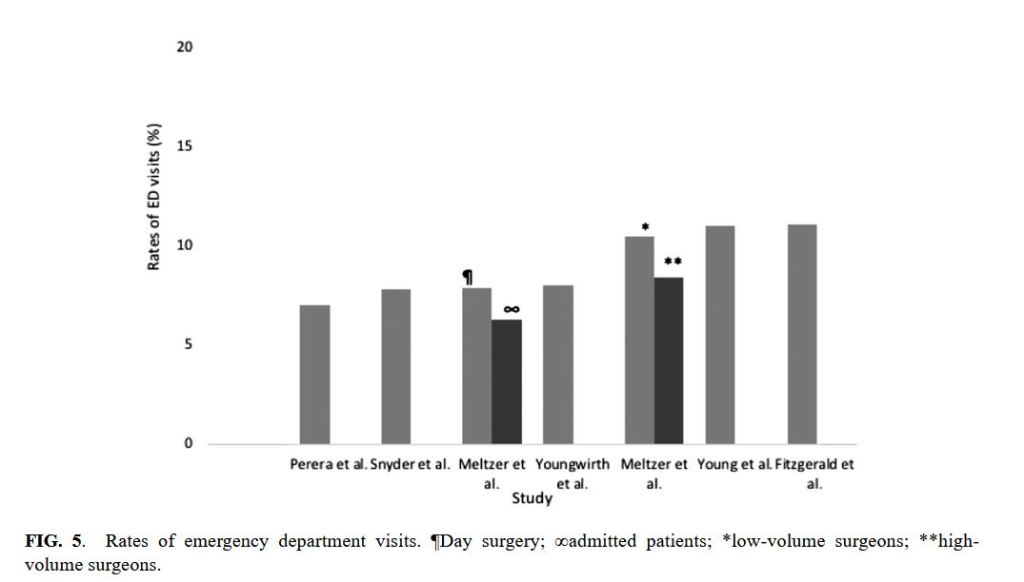
Unplanned Reoperations, Emergency Department Visits and Hospital Readmission After Thyroidectomy

“Emergency Department visits and hospital readmission after thyroidectomy are common, and there are several practices that can reduce their occurrence. Routine postoperative calcium and vitamin D supplementation may reduce rates of postoperative hypocalcemia, and avoiding postoperative hypertension may decrease the risk of neck hematoma development and the need for reoperation. Older age, thyroid cancer, dependent functional status, higher ASA score, diabetes, chronic obstructive pulmonary disease, steroid use, hemodialysis, and recent weight loss increase the risk of hospital readmission after thyroid surgery. By further identifying risk factors for reoperation, ED visits, and readmission, this review may assist practitioners in optimizing perioperative care and therefore reducing patient morbidity and mortality after thyroid operations.”

Continue reading

Practice Guideline: The AAES guidelines for the definitive surgical management of thyroid disease in adults

Patel KN, Yip L, Lubitz CC, et al. The American Association of Endocrine Surgeons (AAES) Guidelines for the Definitive Surgical Management of Thyroid Disease in Adults. Ann Surg. 2020 Mar;271(3):e21-e93. Full-text for Emory users.

See also: Patel KN, Yip L, Lubitz CC, et al. Executive Summary of the American Association of Endocrine Surgeons Guidelines for the Definitive Surgical Management of Thyroid Disease in Adults. Ann Surg. 2020 Mar;271(3):399-410. Full-text for Emory users.

Continue reading

Lobectomy vs total thyroidectomy for intermediate-size papillary thyroid cancer

One discussion last week included the extent of surgery for intermediate-size papillary thyroid cancer: lobectomy vs total thyroidectomy.


Reference: Adam MA, et al. Extent of surgery for papillary thyroid cancer is not associated with survival: an analysis of 61,775 patients. Annals of Surgery. 2014 Oct;260(4):601-605. doi:10.1097/SLA.0000000000000925.

Summary: Guidelines recommend total thyroidectomy for PTC tumors >1 cm, based on older data demonstrating an overall survival advantage for total thyroidectomy over lobectomy.

Adult patients with PTC tumors 1.0-4.0 cm undergoing thyroidectomy in the National Cancer Database between 1998-2006 were included, totaling 61,775 patients. Median follow-up was 82 months (range, 60-179 months).

Lobectomy (n=6849)

Total thyroidectomy (n=54,926)

Nodal disease

7%

27%

Extrathyroidal disease

5%

16%

Multifocual disease

29%

44%

After multivariable adjustment, overall survival was similar in patients undergoing total thyroidectomy versus lobectomy for tumors 1.0-4.0 cm and when stratified by tumor size: 1.0-2.0 cm and 2.1-4.0 cm. Older age, male sex, black race, lower income, tumor size, and presence of nodal or distant metastases were independently associated with compromised survival (P < 0.0001).

Adam et al (2014) conclude that although current guidelines suggest total thyroidectomy for PTC tumors >1 cm, they did not observe a survival advantage associated with total thyroidectomy compared with lobectomy. These findings call into question whether tumor size should be an absolute indication for total thyroidectomy.