Article of interest: Counterclockwise rotation of Roux-en-Y limb significantly reduces internal herniation in laparoscopic Roux-en-Y gastric bypass (LRYGB)

Nandipati KC, Lin E, Husain F, Srinivasan J, Sweeney JF, Davis SS. Counterclockwise rotation of Roux-en-Y limb significantly reduces internal herniation in laparoscopic Roux-en-Y gastric bypass (LRYGB). J Gastrointest Surg. 2012 Apr;16(4):675-81.

Full-text for Emory users.

Continue reading

For your review: Desmoplastic melanoma

Nicolson NG, Han D. Desmoplastic melanoma. J Surg Oncol. 2019 Jan;119(2):208-215. doi: 10.1002/jso.25317. Epub 2018 Nov 27.

Desmoplastic melanoma (DM) is a rare melanoma variant that has unique biology and pathology compared with conventional melanoma (non-DM). Importantly, DM is classified into pure and mixed histologic subtypes, which have been correlated with outcomes. Management of DM broadly mirrors that of non-DM; however, there are unique considerations for DM that influence treatment approaches. This paper will provide a contemporary overview of this disease and will review the literature regarding the management of DM.

Continue reading

Stapled versus handsewn intestinal anastomosis in emergency laparotomy

“This study hypothesized that there may be additional differences between trauma surgery (TS) and emergency general surgery (EGS) patients, because the physiologic conditions are typically dominated by hemodynamic instability from hemorrhage in the former, whereas the latter is predominantly complicated by sepsis. The 2 groups may also have different patient demographics, with TS patients being younger and more likely to be male than EGS patients.”

Continue reading

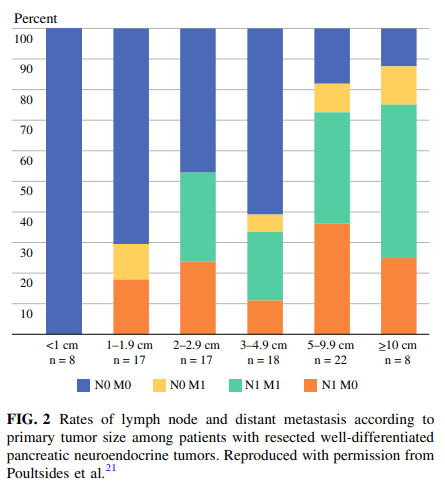
The Landmark Series: Pancreatic Neuroendocrine Tumors

“Pancreatic neuroendocrine tumors (PNETs) comprise a heterogeneous group of neoplasms arising from pancreatic islet cells that remain relatively rare but are increasing in incidence worldwide. While significant advances have been made in recent years with regard to systemic therapies for patients with advanced disease, surgical resection remains the standard of care for most patients with localized tumors. Although formal pancreatectomy with regional lymphadenectomy is the standard approach for most PNETs, pancreas-preserving approaches without formal lymphadenectomy are acceptable for smaller tumors at low risk for lymph node metastases.”

Continue reading

Comparison of stapled versus handsewn loop ileostomy closure

“The purpose of this study was to compare the rates of small bowel obstruction, anastomotic complications, and wound infections between stapled and handsewn closures of loop ileostomies. The diverting loop ileostomy is a commonly used stoma, often employed to diminish the consequences of an anastomotic leak in low colorectal anastomoses, ileal pouch-anal anastomoses, and in situations where reversible patient factors increase the risk of an anastomotic dehiscence. They are also used to divert the fecal stream in the event of an anastomotic leak and, occasionally, in severe fistulizing perianal disease.”

Continue reading

Handsewn vs. stapled anastomoses in colon and rectal surgery

“Trials comparing handsewn with stapled anastomoses in colon and rectal surgery have not found statistical differences. Despite this, authors have differed in their conclusions as to which technique is superior. To help determine whether differences in patient outcomes are present, a meta-analysis of all trials was performed.”

Continue reading