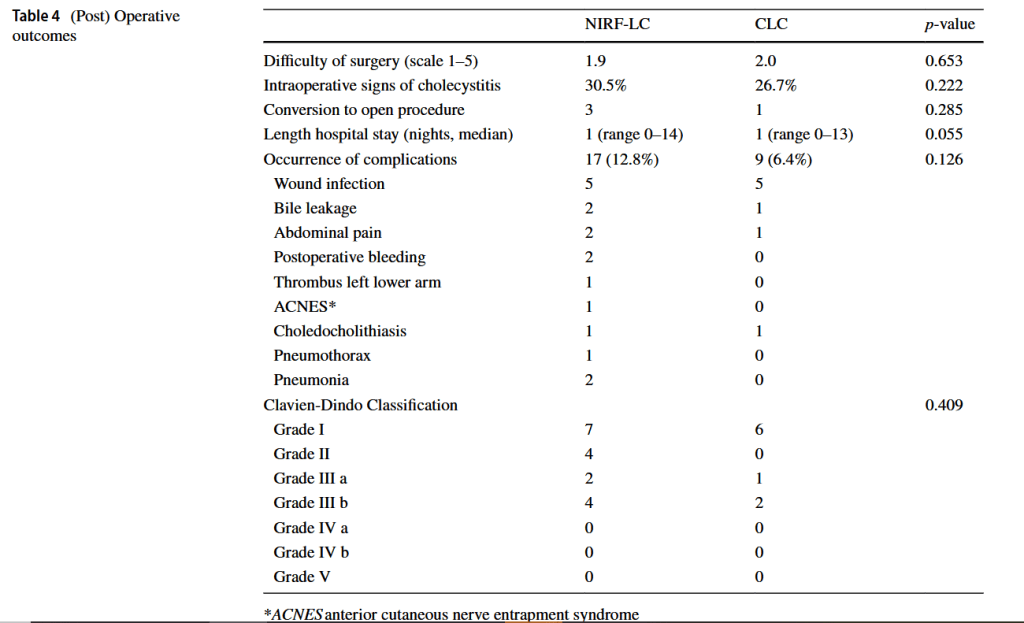
Near‑infrared fluorescence cholangiography assisted laparoscopiccholecystectomy

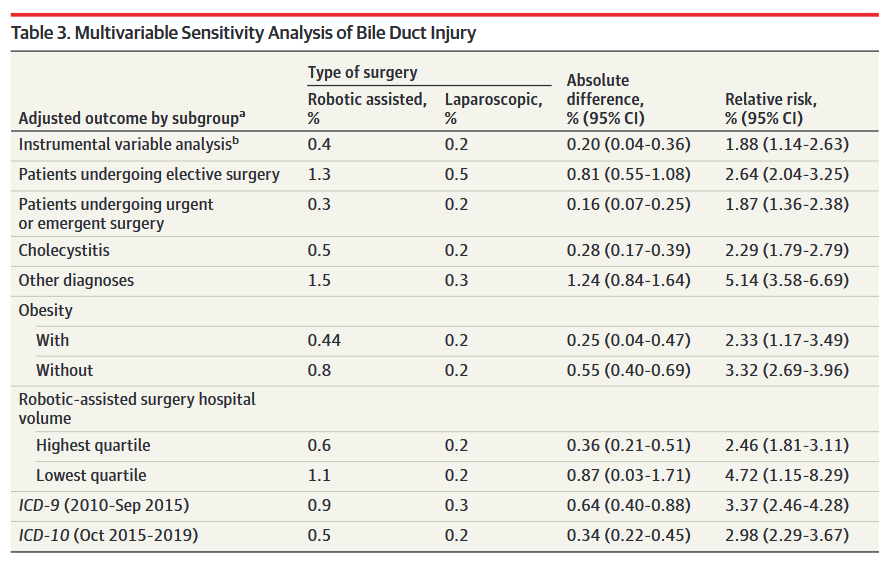
“The most feared complication during laparoscopic cholecystectomy is bile duct injury. Bile duct injury as a result of laparoscopic cholecystectomy is rare with an incidence of 0.3–0.7% but often results in severe morbidity and even mortality, lower quality of life and extra costs.
Misidentification of extra-hepatic bile duct anatomy during laparoscopic cholecystectomy is the main cause of bile duct injury. Examples of such misidentification are mistaking the common bile duct for the cystic duct and aberrant hepatic ducts for the cystic duct or cystic artery. In order to reduce the risk of bile duct injury, techniques to enhance proper identification of the anatomy are needed.”
Continue reading

Comparative Safety of Robotic-Assisted vs Laparoscopic Cholecystectomy

“Whether robotic-assisted cholecystectomy leads to even safer outcomes than minimally invasive laparoscopic cholecystectomy remains unclear. Some contend that robotic-
assisted cholecystectomy may be safer because it offers 3-dimensional visualization, enhanced instrument articulation to allow for more complex maneuvers, novel ways to
visualize biliary anatomy, and potentially increases a surgeon’s ability to perform difficult procedures in a minimally invasive fashion. Studies comparing the safety of these
approaches found equivalency, but are limited to single-center case series inclusive of surgeons with the most robotic-assistance experience. Whether those outcomes reflect
current surgical practice, especially as robotic-assisted cholecystectomy is adopted by a larger and potentially more novice group of surgeons, represents crucial information for
surgeons, referring physicians, and patients.”

Continue reading

Robotic compared with laparoscopic cholecystectomy

“Robotic cholecystectomy was independently associated with a lower risk of serious complications, lower rate conversion to open, and hospitalization ≥24 hours compared with laparoscopic cholecystectomy. These findings suggest that new technologies might enhance the safety of minimally invasive surgery.”

Continue reading

Inadvertent Enterotomy in Minimally Invasive Abdominal Surgery

“Inadvertent enterotomy (IE) is one of the underreported complications in abdominal surgery. Krabben et al reported a 19% incidence of IE in patients who had a repeat
laparotomy. The incidence of and risk factors for IE during enterolysis were reported in a cohort of patients reoperated on. According to Krabben et al, the risk of inadvertent enterotomy in open surgery is more than 10-fold in patients with a history of 3 or more previous laparotomies.”

Continue reading

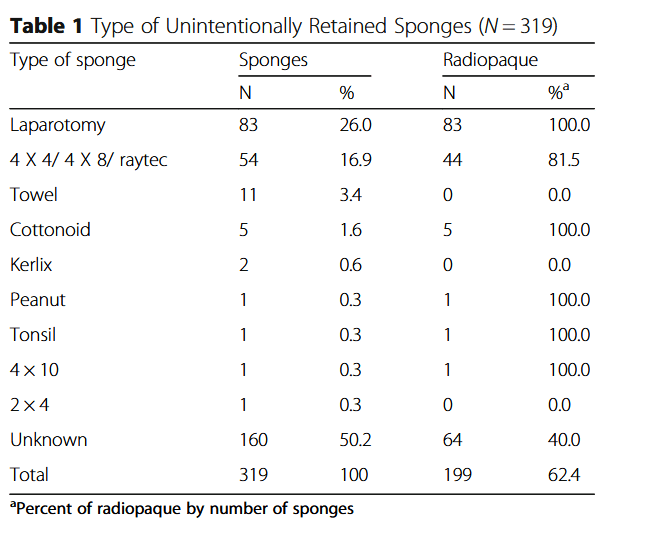
Retained surgical sponges: occurrences and contributing factors.

“Unintended retentions of a foreign object after surgery (e.g. sponge, needle, and instrument) (URFO) remain the sentinel events most frequently reported to The Joint
Commission (TJC). Although these events have happened in other invasive procedures, URFOs are estimated to occur in 1:5500 surgeries. These serious adverse events have resulted in patient harm involving reoperation, readmission/prolonged hospital stay, infection or sepsis, fistulas/ bowel obstructions, visceral perforation, and death.”

Continue reading

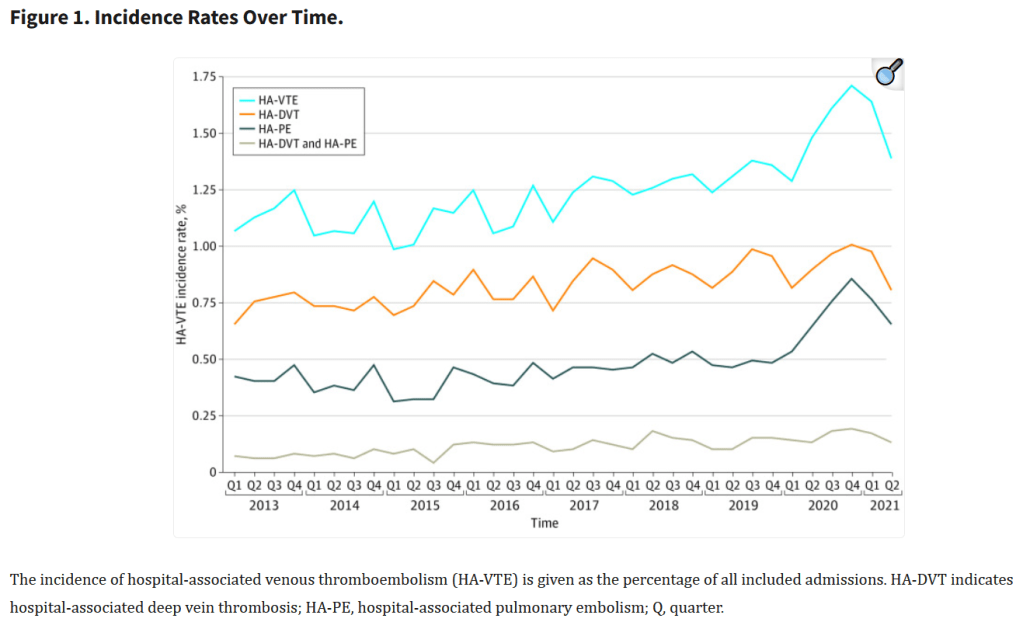
Trends and Risk Factors for Venous Thromboembolism Among Hospitalized Medical Patients

“Hospital-associated venous thromboembolism (HA-VTE), commonly defined as deep vein thrombosis (DVT), pulmonary embolism (PE), or both occurring during or within 90 days of hospital admission, is a frequent complication of hospitalization, accounting for approximately one-half to two-thirds of VTE incidence worldwide. HA-VTE events are associated with substantial burdens. They are a leading factor associated with hospital mortality and lost disability-adjusted life-years.”

Continue reading

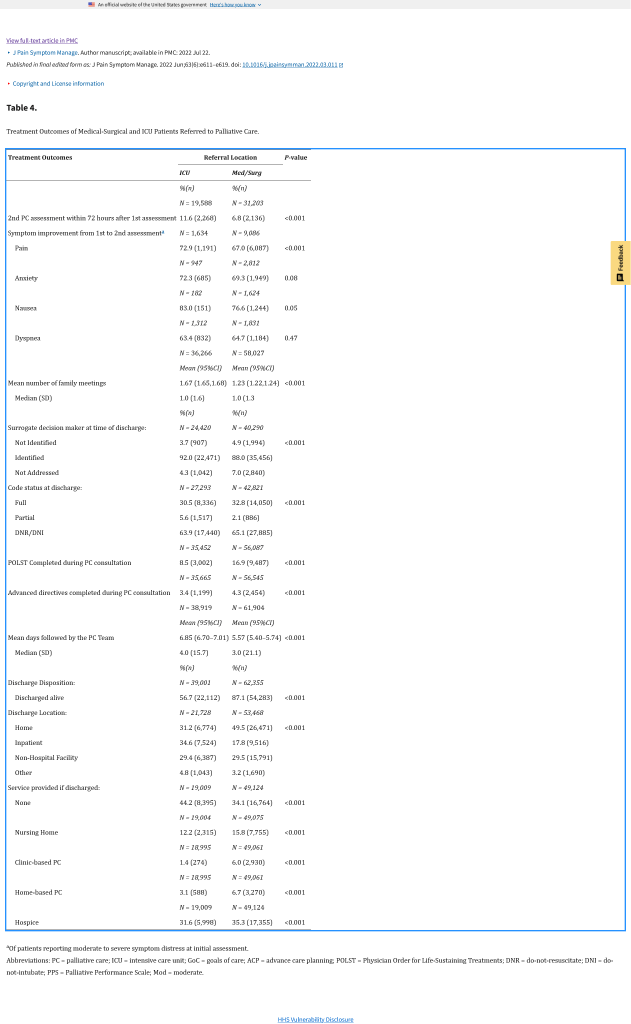
Utilization and Delivery of Specialty Palliative Care in the ICU

“Palliative care (PC) interventions in the critically ill have been associated with reduced subsequent ICU admissions and reduced ICU length of stay. Barriers to PC integration
and utilization in the ICU include unrealistic expectations of ICU interventions by patients and families, barriers related to ICU culture as well as cultural attributes of patients and families, insufficient training in PC principles for ICU clinicians, PC workforce shortages,
and inability of patients to participate in treatment discussions. Overcoming these barriers and assessing patient and provider needs for specialty PC depends on the availability and capabilities of PC services at the institutional level, the bandwidth of providers and characteristics of the patient population.”

Continue reading