High ileostomy output: A practical review of pathophysiology, causes,and management

“An estimated 100,000 surgical cases result in the creation of a stoma annually, of which approximately 40,000 are ileostomies. Given the truncation of the gastrointestinal (GI) tract and loss of the colon, ileocecal valve, and “ileal brake”, ileostomy patients are high risk for impaired sodium and water gastrointestinal absorption. Unsurprisingly, such alterations can lead to serious complications such as electrolyte derangements, dehydration, and acute kidney injury.”
“Though the definition of high-ileostomy output is debatable, it is typically recognized that a total ileostomy output exceeding 1.4 L per day has a potential of leading to such complications. An estimated 2030% of ileostomy patients experience high output in the early
postoperative period which imparts increases in morbidity, healthcare resource utilization, and length of inpatient stay.”

Continue reading

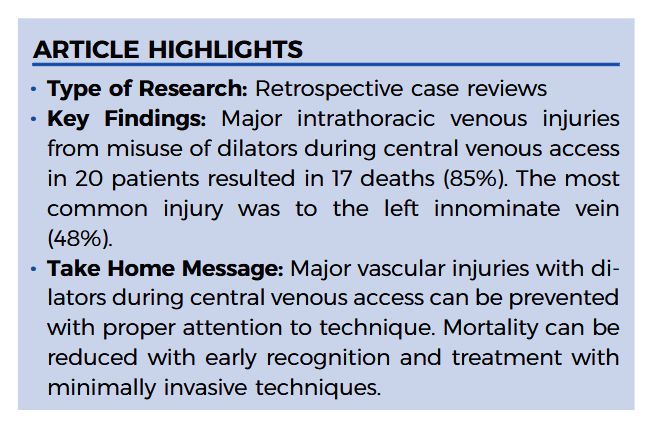
Prevention and treatment of dilator injuries during central venous catheter placement

“Accessing central veins is a common procedure that is performed in many clinical settings. Complications are not infrequent events. Local complications have been reduced by the utilization of ultrasound guidance; however, this practice does not prevent injuries to the deep, intrathoracic veins.
Major venous injuries that occur within the thorax secondary to misuse of the dilator have been reported. The majority of these reports have been anecdotal case reports. There is very little evidence to suggest that a flexible, spring-loaded guidewire could perforate a
major vein. The dilator is the only instrument that has the stiffness and point that is capable of perforating a central vein.”

Continue reading

Post-pancreatectomy haemorrhage management stratified according to ISGPS grading

“Despite improvements in the perioperative care of patients undergoing pancreatic surgery, the risk of major complications including anastomotic leak (6–24%), post-operative pancreatic fistula (POPF) (10–40%) and delayed gastric emptying (20–34%) persist. Post-pancreatectomy haemorrhage (PPH) is a less common, but particularly hazardous complication with mortality rates of up to 40%. However, varying definitions and incidences of PPH have been previously reported, which have hindered comparison of optimal treatment modalities.”

Continue reading

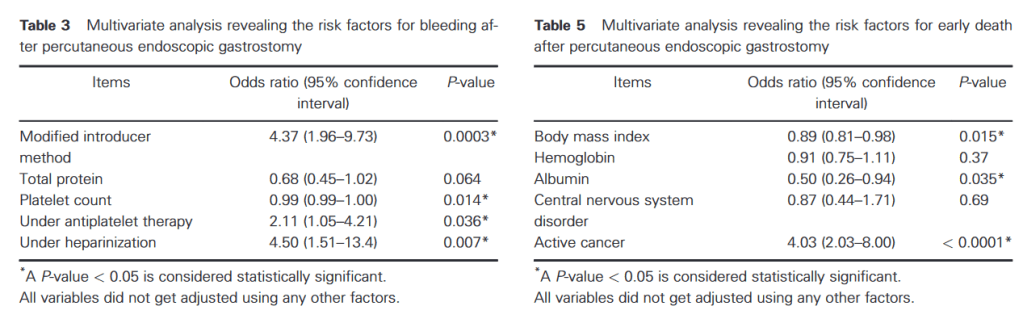
Risk factors for postoperative bleeding and early death in percutaneous endoscopic gastrostomy

“Gastrostomy is a method of tube feeding for patients incapable of oral intake. Percutaneous endoscopic gastrostomy (PEG) is performed in many hospitals in Japan. However, reports of postoperative bleeding or early postoperative death after PEG are limited.
Compared with nasogastric tube feeding, gastrostomy feeding has a favorable outcome, decreases treatment failure, decreases the frequency of gastrointestinal bleeding, and leads to increased serum albumin levels. However, as PEG is an invasive procedure, adverse events such as bleeding, local infection, peritonitis, and pulmonary aspiration may occur, thus worsening patient prognosis. Aspiration pneumonia has long been recognized as the
most common cause of death after PEG. However, there are no recent large-scale studies investigating the association between postoperative adverse events and early postoperative death in PEG.”

Continue reading

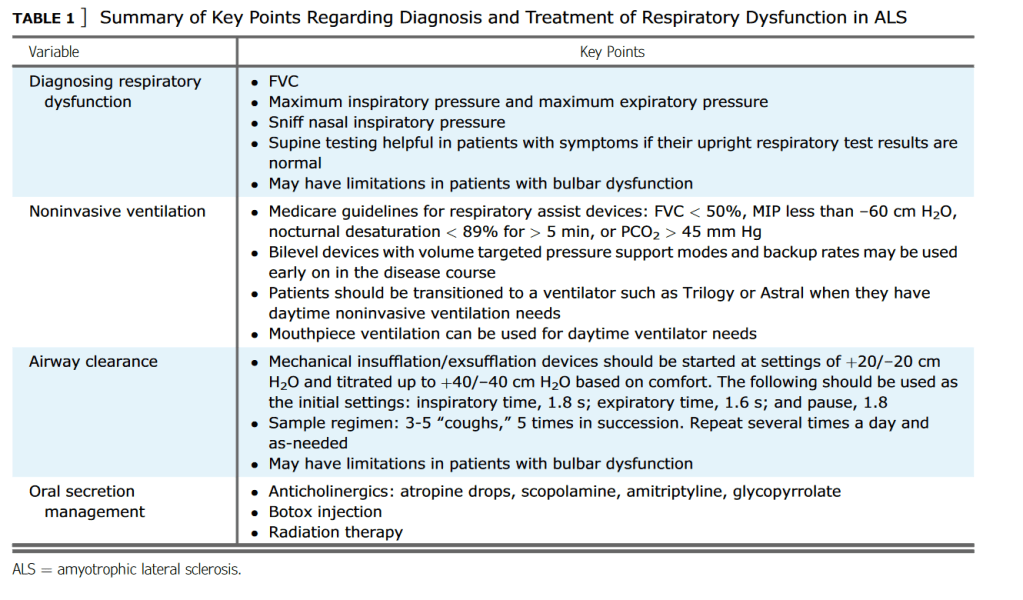
Respiratory Failure in Amyotrophic Lateral Sclerosis

“Amyotrophic lateral sclerosis is a progressive neuromuscular disease characterized by both
lower motor neuron and upper motor neuron dysfunction. Although clinical presentations can vary, there is no cure for ALS, and the disease is universally terminal, with most patients dying of respiratory complications. Patients die, on average, within 3 to 5 years of diagnosis, unless they choose to undergo tracheostomy, in which case, they may live, on average, 2 additional years. Up to 95% of patients with ALS in the United States choose not to undergo tracheostomy; management of respiratory failure is therefore aimed at both prolonging survival as well as improving quality of life. Standard of care for patients with ALS includes treatment from multidisciplinary teams, but many patients do not have consistent access to a pulmonary physician who regularly sees patients with this disease.”

Continue reading

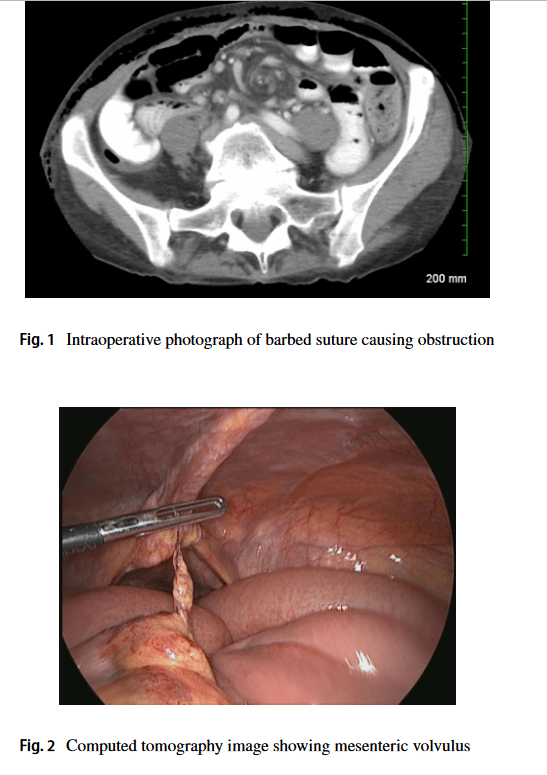
Small bowel obstructions following the use of barbed suture

“Barbed suture has been adopted across all surgical specialties. One of the infrequent complications seen with the use of barbed suture is small bowel obstructions (SBOs). In this study, we perform a review of the literature and the Manufacturer and User Facility Device Experience Database (MAUDE) to characterize SBOs after the use of barbed sutures
in a variety of operative procedures.”

Continue reading

Abdominal fascia dehiscence: is there a connection to a special microbial spectrum?

“Acute fascia dehiscence (FD) is a threatening complication occurring in 0.4–3.5% of cases after abdominal surgery. Prolonged hospital stay, increased mortality and increased rate of incisional hernias could be following consequences. Several risk factors are controversially discussed. Even though surgical infection is a known, indisputable risk factor, it is still not proven if a special spectrum of pathogens is responsible. In this study, we investigated if a specific spectrum of microbial pathogens is associated with FD.”

Continue reading