“Parastomal hernia, defined as an incisional hernia at the abdominal wall defect resulting from stoma formation, is a frequent complication of enterostomy (ileostomy and jejunostomy), colostomy, and urostomy. A growing body of evidence supports the use of prophylactic mesh at the time of stoma creation to prevent the development of PSH. In particular, the use of permanent mesh has been supported in the creation of an end colostomy, and prophylactic mesh has been studied for use in other types of stoma.”
Continue readingCategory Archives: Abdominal
Laparoscopic mesh versus suture repair of hiatus hernia
“Hiatus hernia contributes to the pathophysiology of gastroesophageal reflux disease (GERD). Mesh-augmentation of surgical repair might be associated with a reduced risk of recurrence and GERD. However, recurrence rates, mesh-associated complications and quality of life after mesh versus suture repair are debated. The aim of this meta-analysis was to determine HH recurrence following mesh-augmentation versus suture repair.”

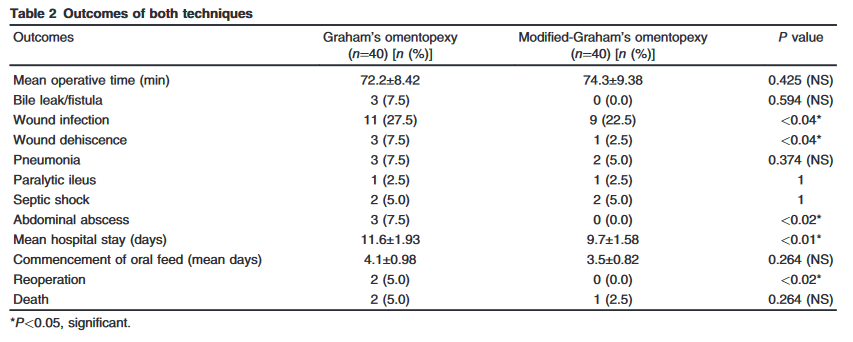
Comparative study between Graham’s omentopexy and modified-Graham’s omentopexy
“Peptic ulcer perforation is a frequent cause of hospitalization, which affects 2–10% of patients with peptic ulcer. Omentopexy is commonly used in emergency management of duodenal ulcer perforation. Omentopexy was first described by Cellen Jones in 1929 and was later modified by Graham in 1937. The surgical approaches for omental patching rely on two principles, that is, direct and indirect omentopexy.”

Anterior versus posterior component separationfor hernia repair in a cadaveric mode
Component separation via both anterior and posterior approaches provide substantial myofascial advancement.In our model, we noted statistically greater anterior fascial medialization after PCS versus ACS as a whole, and especiallyin the upper and mid-abdomen. We advocate PCS as a reliable and possibly superior alternative for linea alba restoration forreconstructive repairs, especially for large defects in the upper and mid-abdomen.

Component separation index
“Abdominal wall reconstruction in the ventral hernia patient represents a constant challenge to the general surgeon and plastic and reconstructive surgeon. Current studies lack a predictive value or objective 3-dimensional measurement to assist in the treatment algorithm or to assess and analyze surgical outcomes. On the basis of our current data, we believe the component seperation index, much like other commonly used anthropomorphic measurements, can assist with decisions for reconstructive options preoperatively.”

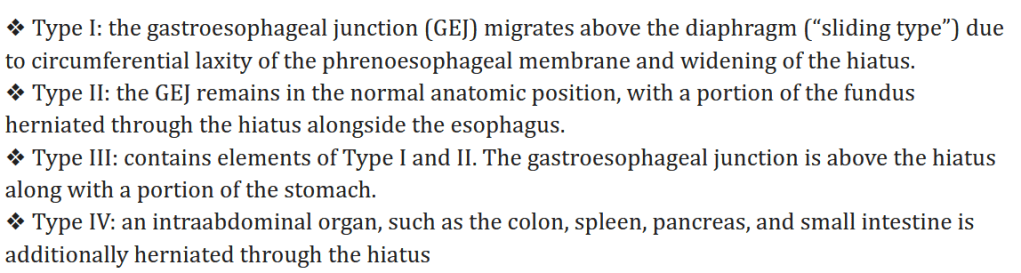
Fundoplication at the Time of Laparoscopic Paraesophageal Hernia Repair
“Laparoscopic paraesophageal hernia repair is a complex surgical problem with many variables that can affect the outcome. Based on the results of our carefully selected patients, the addition of a fundoplication minimizes postoperative reflux symptoms without additional operative time. In addition, neither dysphagia nor paraesophageal hernia recurrence is affected by the presence of a fundoplication.”

Management controversies for paraesophageal hernia
“Paraesophageal hernia repair remains a staple in the armamentarium of the foregut surgeon. Current literature suggests paraesophageal hernia repair should be approached
in a patient-centered, precision medicine manner. In general, hernia reduction, sac excision, and primary suture approximation of the hiatal crura are mandatory. Use of mesh should be based on individual risk factors; if mesh is used, biological meshes appear to have a more favorable safety profile, with the “reverse C” or keyhole configuration allowing for increase in crural tensile strength at it most vulnerable areas.”