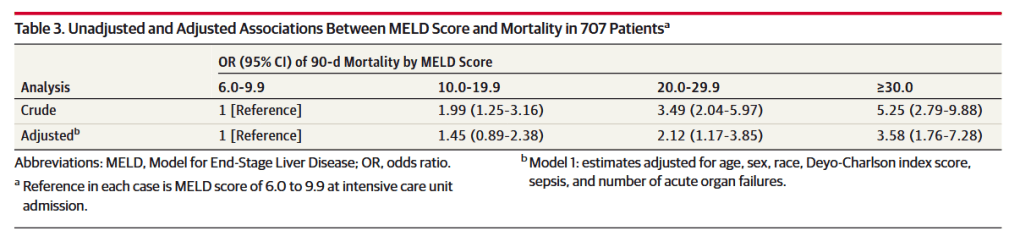
Association of Model for End-Stage Liver Disease Score With Mortality in Emergency General Surgery Patients

“Emergency general surgery (EGS) is associated with increased rates of morbidity and mortality compared with non-emergent general surgery cases.8 Patients undergoing EGS are approximately 2.5 times more likely to experience a significant complication and have a 6-fold increase in mortality relative to non-EGS patients. The underlying causes of this increased morbidity and mortality are not fully understood, but medical comorbidities and physiological derangements are likely to be contributing factors. Although surgical risk calculation tools such as the American College of Surgeons National Surgical Quality Improvement Project Surgical Risk Calculator are used to gain an objective sense of surgical risk stratification, such tools have yet to be comprehensively studied in this patient population and do not include the use of liver disease–specific assessment tools such as the MELD score in the prediction of outcomes among patients with CLD undergoing EGS.”
Continue reading

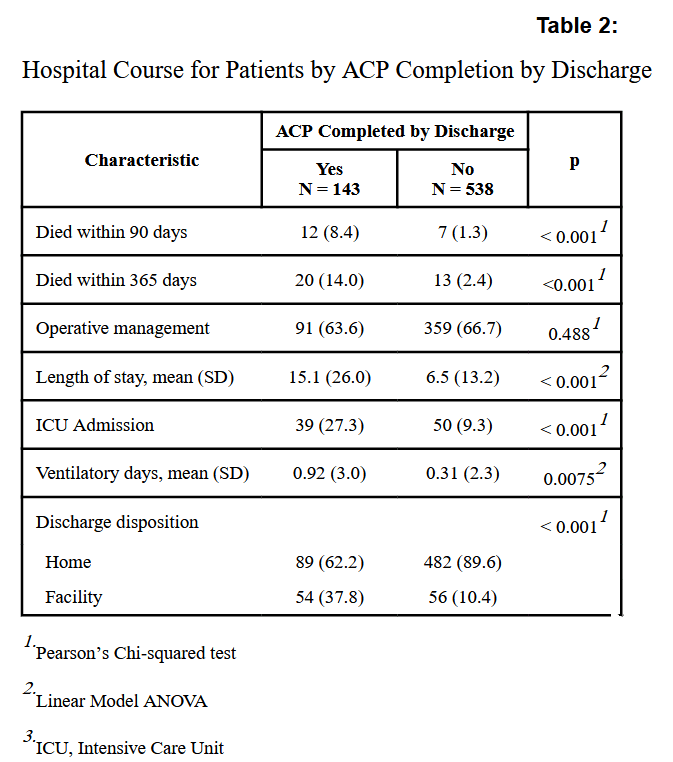
Disparities in advance care planning rates among emergency general surgery patients:

“Unanticipated changes in health status, new medical diagnoses, or worsening of previously
managed conditions often precipitate the prompt to consider emergency general surgery
(EGS) and make other major health-related decisions. Advance Care Planning (ACP) is the
process of understanding and sharing personal values, life goals, and preferences regarding
future medical care. ACP has traditionally focused on end-of-life treatment preferences
(e.g., cardiopulmonary resuscitation or mechanical ventilation), but the ACP paradigm has
been expanded more recently to prepare patients to communicate their medical wishes and
make informed medical decisions. This expanded ACP paradigm (3, 4) seeks to elicit
patients’ values about quality of life and such discussions can help align treatment intensity
with patient preferences to balance short-term risks and longer-term benefits of surgery and
management of post-surgical complications.”

Continue reading

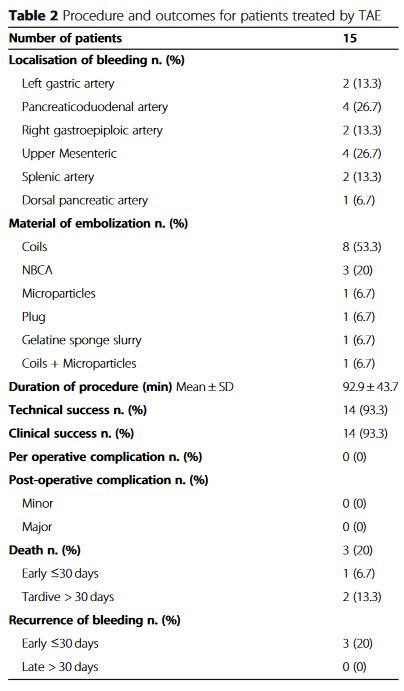
Emergency transarterial embolization for mesenteric bleeding – Safety and efficacy

“Mesenteric bleeding (MB) occurs rarely and its frequency is not well known. It corresponds to bleeding from mesenteric vessels in the abdominal cavity, without intra-luminal digestive bleeding. Although relatively rare, this pathology can be life-threatening if left undiagnosed and untreated. Clinically, MB are characterized by non-systematised abdominal pain and sudden blood loss. MB has many causes such as a post operative complication (especially after pancreaticoduodenectomy), traumatism, tumour, or may be idiopathic with no cause found. CT-scan is the gold standard of diagnostic imaging to identify the cause of MB. While the management of upper and lower gastrointestinal bleeding has been well established, the management of active mesenteric bleeding is less defined in the medical literature.”

Continue reading

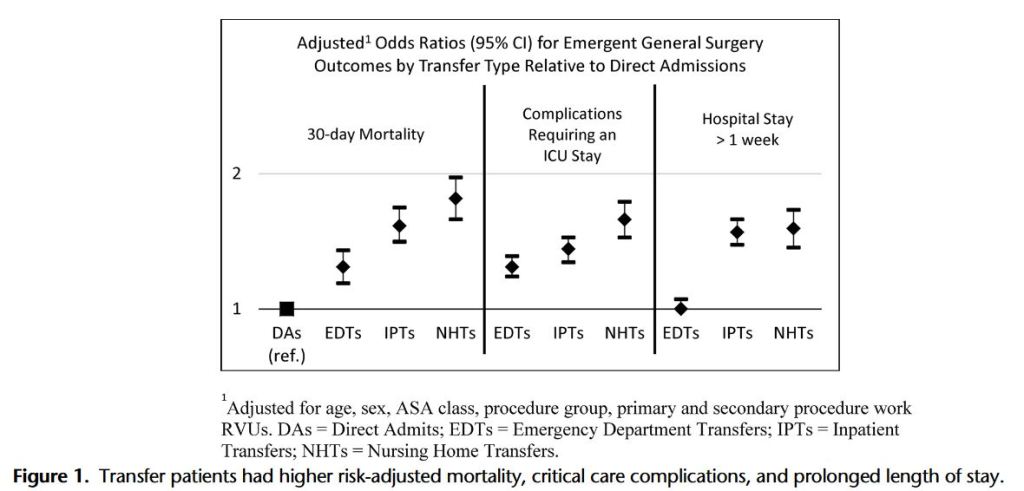
Effects of delay of emergent transfer of patients requiring surgery.

“Emergency general surgery (EGS) patients require greater resources and have increased rates of morbidity and mortality. Previous work has shown mortality differences in colectomy patients between direct admissions and transfers patients based on source, including emergency department, inpatient, and nursing home transfers. We hypothesize that patient transfer status negatively effects morbidity, mortality, and resource utilization in a mixed population of EGS patients.
This study demonstrates significant increases in mortality, morbidity, and resource utilization in EGS transfer patients who were not attributable to case mix, demographics, and comorbid status alone. These data point to potential financial and quality assessment challenges for tertiary referral centers.”

Continue reading

Frailty and Emergency Surgery

“Emergency surgery carries higher risk of mortality and morbidity. Appropriate risk assessment, attentive decision-making and carefully selected interventions are the cornerstones of a patient centered management.” (Leiner)

“Frailty, a “syndrome of loss of reserves,” is more than decade old concept. Initially it was used mainly in geriatrics but lately its use has been extended into other specialties including surgery. A meta-analysis demonstrated that frail surgical patients had a higher risk of readmission and increased risk of mortality.” (Leiner)

ACS NSQIP Surgical Risk Calculator

Continue reading