Anastomotic LeakageFollowing Colorectal Surgery

“Anastomotic leakage is a common yet one of the most feared complications following colorectal surgery. Dehiscence of the anastomosis can result in fatal complications such as peritonitis, abscess formation, and sepsis, thereby increasing morbidity and mortality, cost and length of hospital stay. Multiple factors contribute to the development of anastomotic dehiscence. Several studies have been published identifying various risk factors that may play a role in causing AL.” (Sripathi)

“Anastomotic leak in colorectal surgery is a multifactorial complication associated with an increased morbidity and mortality rate. It has remained the most feared complication over the past several years, despite numerous studies and technological advances like robotic surgery, staplers, and other anastomotic techniques. The clinical significance of reviewing and summarizing the risk factors of AL is to identify high-risk patients. Awareness and understanding of these factors will provide an opportunity to offer more comprehensive preoperative patient counseling.” (Sripathi)

Sripathi
Continue reading

Relationship Between the Number of Intersections of Staple Lines and Anastomotic Leakage

“The number of intersections of staple lines is associated with anastomotic leakage, and the inversion technique is a useful method for avoiding anastomotic leakage. Using an appropriate technique by skilled operator, double stapling technique for laparoscopic
anterior resection is safe and feasible.”

Laparoscopic intracorporeal colorectal anastomosis with double stapling technique is difficult because of the unsuitable cutting angle associated with using a linear stapler in the narrow pelvic cavity. Consequently, we sometimes have used multiple stapler firings during division of the rectum. Because of the long and tilted linear staple line placed on the rectal stump, a circular anastomotic plane can create multiple intersections of staple lines and dog-ears. Anastomotic leakage is a major problem in patients with colorectal cancer who have
undergo laparoscopic surgery. Despite technical improvements in laparoscopic surgery, recent studies have reported that the anastomotic leakage rate remains at 6.3% to 13.7%.” (Lee)

Lee
Continue reading

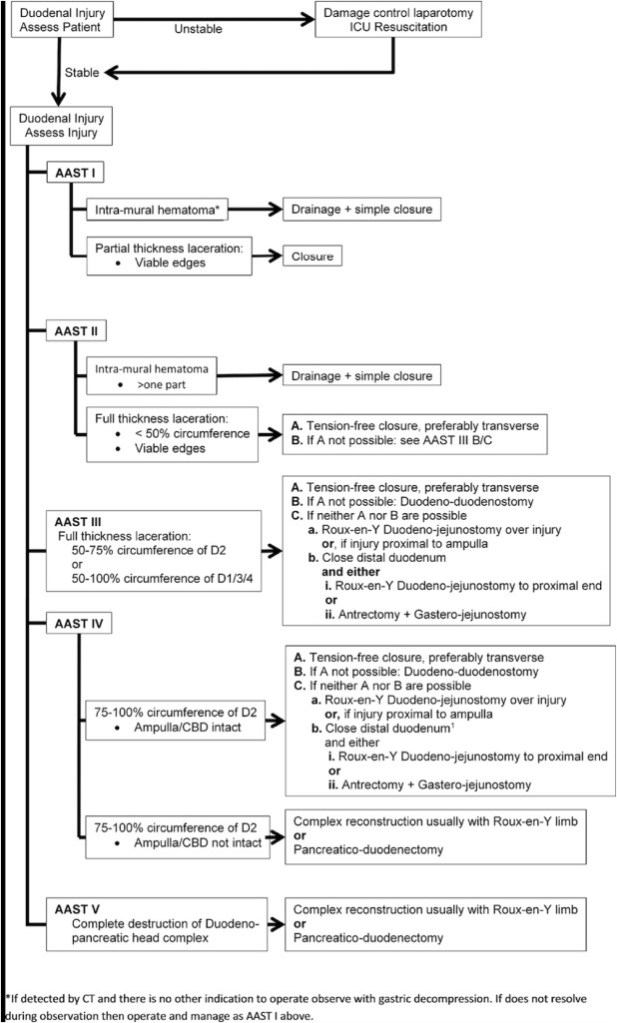
Management of the complex duodenal injury

“Duodenal trauma is a rare occurrence existing in 1–4.7% of all abdominal trauma. Its posterior and partially retroperitoneal location shields it from most traumatic mechanisms. Colloquially referred to as the ‘surgical soul’, its proximity to complex regional anatomy makes duodenal trauma particularly at risk for biliary, pancreatic and major vascular injury with 68–86.5% of patients sustaining an associated injury.”

Continue reading

Parkinson’s Gut Motility

“Growing evidence suggests an increasing significance for the extent of gastrointestinal tract (GIT) dysfunction in Parkinson’s disease (PD). Most patients suffer from GIT symptoms, including dysphagia, sialorrhea, bloating, nausea, vomiting, gastroparesis, and constipation during the disease course. The underlying pathomechanisms of this α-synucleinopathy play an important role in disease development and progression, i.e., early accumulation of Lewy pathology in the enteric and central nervous systems is implicated in pharyngeal discoordination, esophageal and gastric motility/peristalsis impairment, chronic pain, altered intestinal permeability and autonomic dysfunction of the colon, with subsequent constipation.”

Continue reading

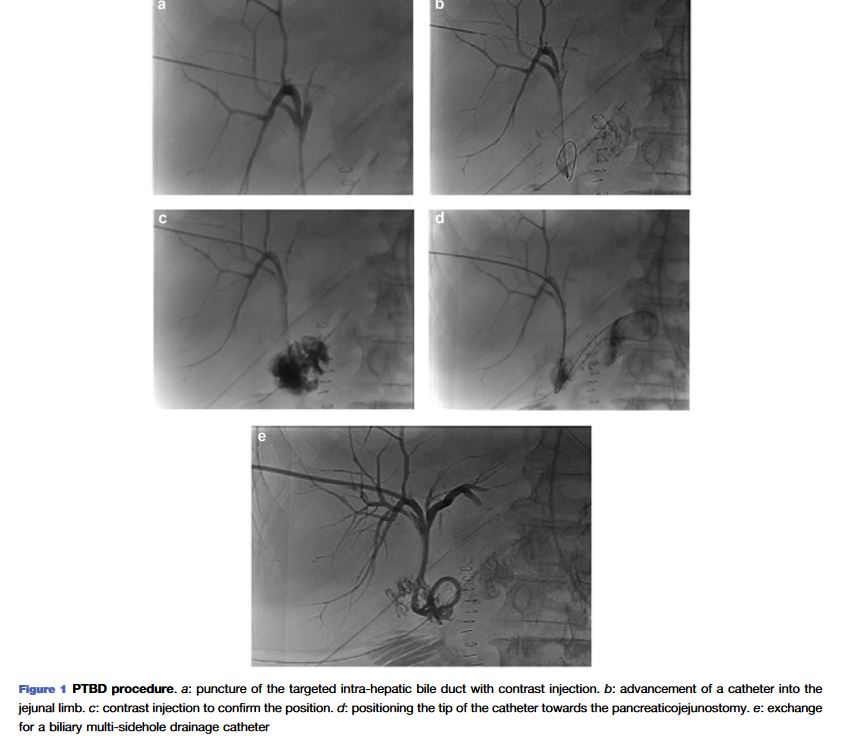
Percutaneous transhepatic biliary drainage (PTBD) in patients with biliopancreatic and biliary leak post-Whipple

“Complementary to percutaneous intra-abdominal drainage, percutaneous transhepatic
biliary drainage (PTBD) might ameliorate healing of pancreatic fistula and biliary leakage after pancreatoduodenectomy by diversion of bile from the site of leakage. Pancreatoduodenectomy is a complex surgical procedure associated with a high risk of complications (50%), even at specialized high-volume centers. A common complication is leakage of the pancreatic anastomosis: i.e. postoperative pancreatic fistula (POPF). The incidence of clinically relevant POPF (grade B/C) is approximately 12%. A less common complication is bile leakage, with an incidence varying between 1 and 4%.”

Continue reading

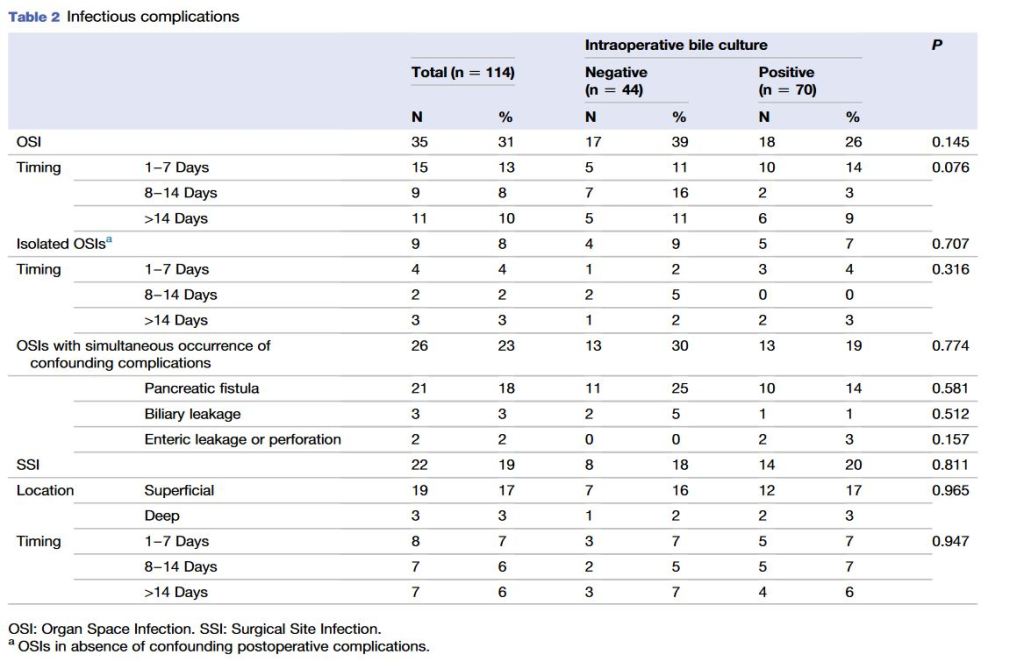
Association between positive intra-operative bile cultures during Whipple procedures and subsequent organ space infections

“The association between intraoperative bile cultures and infectious complications after
pancreatoduodenectomy remains unclear. Pancreatoduodenectomy remains a complex and technically demanding procedure with high rates of morbidity (25–52%) and mortality (1–3%). Infectious complications, such as surgical site infections (SSIs) and organ space infections (OSIs), are reported as the most common complications following pancreatoduodenectomy besides pancreatic fistula and delayed gastric emptying.”

Continue reading

Post-ERCP pancreatitis

“Acute pancreatitis is the most common post-procedural complication following endoscopic retrogrande cholangiopancreatography (ERCP). Its incidence is reported between 2.1% and 24.4%, with such variability being attributable to heterogeneous patient populations, differing levels of endoscopic expertise, procedural differences, disparate definitions of post-ERCP pancreatitis (PEP) and its severity”

“The pathophysiology of PEP is not entirely clear with a multi-factorial concept being held. This involves a combination of chemical, thermal, mechanic, hydrostatic, enzymatic, allergic, and microbiological insults that result from papillary instrumentation and/or hydrostatic injury
from the overfilling of the pancreatic duct with contrast material. The influence of these factors leads to a cascade of events resulting in premature intracellular activation
of pancreatic proteolytic enzymes, autodigestion, and the release of inflammatory cytokines that produce both local and systemic effects.”

Continue reading