
Adult intussusception. Determining the appropriate surgical procedure.

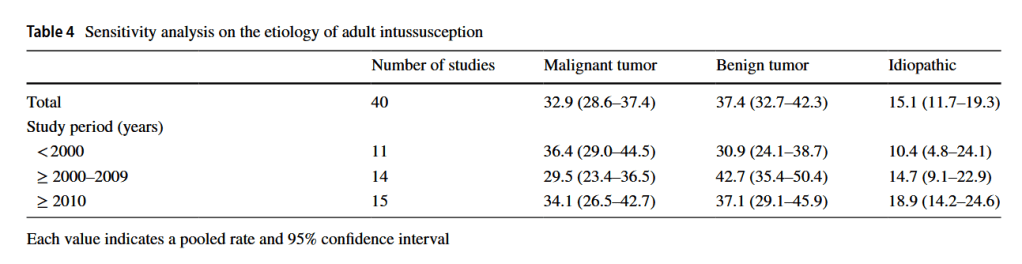
“Although surgery is the recommended treatment for adult intussusception, the optimal surgery remains controversial. Although abdominal computed tomography (CT) scan has
proven useful in diagnosing intussusception, it has limited value in discriminating whether a lead point is malignant, benign, or idiopathic. Reduction at surgery may avoid excessive bowel resection, although it can theoretically increase the risk of potential intraluminal seeding or venous tumor dissemination.
The aim of this study was to determine what the appropriate surgical procedure for adult intussusception is, depending on location of the intussusception or other specific situations.”
Continue reading

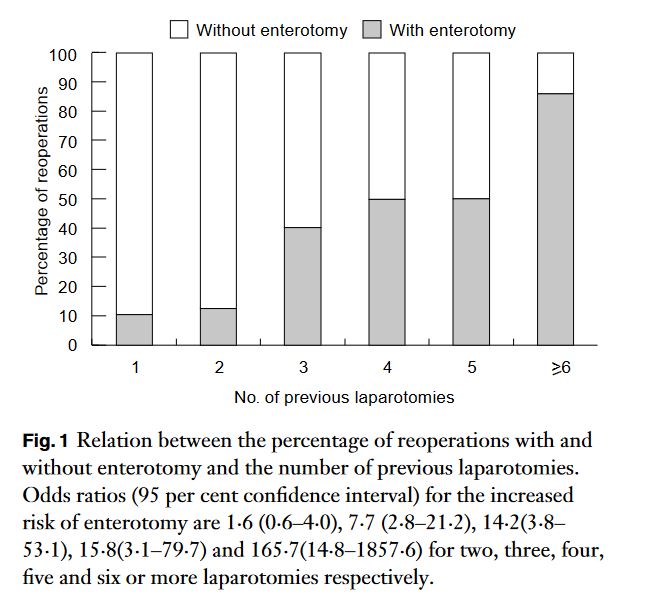
Morbidity and mortality of inadvertent enterotomy during adhesiotomy

“Postoperative intra-abdominal adhesions are a major concern in modern surgery. Intestinal obstruction is an important and well known clinical consequence of adhesions, resulting in significant morbidity and mortality rates, and high financial costs. Secondary infertility in women and chronic abdominal and pelvic pain are other, frequently cited, adhesion-related problems. Furthermore, intraabdominal adhesions render reoperation dif®cult and may
increase the complication rate of the intended surgical procedure. Prolonged operating time, unfeasibility of the laparoscopic approach and inadvertent enterotomy are known drawbacks of reoperative abdominal surgery, directly related to adhesions.”

Continue reading

Techniques for intraoperative evaluation of bowel viability inmesenteric ischemia:

“Acute mesenteric ischemia (AMI) accounts for approximately 1:1000 acute hospital admissions in the United States, and the incidence is on the rise likely due to an aging population as well as the prolonged survival of critically ill patients. AMI can be caused by a reduction in blood flow from arterial occlusion, venous occlusion, arterial vasospasm, or a low-flow state. Regardless of the etiology of the disease, rapid diagnosis and treatment of AMI is of critical importance”

Continue reading

Adhesiolysis-related morbidity in abdominal surgery

ten Broek RP, et al. Adhesiolysis-related morbidity in abdominal surgery. Ann Surg. 2013 Jul;258(1):98-106. 

Full-text for Emory users.

Results: A total of 755 (out of 844) surgeries in 715 patients were included. Adhesiolysis was required in 475 (62.9%) of operations. Median adhesiolysis time was 20 minutes (range: 1-177). Fifty patients (10.5%) undergoing adhesiolysis inadvertently incurred bowel defect, compared with 0 (0%) without adhesiolysis (P < 0.001). In univariate and multivariate analyses, adhesiolysis was associated with an increase of sepsis incidence [odds ratio (OR): 5.12; 95% confidence interval (CI): 1.06-24.71], intra-abdominal complications (OR: 3.46; 95% CI: 1.49-8.05) and wound infection (OR: 2.45; 95% CI: 1.01-5.94), longer hospital stay (2.06 ± 1.06 days), and higher hospital costs [$18,579 (15,204-21,954) vs $14,063 (12,471-15,655)]. Mortality after adhesiolysis complicated by a bowel defect was 4 out of 50 (8%), compared with 7 out of 425 (1.6%) after uncomplicated adhesiolysis (OR: 5.19; 95% CI: 1.47-18.41).

Continue reading

Visceral Hypersensitivity

Zhou Q, Verne GN. New insights into visceral hypersensitivity–clinical implications in IBS. Nat Rev Gastroenterol Hepatol. 2011 Jun;8(6):349-55.

Key points

  • Visceral and somatic hypersensitivity are present in some patients with functional gastrointestinal disorders
  • Injury to visceral afferents is the most common underlying cause of visceral hypersensitivity that is maintained by either peripheral and/or central nervous system mechanisms
  • Animal models of hypersensitivity have been used to examine the neural mechanisms of hypersensitivity following inflammatory injury, such as alterations in the N-methyl, D-aspartate receptor, dorsal horn neurons or c-Fos
  • Increased intestinal permeability might lead to hypersensitivity and abdominal pain in patients with functional gastrointestinal disorders
  • Functional gastrointestinal disorders are similar to other chronic pain disorders in which persistent nociceptive mechanisms are activated

Continue reading