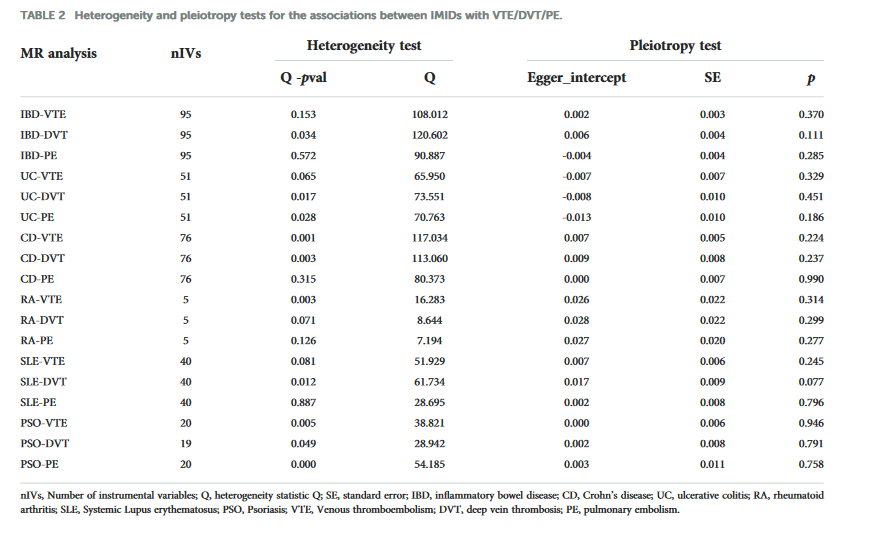
Immune-mediated inflammatory diseases and risk of venous thromboembolism:

“Venous thromboembolism (VTE), including deep vein thrombosis (DVT) and pulmonary embolism (PE), affects ~10 million people worldwide every year, representing the third most
common cardiovascular disease globally. The 30-day case fatality rate after VTE diagnosis is 10.6%, with about 30% to 50% of survivors developing long-term complications that increase
the burden of this disease.”

Continue reading

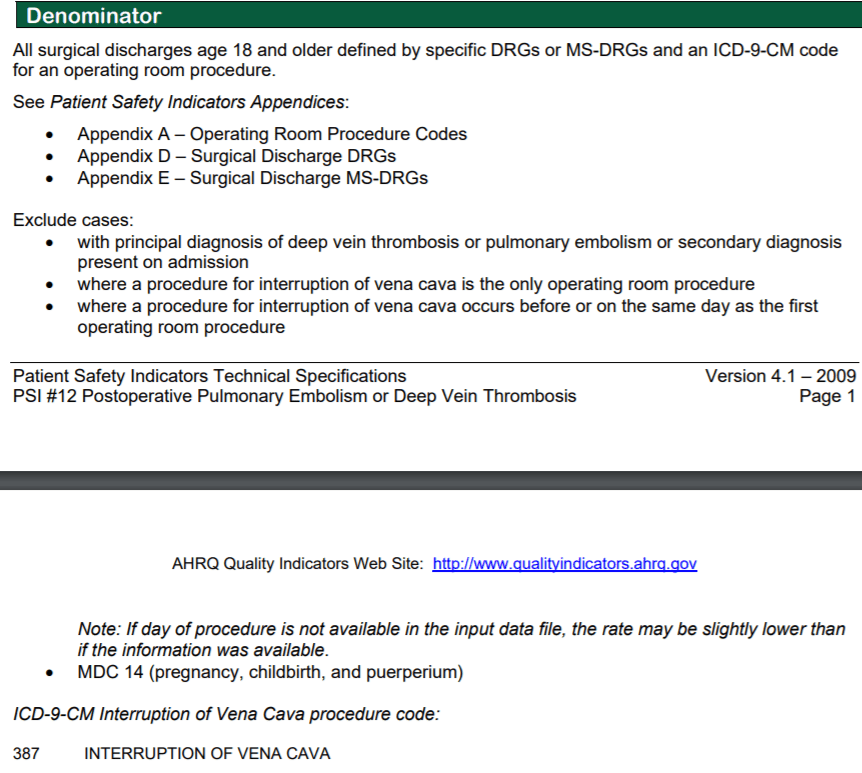
Risk of postoperative deep vein thrombosis and pulmonary embolism in patients with inflammatory bowel disease

“An increased risk of DVT and PE in patients with IBD has been evident for the past 75 years. Most work in this area has not looked specifically at patients undergoing surgery. Patients with IBD frequently require surgical intervention, and an understanding of their risk of venous thromboembolism is therefore an important issue. This study aimed to examine rates of DVT and PE in patients with IBD undergoing surgery using data from the NSQIP.”

Continue reading

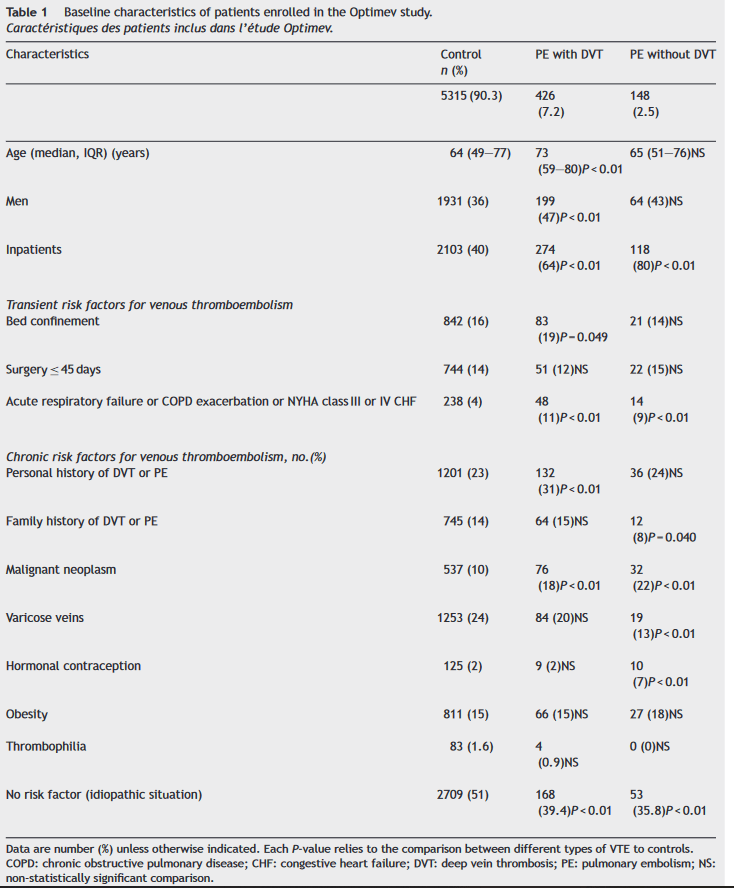
Optimev study. Clinical presentation and mortality in pulmonary embolism

“Venous thromboembolism (VTE), including deep vein thrombosis (DVT) and pulmonary embolism (PE), is a common clinical problem associated with significant mortality and life-long morbidity among hospitalized patients and outpatients. The diagnosis of VTE is challenging because of the non specific signs and symptoms of this disease.”

“The aim of this study was to investigate the clinical presentation and 3-month mortality associated with some forms of VTE: PE with DVT, and PE without DVT.”

Continue reading

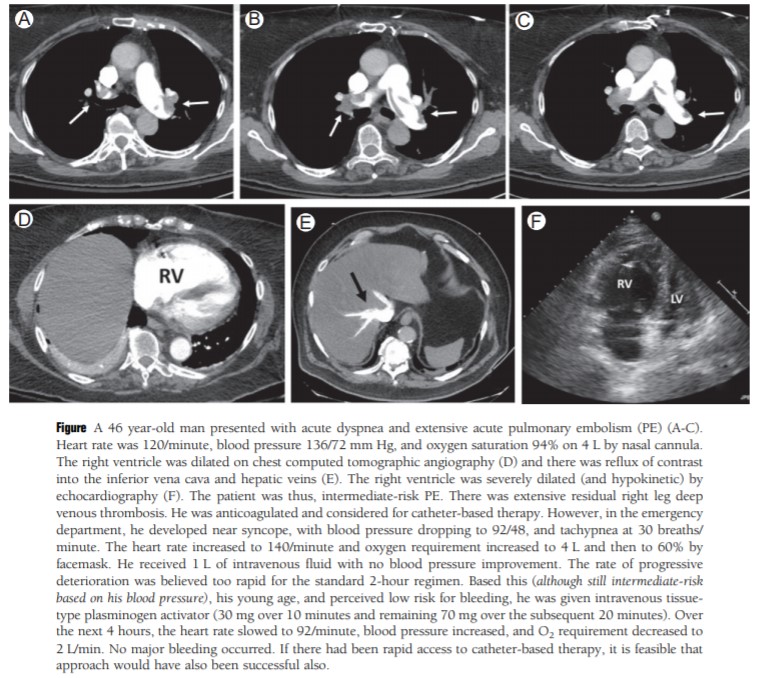
Systemic Thrombolysis for Pulmonary Embolism

Tapson VF, Friedman O. Systemic Thrombolysis for Pulmonary Embolism: Who and How. Tech Vasc Interv Radiol. 2017 Sep;20(3):162-174.

Full-text for Emory users.
PE screenshot

“For several decades, clinicians and clinical trialists have worked toward a more aggressive, yet safe solution for patients with intermediate-risk PE. Standard-dose thrombolysis, low-dose systemic thrombolysis, and catheter-based therapy which includes a number of devices and techniques, with or without low-dose thrombolytic therapy, have offered potential solutions and this area has continued to evolve. On the basis of heterogeneity within the category of intermediate-risk as well as within the high-risk group of patients, we will focus on the use of systemic thrombolysis in carefully selected high- and intermediate-risk patients. In certain circumstances when the need for aggressive therapy is urgent and the bleeding risk is acceptable, this is an appropriate approach, and often the best one.”


More PubMed results on systemic thrombolysis.