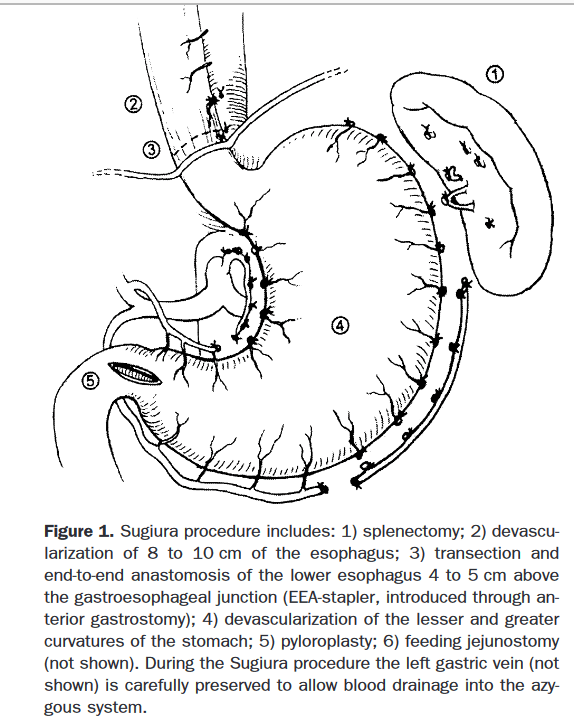
“Study results indicate that the modified Sugiura procedure is an effective rescue therapy in patients who are not candidates for selective shunts, transhepatic porto-systemic shunt, or transplantation. Emergency settings and decreased liver function are associated with an increased morbidity.”
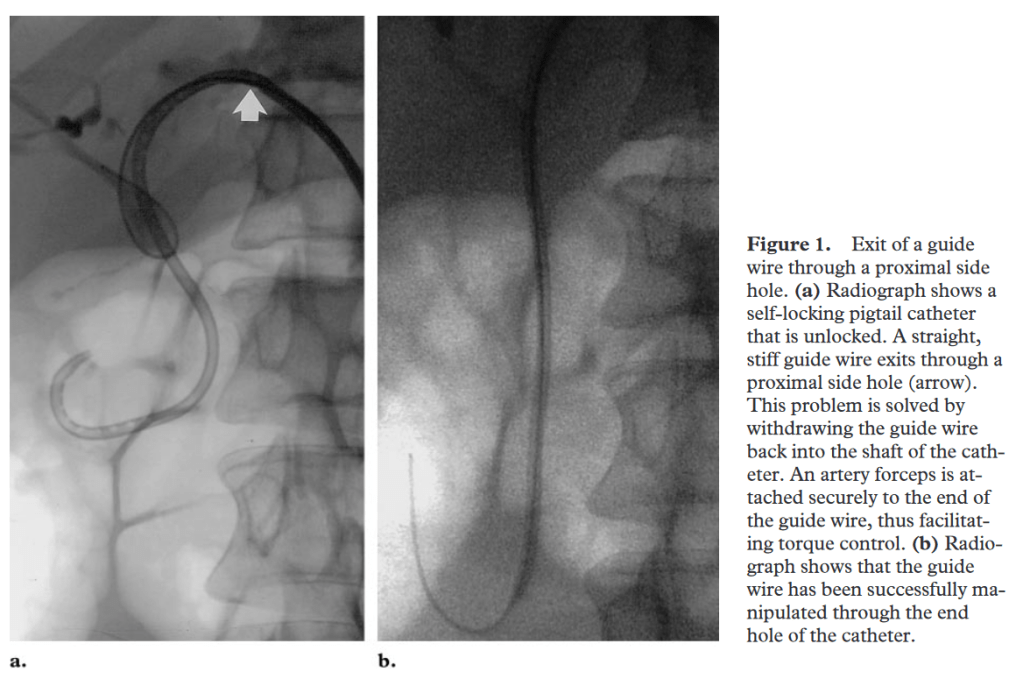
“Management of interventional radiology catheters has received much less attention in the literature than the techniques of catheter placement. However, this aspect of patient care by interventional radiologists is vitally important in avoiding catheter-related problems.”
Abdominal wall reconstruction is a relevant and important topic not only in plastic and reconstructive surgery, but in the practice of general surgeons. The ideal anatomic location for mesh placement during the repair of ventral hernias has been debated; however, the most common anatomic locations include onlay, inlay, sublay-retromuscular, sublaypreperitoneal, and sublay-intraperitoneal techniques (Alimi)
Component separation via both anterior and posterior approaches provide substantial myofascial advancement.In our model, we noted statistically greater anterior fascial medialization after PCS versus ACS as a whole, and especiallyin the upper and mid-abdomen. We advocate PCS as a reliable and possibly superior alternative for linea alba restoration forreconstructive repairs, especially for large defects in the upper and mid-abdomen.
“Abdominal wall reconstruction in the ventral hernia patient represents a constant challenge to the general surgeon and plastic and reconstructive surgeon. Current studies lack a predictive value or objective 3-dimensional measurement to assist in the treatment algorithm or to assess and analyze surgical outcomes. On the basis of our current data, we believe the component seperation index, much like other commonly used anthropomorphic measurements, can assist with decisions for reconstructive options preoperatively.”
“Laparoscopic paraesophageal hernia repair is a complex surgical problem with many variables that can affect the outcome. Based on the results of our carefully selected patients, the addition of a fundoplication minimizes postoperative reflux symptoms without additional operative time. In addition, neither dysphagia nor paraesophageal hernia recurrence is affected by the presence of a fundoplication.”
“Paraesophageal hernia repair remains a staple in the armamentarium of the foregut surgeon. Current literature suggests paraesophageal hernia repair should be approached in a patient-centered, precision medicine manner. In general, hernia reduction, sac excision, and primary suture approximation of the hiatal crura are mandatory. Use of mesh should be based on individual risk factors; if mesh is used, biological meshes appear to have a more favorable safety profile, with the “reverse C” or keyhole configuration allowing for increase in crural tensile strength at it most vulnerable areas.”
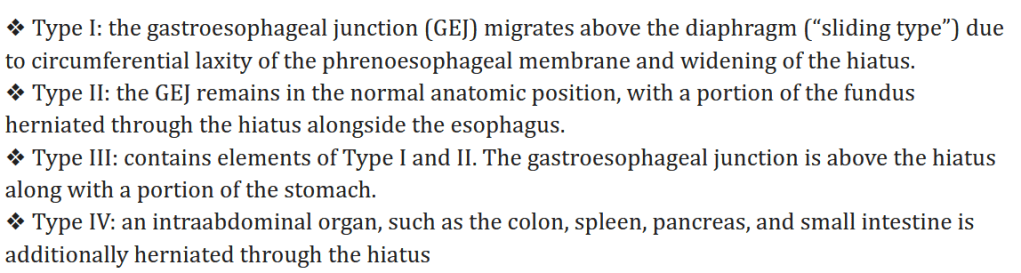
Hiatal hernias are categorized into four types (Rogers)Continue reading →