Diagnosis and Management of Hyponatremia and Hypernatremia

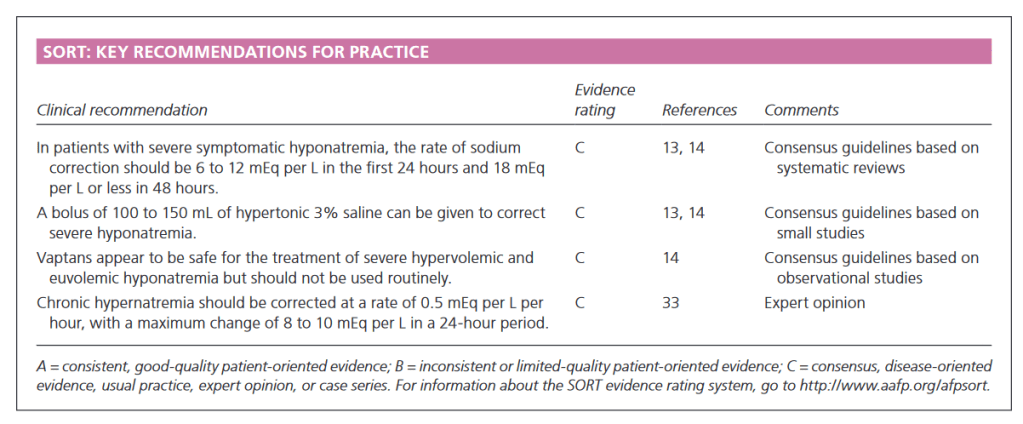
“Hyponatremia and hypernatremia are common findings in the inpatient and outpatient settings. Sodium disorders are associated with an increased risk of morbidity and mortality. Plasma osmolality plays a critical role in the pathophysiology and treatment of sodium disorders. Hyponatremia and hypernatremia are classified based on volume status (hypovolemia, euvolemia, and hypervolemia). Sodium disorders are diagnosed by findings from the history, physical examination, laboratory studies, and evaluation of volume status. Treatment is based on symptoms and underlying causes. In general, hyponatremia is treated with fluid restriction (in the setting of euvolemia), isotonic saline (in hypovolemia), and diuresis (in hypervolemia).”
Braun
Continue reading →

Management of anticoagulation in patients with mechanical heart valves undergoing noncardiac surgical procedures

“Although the American Heart Association (AHA) and American College of Cardiology (ACC) and the American College of Chest Physicians (ACCP) provide guidelines on anticoagulation for patients with MHVs, limited guidance is provided for bridging anticoagulation 2,3 The guidelines are focused on preoperative bridging, with virtually no guidance on postoperative bridging.”

Continue reading →

Histological Margin Positivity in the Prediction of Recurrence After Crohn’s Resection

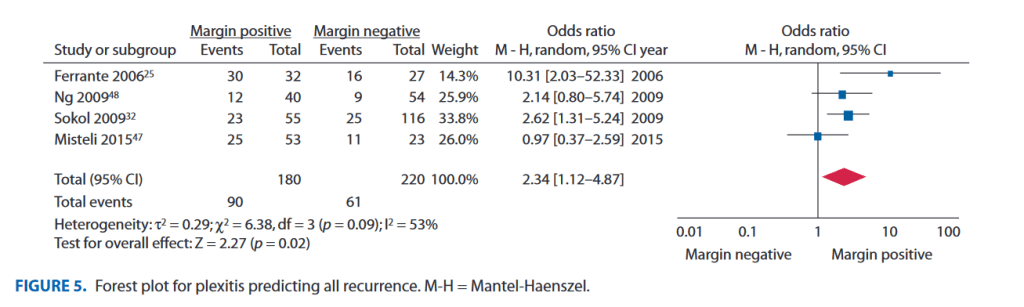
“The presence of involved histological margins at the time of index resection in Crohn’s disease is associated with recurrence, and plexitis shows promise as a marker of more aggressive disease. Further studies with homogeneity of histopathological and recurrence reporting are required.“”The presence of involved histological margins at the time of index resection in Crohn’s disease is associated with recurrence, and plexitis shows promise as a marker of more aggressive disease. Further studies with homogeneity of histopathological and recurrence reporting are required.“

Continue reading →

Optimev study. Clinical presentation and mortality in pulmonary embolism

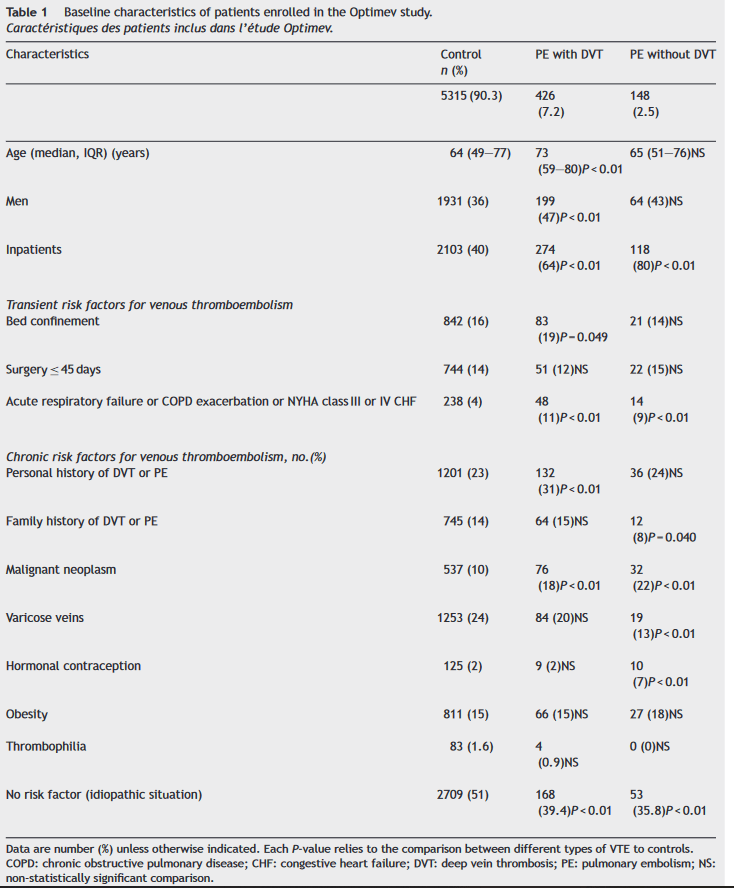
“Venous thromboembolism (VTE), including deep vein thrombosis (DVT) and pulmonary embolism (PE), is a common clinical problem associated with significant mortality and life-long morbidity among hospitalized patients and outpatients. The diagnosis of VTE is challenging because of the non specific signs and symptoms of this disease.”

“The aim of this study was to investigate the clinical presentation and 3-month mortality associated with some forms of VTE: PE with DVT, and PE without DVT.”

Continue reading →

Sugammadex and anaphylaxis

“Anaphylaxis is described as a severe, life‑threatening, generalized or systemic hypersensitivity reaction. It occurs rarely during surgery and anesthesia but neuromuscular blocking agents, non‑steroidal anti‑inflammatory drugs (NSAIDs), and antibiotics are considered common causes of anaphylaxis”

“Sugammadex is a synthetic modified gamma‑cyclodextrin derivative first designed to selectively bind to the steroidal neuromuscular blocking agent molecule to provide rapid recovery of neuromuscular function. Sugammadex is extensively used for reversing the effects of rocuronium and to a lesser extent, vecuronium.”

Continue reading →