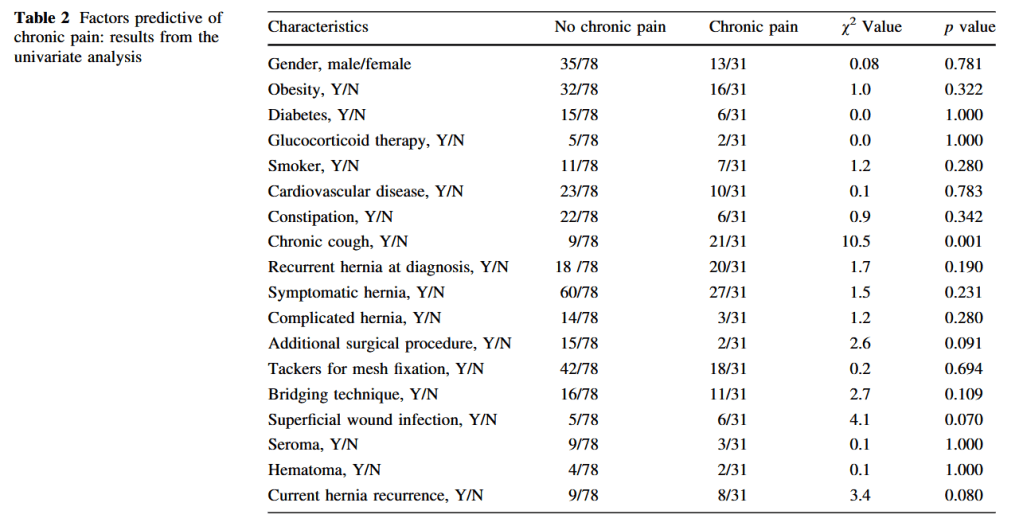
Risk Factors for Chronic Pain after Open Ventral Hernia Repair by Underlay Mesh Placement

“Incisional hernia is one of the most frequent long-term complications after abdominal surgery (11%–20%). After primary repair, rates of recurrence range from 24% to 54%. It has been clearly demonstrated that the use of prostheses for a tension-free repair allows for a
significant reduction in recurrence rate, and even for the treatment of small defects. However, the type and position of the mesh and the mesh fixation technique used are still a matter of debate. The underlay position of the mesh allows for easy treatment of major parietal defects with limited dissection and potentially lower rates of mesh infection, but this position exposes the patient to the risk of small bowel occlusion and enterocutaneous fistula.”
Continue reading

Inadvertent Enterotomy in Minimally Invasive Abdominal Surgery

“Inadvertent enterotomy (IE) is one of the underreported complications in abdominal surgery. Krabben et al reported a 19% incidence of IE in patients who had a repeat
laparotomy. The incidence of and risk factors for IE during enterolysis were reported in a cohort of patients reoperated on. According to Krabben et al, the risk of inadvertent enterotomy in open surgery is more than 10-fold in patients with a history of 3 or more previous laparotomies.”

Continue reading

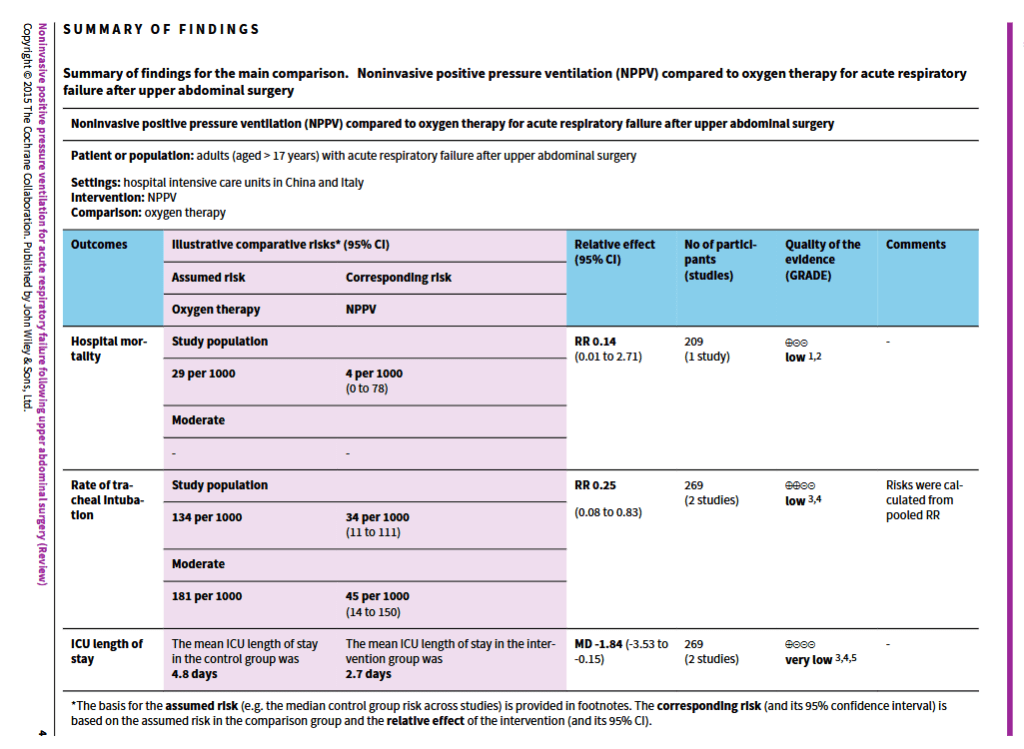
Noninvasive positive pressure ventilation for acute respiratory failure following upper abdominal surgery

“More than four million abdominal surgeries are performed in the US every year and in England about 250,000 abdominal operations are performed per year. Adults undergoing upper abdominal surgery are at an increased risk of postoperative pulmonary complications.
Acute respiratory failure is a relatively common complication after abdominal surgery and is associated with significant morbidity and mortality. According to Michelet 2010, the development of respiratory complication may be explained by two pathological mechanisms.
The first is linked to surgical complications, notably with the occurrence of anastomotic leakage leading to mediastinitis, septic shock, and acute respiratory distress. The second is of medical origin, with multifactorial impairment of respiratory function.”

Continue reading

Postoperative CD4 counts predict anastomotic leaks in patients withpenetrating abdominal trauma

“Survival following penetrating abdominal trauma has improved significantly, nonetheless despite enhanced resuscitation and surgical intervention strategies the immune mediated systemic inflammatory response syndrome (SIRS) continues to result in organ dysfunction and potential death. Posttraumatic lymphopenia or altered cell-mediated immunity as a result of decreased lymphocyte subsets may affect SIRS severity; however in penetrating trauma it is uncertain which factors may result in decreased CD4 counts and whether or not these changes affect postoperative outcomes, in particular anastomotic complications.”

Continue reading

Abdominal fascia dehiscence: is there a connection to a special microbial spectrum?

“Acute fascia dehiscence (FD) is a threatening complication occurring in 0.4–3.5% of cases after abdominal surgery. Prolonged hospital stay, increased mortality and increased rate of incisional hernias could be following consequences. Several risk factors are controversially discussed. Even though surgical infection is a known, indisputable risk factor, it is still not proven if a special spectrum of pathogens is responsible. In this study, we investigated if a specific spectrum of microbial pathogens is associated with FD.”

Continue reading

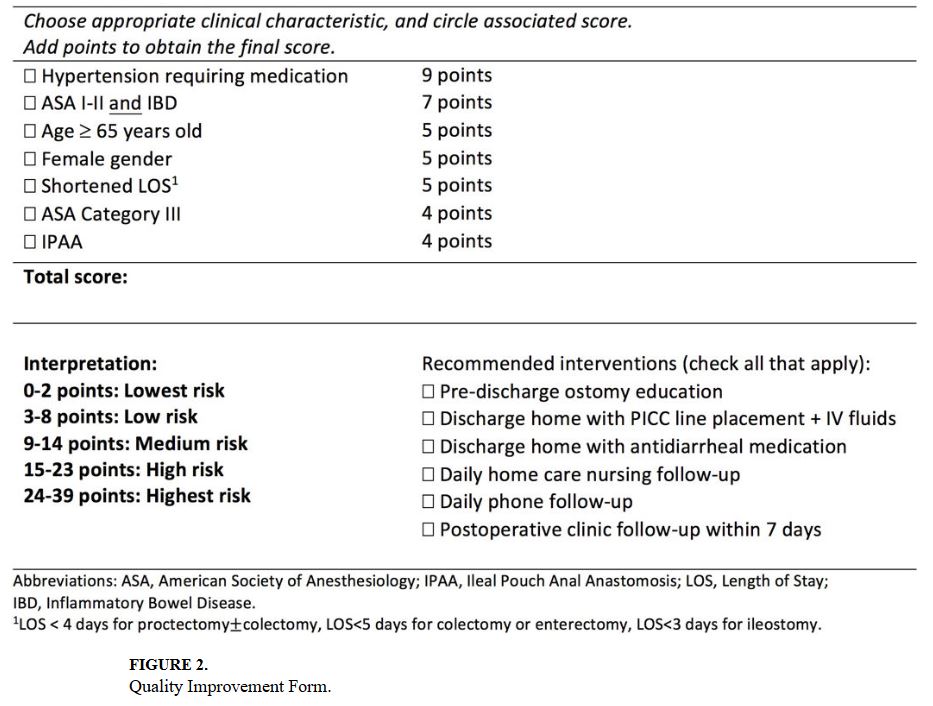
Predicting the Risk of Readmission From Dehydration After Ileostomy Formation

“Readmission within 30-days of hospital discharge has received widespread attention as a
potential healthcare quality indicator. In 2013, the Center for Medicare and Medicaid
Services established the Hospital Readmission Reduction Program (HRRP), a cost-
containment strategy that financially penalizes hospitals with higher than expected 30-day
readmission. Though conditions targeted by the HRRP have been predominately medical, it
is anticipated that readmission after surgical procedures will be used to structure financial
incentives and hospital compensation in the near future.”

Continue reading

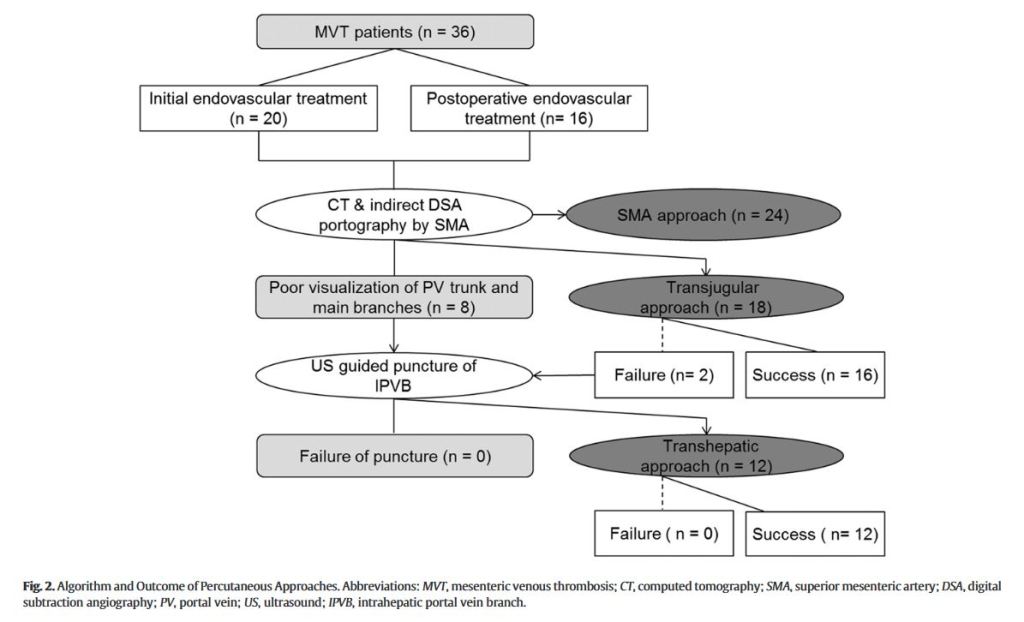
Multidisciplinary Stepwise Management Strategy for Acute Superior Mesenteric Venous Thrombosis

“Acute mesenteric ischemia (AMI) is a rare but catastrophic abdominal vascular emergency associated with a daunting mortality comparable to myocardial infarction or cerebral stroke. Mesenteric vein thrombosis (MVT) is the least common form, accounting for 6% to 9%, of AMI, mainly involving the superior mesenteric vein (SMV). Despite the lack of specific biomarker and insidious symptomatology profile, incidence of acute superior mesenteric venous thrombosis (ASMVT) has been increasing worldwide due to the raised awareness
as well as widespread use of contrast-enhanced computed tomography (CT) portography, which facilitates early diagnosis with sensitivity of over 90%.”

Continue reading