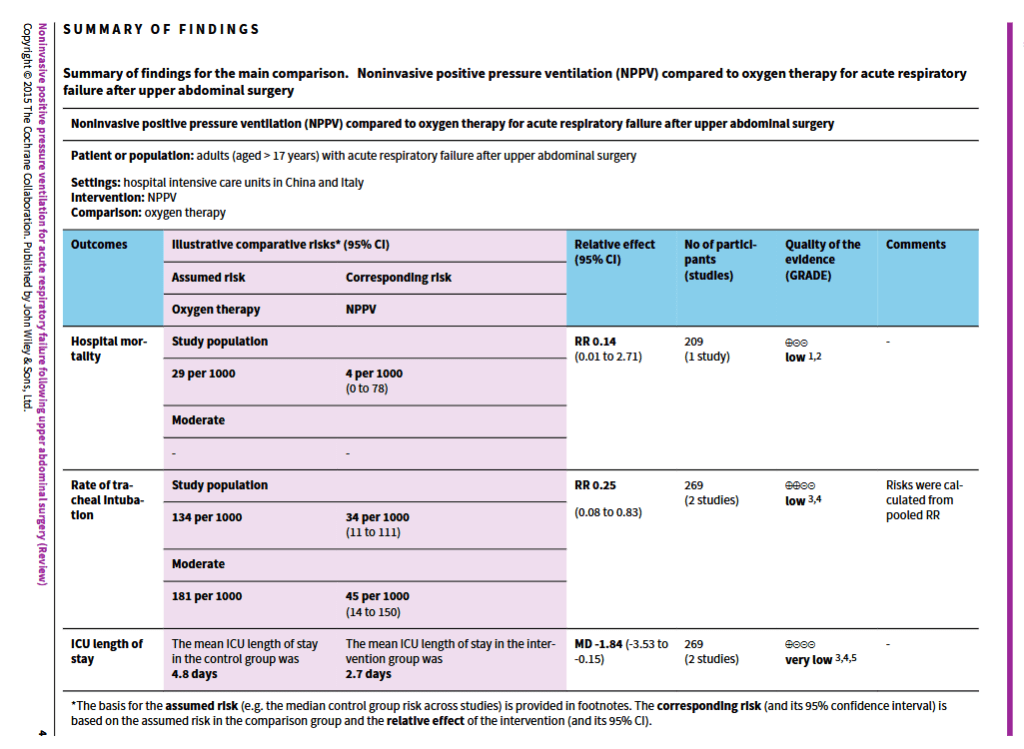
Noninvasive positive pressure ventilation for acute respiratory failure following upper abdominal surgery

“More than four million abdominal surgeries are performed in the US every year and in England about 250,000 abdominal operations are performed per year. Adults undergoing upper abdominal surgery are at an increased risk of postoperative pulmonary complications.
Acute respiratory failure is a relatively common complication after abdominal surgery and is associated with significant morbidity and mortality. According to Michelet 2010, the development of respiratory complication may be explained by two pathological mechanisms.
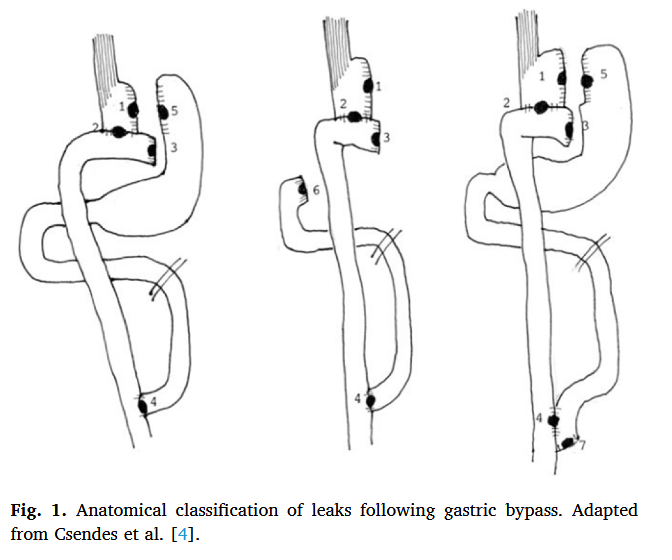
The first is linked to surgical complications, notably with the occurrence of anastomotic leakage leading to mediastinitis, septic shock, and acute respiratory distress. The second is of medical origin, with multifactorial impairment of respiratory function.”

Continue reading

Postoperative CD4 counts predict anastomotic leaks in patients withpenetrating abdominal trauma

“Survival following penetrating abdominal trauma has improved significantly, nonetheless despite enhanced resuscitation and surgical intervention strategies the immune mediated systemic inflammatory response syndrome (SIRS) continues to result in organ dysfunction and potential death. Posttraumatic lymphopenia or altered cell-mediated immunity as a result of decreased lymphocyte subsets may affect SIRS severity; however in penetrating trauma it is uncertain which factors may result in decreased CD4 counts and whether or not these changes affect postoperative outcomes, in particular anastomotic complications.”

Continue reading

Abdominal fascia dehiscence: is there a connection to a special microbial spectrum?

“Acute fascia dehiscence (FD) is a threatening complication occurring in 0.4–3.5% of cases after abdominal surgery. Prolonged hospital stay, increased mortality and increased rate of incisional hernias could be following consequences. Several risk factors are controversially discussed. Even though surgical infection is a known, indisputable risk factor, it is still not proven if a special spectrum of pathogens is responsible. In this study, we investigated if a specific spectrum of microbial pathogens is associated with FD.”

Continue reading

Predicting the Risk of Readmission From Dehydration After Ileostomy Formation

“Readmission within 30-days of hospital discharge has received widespread attention as a
potential healthcare quality indicator. In 2013, the Center for Medicare and Medicaid
Services established the Hospital Readmission Reduction Program (HRRP), a cost-
containment strategy that financially penalizes hospitals with higher than expected 30-day
readmission. Though conditions targeted by the HRRP have been predominately medical, it
is anticipated that readmission after surgical procedures will be used to structure financial
incentives and hospital compensation in the near future.”

Continue reading

Multidisciplinary Stepwise Management Strategy for Acute Superior Mesenteric Venous Thrombosis

“Acute mesenteric ischemia (AMI) is a rare but catastrophic abdominal vascular emergency associated with a daunting mortality comparable to myocardial infarction or cerebral stroke. Mesenteric vein thrombosis (MVT) is the least common form, accounting for 6% to 9%, of AMI, mainly involving the superior mesenteric vein (SMV). Despite the lack of specific biomarker and insidious symptomatology profile, incidence of acute superior mesenteric venous thrombosis (ASMVT) has been increasing worldwide due to the raised awareness
as well as widespread use of contrast-enhanced computed tomography (CT) portography, which facilitates early diagnosis with sensitivity of over 90%.”

Continue reading

Prophylactic nasogastric decompression after abdominal surgery

“The prophylactic use of nasogastric tubes after abdominal operations, flexible tubes inserted through the nose, pharynx, oesophagus and into the stomach, has happened only in the last century, becoming so prevalent that it has been variously described as “the standard of care” (Montgomery 1996), “traditionally used by most surgeons” (Lee 2002), “common practice” (Cunningham 1992, Sakadamis 1999, Manning 2001), “unquestioned” (Savassi-Rocha 1992), and “routine” (Wolff 1989). What is to be achieved by this prophylaxis is gastric decompression, decreased likelihood of nausea and vomiting, decreased distention, less chance of pulmonary aspiration and pneumonia, less chance of wound separation and infection, less chance of fascial dehiscence and hernia, earlier return of bowel function, and earlier hospital discharge.”

Continue reading

Transjugular intrahepatic portosystemic shunt before abdominal surgery in cirrhotic patients

“Abdominal surgery is occasionally needed in cirrhotic patients and is associated with high morbidity and mortality rates. It has been suggested that the main determinant of short- and long-term survival is the degree of liver failure, as evaluated by the presence of ascites, low serum albumin level and coagulation disorders. In addition, the degree of portal
hypertension may be an independent predictor for operative bleeding, postoperative ascites leakage or variceal rupture; this may also influence survival. Transjugular intrahepatic portosystemic shunt (TIPS) placement is much less invasive than surgical shunts and can be performed in patients with a significant degree of liver insufficiency. Therefore, it has been suggested that preoperative TIPS placement may improve the prognosis of cirrhotic patients, submitted to abdominal surgery.”

Continue reading