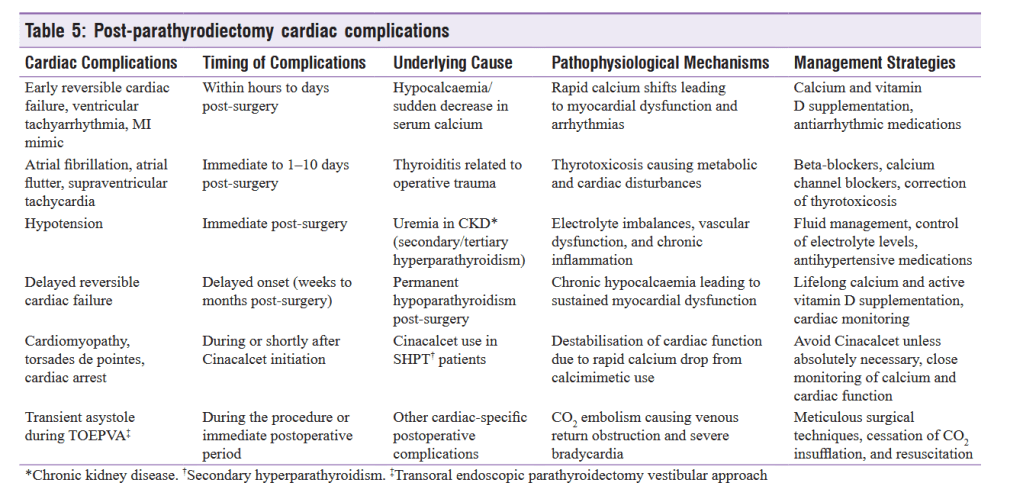
Cardiac Complications Post Parathyroidectomy

“Parathyroidectomy (PTX) is primarily performed to treat primary and secondary hyperparathyroidism (HPT) and has been shown to reduce cardiac risk factors, including ECG abnormalities, 2D-echo abnormalities, arrhythmias, and NT-proBNP levels Cardiac complications, though rare, can occur in patients undergoing thyroidectomy. In a US-based cohort of 3,575 patients, approximately 0.2%–0.3% developed congestive heart failure (CHF) during follow-up. A study by Kravietz et al. found that while readmission rates were lower in primary HPT (PHPT) patients (5.6%) compared to secondary HPT (SHPT) patients (19.4%), heart failure was more prevalent in PHPT patients (10.8%) compared to SHPT patients (3.9%). Additionally, patients with existing CHF undergoing PTX have a higher likelihood of readmission. Although cardiac complications are rare, they can occasionally be fatal.”
Continue reading

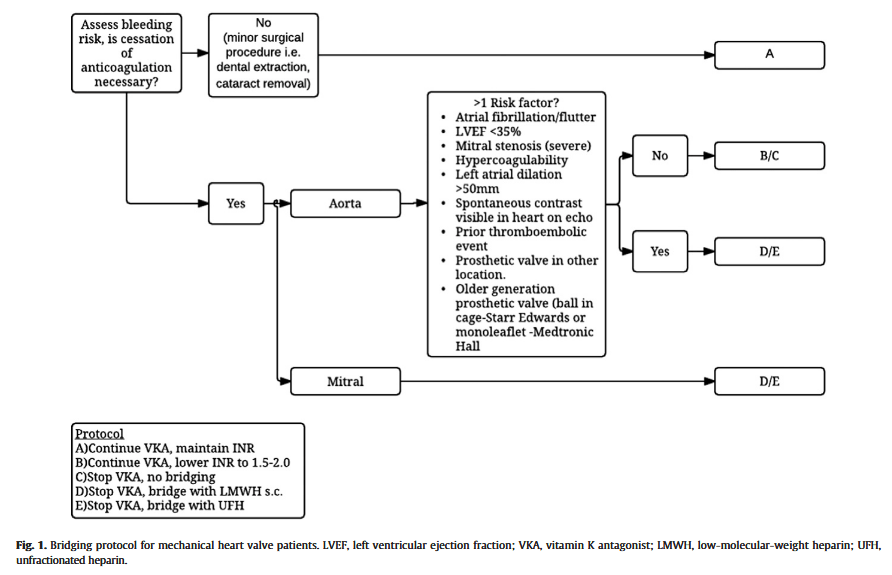
Anticoagulant bridging in left-sided mechanical heart valve patients

“There are two strategies for heparin bridging; administration of intravenous unfractionated heparin (UFH), and subcutaneous low-molecular-weight heparin (LMWH). While both strategies reduce the risk of valve thrombus formation, they have distinct biomedical, financial, and logistical profiles. UFH is administered intravenously according to a nomogram and hence requires peri-procedural hospital admission and continuous monitoring of
activated partial thromboplastin time (aPTT). In contrast, LMWH is administered subcutaneously once or twice daily in an outpatient setting and usually does not require continuous blood monitoring of anti-Xa levels.”

Continue reading

Guideline for Perioperative Cardiovascular Management for Noncardiac Surgery: A Report of the American College of Cardiology/American Heart Association Joint Committee on Clinical Practice Guidelines

“Top Take-Home Messages

1.A stepwise approach to perioperative cardiac assessment assists clinicians in determining when surgery should proceed or when a pause for further evaluation is warranted.
2.Cardiovascular screening and treatment of patients undergoing noncardiac surgery should adhere to the same indications as nonsurgical patients, carefully timed to avoid delays in surgery and chosen in ways to avoid overscreening and overtreatment.
3.Stress testing should be performed judiciously in patients undergoing noncardiac surgery, especially those at lower risk, and only in patients in whom testing would be appropriate independent of planned surgery.
4.Team-based care should be emphasized when managing patients with complex anatomy or unstable cardiovascular disease.
5.New therapies for management of diabetes, heart failure, and obesity have significant perioperative implications. Sodium-glucose cotransporter 2 inhibitors should be discontinued 3 to 4 days before surgery to minimize the risk of perioperative ketoacidosis associated with their use.
6.Myocardial injury after noncardiac surgery is a newly identified disease process that should not be ignored because it portends real consequences for affected patients.
7.Patients with newly diagnosed atrial fibrillation identified during or after noncardiac surgery have an increased risk of stroke. These patients should be followed closely after surgery to treat reversible causes of arrhythmia and to assess the need for rhythm control and long-term anticoagulation.
8.Perioperative bridging of oral anticoagulant therapy should be used selectively only in those patients at highest risk for thrombotic complications and is not recommended in the majority of cases.
9.In patients with unexplained hemodynamic instability and when clinical expertise is available, emergency focused cardiac ultrasound can be used for perioperative evaluation; however, focused cardiac ultrasound should not replace comprehensive transthoracic echocardiography.”
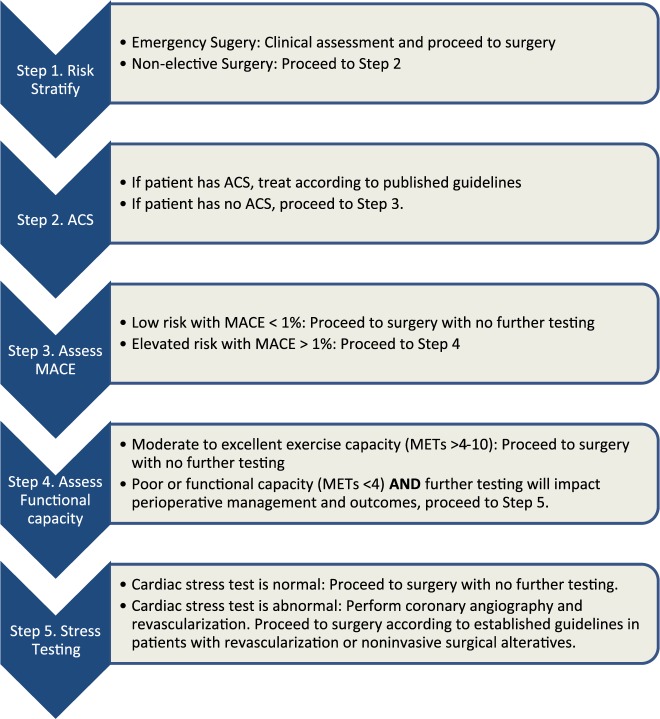
Stepwise Approach to Perioperative Cardiac Assessment
∗Cardiovascular risk factors: hypertension, smoking, high cholesterol, diabetes, women age >65 y, men age >55 y, obesity, family history of premature CAD. †Determining elevated calculated risk depends on the calculator used. Traditionally, RCRI >1 or a calculated risk of MACE with any perioperative risk calculator >1% is used as a threshold to identify patients at elevated risk. §Abnormal biomarker thresholds: troponin >99th percentile URL for the assay; BNP >92 ng/L, NT-proBNP ≥300 ng/L. ‡Conditions that pose additional risk for MACE. ‖Noninvasive stress testing or CCTA suggestive of LM or multivessel CAD. Colors correspond to Class of Recommendation in Table 3. BNP indicates B-type natriuretic peptide; CABG, coronary artery bypass grafting; CAD, coronary artery disease; CCTA, coronary computed tomography angiography; CIED, cardiovascular implantable electronic device; CVD, cardiovascular disease; DASI, Duke Activity Status Index; ECG, electrocardiogram; GDMT, guideline-directed management and therapy; ICD, implantable cardioverter-defibrillator; LM, left main; MACE, major adverse cardiovascular event; METs, metabolic equivalents; NCS, noncardiac surgery; NT-proBNP, N-terminal pro b-type natriuretic peptide; RCRI, Revised Cardiac Risk Index; and URL, upper reference limit.
Continue reading

Cardiac Evaluation and Monitoring of Patients Undergoing Noncardiac Surgery

“The main purpose of perioperative cardiac evaluation involves answering few basic questions. What are the underlying cardiac risk factors which a patient might have before
s/he undergoes noncardiac surgery? Will such cardiac evaluation change the management of the patient? Will it defer surgery altogether in favor of resolving the patient’s cardiac disease and hence reducing perioperative mortality? What will be the course of management in the postoperative period?
Communication among the complete medical team involved in patient care, including the internist, cardiologist, anesthesiologist, surgeon, and ancillary staff, is of utmost importance,
along with the facilitation of shared decision making by the patient.”

Algorithm for perioperative cardiac risk assessment prior to noncardiac surgery.
Continue reading

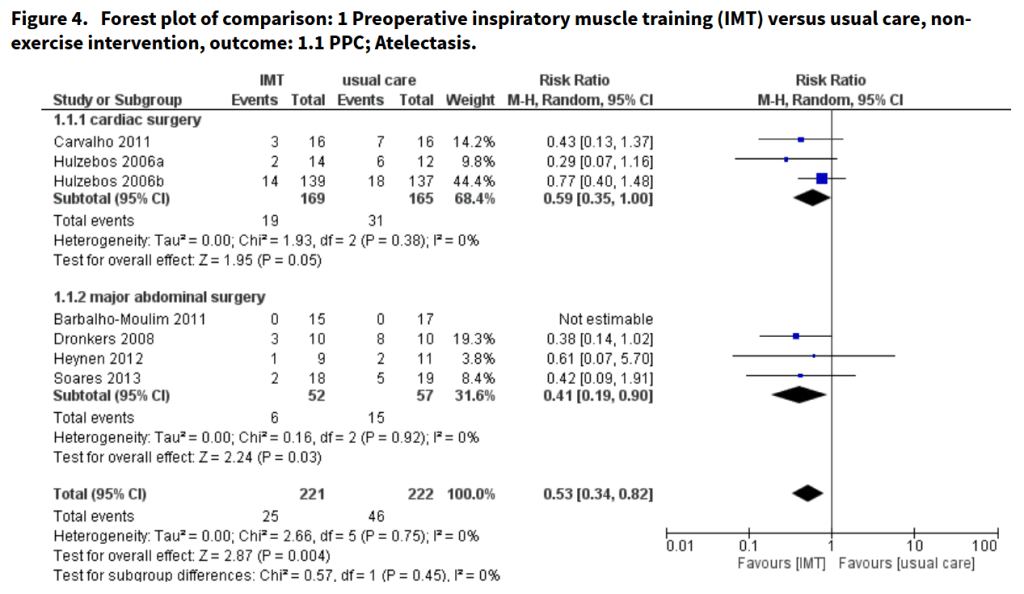
Preoperative inspiratory muscle training for postoperative pulmonary complications in adults undergoing cardiac and major abdominal surgery

“Despite advances in perioperative care in the last few decades, postoperative pulmonary complications (PPCs) are probably the leading cause of morbidity and mortality in adults undergoing chest and abdominal surgery. PPCs and cardiac complications are commonly regarded as the two major causes of perioperative problems in selected groups of patients undergoing these high-risk surgical procedures. However, PPCs are more common than postoperative cardiac complications and play a bigger role in mortality and healthcare costs. Despite these factors, the natural history of PPCs and the necessity of preventive strategies have not been well recognized in studies to date.”

Continue reading

Enterocutaneous fistula formation after cardiac transplantation due to injury from LVAD driveline migration

Abstract

“A man in his early 20s with heart failure with reduced ejection fraction secondary to non-compaction cardiomyopathy (Titin (TTN) gene mutation positive) was transitioned from left ventricular assist device (LVAD) mechanical support to heart transplantation. Transplantation was successful; however, LVAD explantation resulted in innumerable complications secondary to penetration of the driveline into the peritoneal cavity. He developed an enterocutaneous fistula which led to concurrent malnutrition, poor wound healing, systemic infection, and allograft rejection in a patient less than 1 month after heart transplantation on immunosuppression.”

Tan, Derek W et al. “Enterocutaneous fistula formation after cardiac transplantation due to injury from LVAD driveline migration.” BMJ case reports vol. 16,6 e254696. 22 Jun. 2023 Emory Users Request Article via Interlibrary Loan

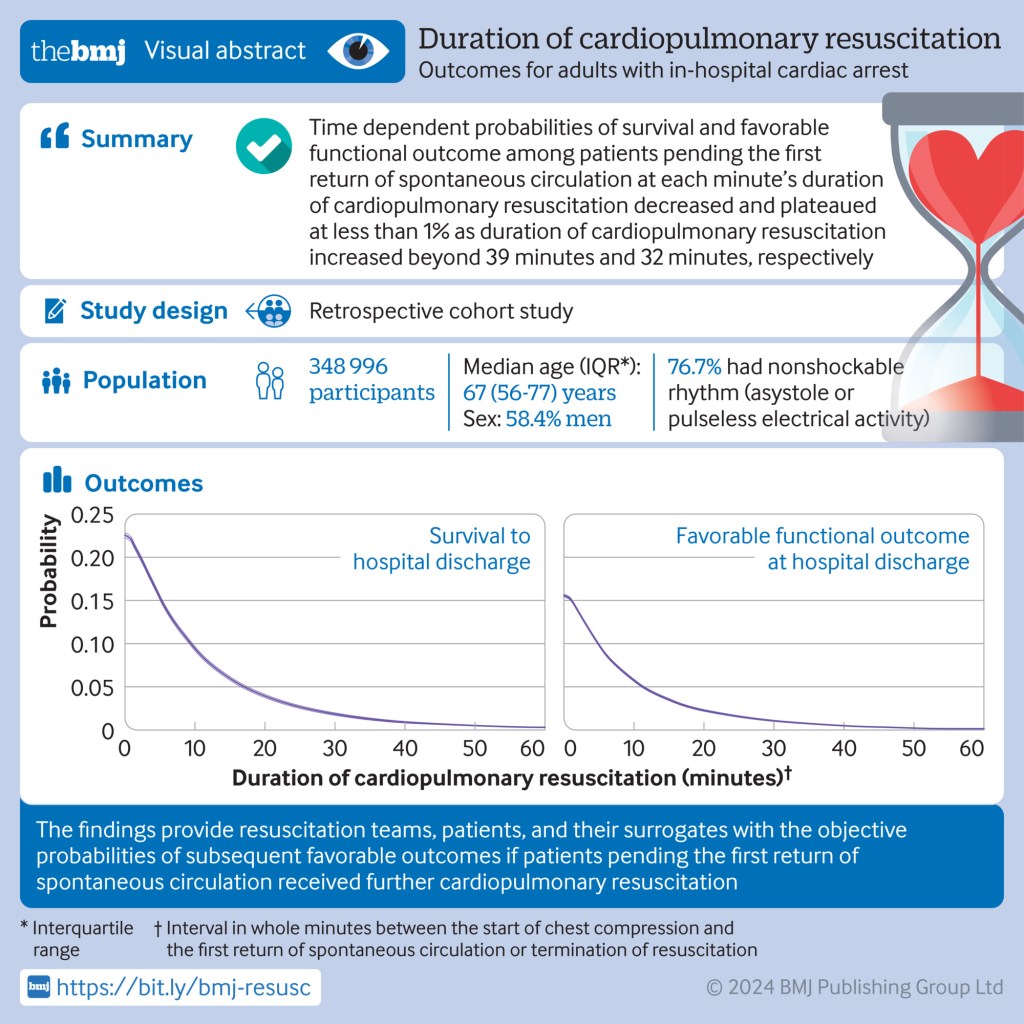
Cardiopulmonary resuscitation and outcomes with in-hospital cardiac arrest

“In-hospital cardiac arrest is an important public health problem, affecting approximately 300 000 adults annually in the United States, with a high mortality rate.1 2 The survival rate after in-hospital cardiac arrest in the US improved from 2000 to 2010 and has remained plateaued after 2010, with approximately 25% of patients surviving to hospital discharge.
Achieving return of spontaneous circulation is the first step toward long term survival and favorable functional recovery. However, for nearly half of patients with in-hospital cardiac arrest, resuscitative efforts are terminated without achievement of return
of spontaneous circulation.”

Continue reading